



Airport Runway Solid Potassium Acetate: Meeting FAA Safety Standards
Keeping the runways safe is a matter of life and death when winter weather threatens airport operations. Airport runway solid potassium acetate has become the aviation industry's answer to this problem because it is non-corrosive, biodegradable, and complies with FAA safety standards. Traditional road salts hurt aircraft parts and are bad for the environment. This special deicer, on the other hand, saves both the airframe and operations, and it works well in temperatures as low as -60°C. Because of the strict rules set by the Federal Aviation Administration, deicing agents must balance performance with safety. This is why potassium acetate-based products are the usual choice for all major airports around the world.
Understanding Solid Potassium Acetate for Airport Runways
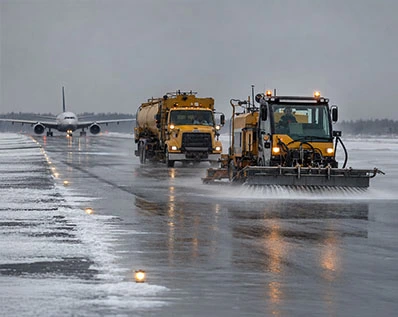
For airplanes to be safe, the runway surfaces need to have enough roughness for takeoff and landing. As soon as ice and snow damage these surfaces, runways need quick, reliable fixes that don't add any new risks. Airport runway solid potassium acetate provides a high-performance solution for these critical moments.
The Science Behind Potassium Acetate Deicing
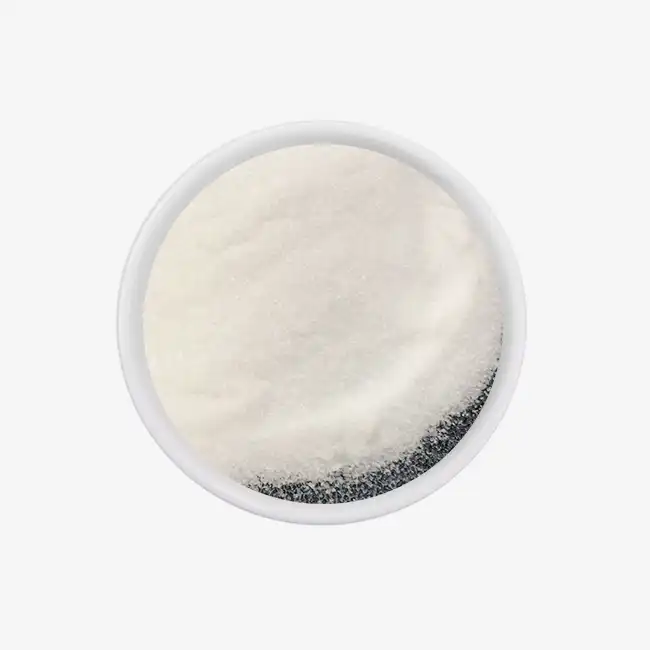
The freezing point reduction feature of potassium acetate (CH₃COOK) makes it work by lowering the temperature at which water freezes. When the white crystal pieces come in touch with ice, they break down quickly, making a strong brine solution. An exothermic reaction in this mix gives off heat, which speeds up the melting process. Ions of acetate stop hydrogen bonds from forming between water molecules, which means that ice crystals can't keep their hard shape. With a bulk density of 0.8 to 0.9 g/cm³, the granules don't get blown around in jet blasts and stay where they're put down instead of spreading out across the runway.
Advantages Over Traditional Deicing Methods
Traditional salts that are based on chloride eat away at aluminum, magnesium, and cadmium parts in airplanes, which costs a lot to fix and shortens the life of the equipment. Formulations with potassium acetate completely get rid of this risk. This organic salt is biodegradable, which means it breaks down naturally without giving off dangerous ammonia. This is different from urea-based goods that airlines used to use. The rules about protecting the environment are getting stricter, and acetate-based deicers meet these requirements while still working well. The material works at very low temperatures, where other deicers don't, so operations can continue on the runway even during strong winter storms that shut down operations elsewhere.
Storage and Handling Protocols
Keeping things in the right way saves their purity and makes sure they always work the same way. Because potassium acetate is hygroscopic, it takes in water from the air. This means that it needs to be stored in a dry, well-ventilated area. To keep things from clumping and breaking down, storage sites must keep the relative humidity below 60%. Controlling the temperature is not as important as controlling the wetness, but keeping the food away from excessive heat does extend its shelf life. People who work with the material should store it away from things that don't work with it, like acids and damaging agents. For smaller tasks, 25kg plastic woven bags are an option. For airports with high volume needs and mechanized spreading tools, 1000kg ton bags are the best choice. The product stays useful for up to 24 months if it is kept in the right way in sealed cases.
Comparing Potassium Acetate with Other Common Runway Deicing Agents
When purchasing products for deicing, procurement managers have a lot of choices. Each has its own performance and cost effects. By knowing these differences, you can make smart decisions that match the needs of operations with your budget. Understanding the role of airport runway solid potassium acetate compared to alternatives is essential for effective winter planning.
Performance Analysis Across Deicing Agents
Sodium acetate is not acidic like potassium acetate, but it freezes at a higher temperature, making it less useful in very cold weather. Calcium magnesium acetate (CMA) works well in average weather, but it costs a lot more and breaks through ice more slowly. Urea used to be popular at airports, but people don't want to use it anymore because it's bad for the environment and doesn't work well below -7°C. The anti-icing qualities of glycol-based fluids are great, but they need special application tools and cost more per use. Rock salt is still not allowed at airports because it quickly corrodes plane parts and infrastructure.
Potassium acetate is the best mix between these things. The material works well in the biggest range of temperatures, keeps expensive equipment from rusting, and meets the environmental standards that are becoming more and more important for airport operations. When you take into account lower costs for environmental cleanup and machine upkeep, operational costs stay competitive.
Solid Versus Liquid Formulations
Liquid potassium acetate (SAE AMS 1435) works great as an anti-icing agent because it forms a barrier before precipitation starts. Before winter weather is expected, airports spray the liquid on clean, dry ground. But wind can make it spread and cover unevenly, which makes it less efficient. Solid formulations can get through up to 6mm of current ice, which makes them necessary for deicing that helps during busy winter events. A lot of airports use both types of formulas in smart ways: solids for actively melting ice and liquids for keeping it from melting in the first place.
In pre-wet processes, solid pellets that have been mixed with a liquid solution are used. This method stops bounce and spread when there is a lot of wind, and it speeds up the melting process at first. It stays in place until the deicing process is done because the liquid part helps the solid bits stick to the ground. For airports that don't have a lot of room for liquid storage, solid versions are better because the granular product only needs dry warehouse space instead of heated tanks and special pumping systems.
Compliance and Effectiveness: Meeting FAA Safety Standards with Solid Potassium Acetate
Federal rules about how airports work don't allow for any shortcuts when it comes to safety or taking care of the environment. Products like airport runway solid potassium acetate used on airports have to meet a lot of different rules at the same time.
Regulatory Framework and Certification
According to the FAA, the industry standard for concrete runway deicers is SAE AMS 1431E. These rules spell out the limits for chemical makeup, performance levels, and testing methods. Products that meet AMS 1431E guidelines are put through a lot of tests, such as friction tests, corrosion tests, and environmental effect tests. Airport managers check for compliance by looking at paperwork from suppliers and, more and more, by having shipped goods tested by a third-party lab.
The Clean Water Act and rules made by the Environmental Protection Agency require airports to handle deicing water, which makes biodegradability a very important feature for airport runway solid potassium acetate. Potassium acetate breaks down naturally in soil and water thanks to microbes, so it doesn't stay in the environment as long as some other chemicals do. The chemical is not very harmful to aquatic life, which protects delicate ecosystems near airport borders. International airports that serve global airlines often look for extra certifications, such as ISO 14001 environmental management standards, to make sure that their supply chain partners keep their promises to be environmentally friendly.
Real-World Performance Data
During the harsh winter of 2014, Chicago O'Hare International Airport used acetate-based deicing procedures to keep operations ready during multiple polar vortex events. During the season, runway friction ratings stayed above the FAA minimums, and reports of airplane corrosion went down compared to previous years. In 2016, Denver International Airport started using potassium acetate formulas to deal with the problems that come with being at a high elevation and having extreme temperature changes. Maintenance teams said that clearing ice took less time and that spreading machines wore out less quickly.
Over the course of five years, Toronto Pearson International Airport compared the success of different deicing products. Potassium acetate products worked best for the longest time after being applied, so they didn't need to be reapplied as often during long winter storms. This meant that less work was needed and fewer chemicals were used for each weather event. The study also showed that there was little damage to the waterways nearby, which backs up what producers say about the environment. Procurement teams can be sure that what works in the lab will work in the real world, even in tough situations, thanks to these case studies.
Procurement Insights: Sourcing Solid Potassium Acetate for Airport Runways
Strategic choices about where to get supplies affect not only operations this winter, but also the budget and the supply chain in the long run. By working with dependable providers of airport runway solid potassium acetate, you can avoid problems that could put airport safety at risk.
Supplier Qualification Criteria
Reputable makers keep their ISO 9001 quality management standards up to date, which shows that they use organized methods to make sure their products are always the same. For foreign safety, aviation applications often need extra badges like KOSHER and HALAL certifications. Safety Data Sheets, product specs, and test results unique to each batch should all be provided by suppliers. When trying to get supplies for big airports that use hundreds of tons each season, manufacturing ability is important. Large orders can be taken care of by facilities that produce more than 100,000 tons of goods every year without affecting delivery times.
Logistics prices and transport reliability are affected by where things are delivered. When it comes to foreign shipping, domestic suppliers make things easier, but when prices are fair, overseas makers can sometimes win. For correct budget predictions, look at the total landed cost instead of the ex-factory price. Lead times depend on the provider and the time of year. Orders placed before the season usually get finished within 5–7 business days, but emergency winter orders may be held up during times of high demand.
Building Strategic Supplier Relationships
Long-term relationships have benefits that go beyond simple purchases. As a preferred customer, you may get priority during supply shortfalls, expert help for application problems, and the chance to work together to solve operating problems. Suppliers with helpful technical support teams can give tips on the right doses for certain conditions, the best tools to use, and how to fix problems when results don't live up to expectations.
During contract discussions for airport runway solid potassium acetate, you should talk about product warranties, promises that the specifications will be met, and how to fix deliveries that don't meet the specifications. Volume prices show appreciation for loyalty while keeping budgets stable over several winter seasons. Payment terms affect how much cash you have on hand. Net-60 or net-90 terms give cities and towns that have delayed budget processes more options. Comprehensive agreements spell out different ways to package items, shipping times that work with the warehouse's space, and ways to communicate about changes to orders as winter weather predictions change.
Best Practices for Applying Solid Potassium Acetate on Airport Runways
The success and cost-effectiveness of deicing depend directly on the right way to apply it. When used incorrectly, even high-end airport runway solid potassium acetate doesn't work as well, but optimized methods get the most value out of every ton bought.
Application Methodology
Granules are spread out evenly on runway surfaces by mechanical spreaders made for airports. The correct application rates, which are usually between 50 and 150 pounds per thousand square feet based on the thickness and temperature of the ice, are made sure by calibration. Higher application rates are needed to get enough ice to penetrate when temperatures are lower and accumulations are larger. Before the season starts, operators should try their equipment to make sure that the settings for the spinners and gates make the coverage patterns similar.
Timing has a big effect on success. Using solid potassium acetate right after snow removal by machines gets rid of any remaining ice and frost before it sticks to the ground. The exothermic process works best when the material touches the ice directly, not when it's on top of loose snow. When it's snowing, applying chemicals at the same time as sweeping keeps you from wasting product on snow that will be removed by machines in later runs.
Monitoring the weather leads choices about applications. When the wind speed is above 25 mph, even with the best grain sizes, they will still move, which will make them less effective and waste material. The amount of precipitation helps figure out if one treatment is enough or if it needs to be done more than once. If the surface temperature is below -30°C, you may need to use higher application rates or pre-wetting methods to get the freezing process going quickly.
Monitoring and Maintenance Strategies
Continuous tracking of friction during winter activities proves that deicing works. With portable friction testers, you can check the real conditions of a runway to see if it needs more work or if the surfaces meet FAA safety standards. Conditions often change between the landing zones, middle sections, and departure ends, so these measures should be taken at several places along the runway.
Evaluations done after a storm find ways to make future events better. Keeping track of how much is applied, the weather, and the surface conditions that result builds institutional knowledge that helps make processes better over time. Photography lets you keep visible records that can be used to train new employees and show that you did your part in safety management programs.
Maintenance on equipment keeps it from breaking down in the middle of the season, which limits its ability to respond. When you flush the spreader devices after each use, you get rid of any leftover material that could attract water and cause rust. During the off-season, lubricating moving parts, checking hydraulic systems, and changing old parts makes sure that the machine will work well when winter storms hit. Keeping backup spreading equipment in good shape gives you a safety net in case the main units break down during important activities.
Conclusion
For aviation safety, deicing systems must protect both the ability to keep operations going and the long-term health of assets. Airport runway solid potassium acetate meets both needs, offering environmental stewardship and equipment protection while reaching FAA safety standards. Extreme temperature performance, non-corrosive qualities, and regulatory compliance make this material the best choice for airports that want to keep safety standards at the greatest level. Strategic relationships with experienced makers ensure a steady supply during the winter, and the right way to use the product will make it work better and cost less. As winter weather gets worse, airport operations become more difficult. Investing in proven acetate-based deicing technology saves passengers, planes, and the image of the airport operations at the same time.
FAQ
How does potassium acetate compare cost-wise to alternative deicers?
Even though airport runway solid potassium acetate may cost more to buy at first than older chemicals like urea, a total cost study shows that it saves a lot of money in the long run. Less corrosion on airplanes means less money spent on upkeep, less money spent on environmental compliance because the material breaks down naturally, and less material needed for applications that need to be used at low temperatures. Most airports say that their overall operating costs went down during the first winter season after switching to goods made from acetate.
What safety considerations apply when handling this material?
Potassium acetate is not very dangerous, but you should still follow basic safety rules. To keep their skin from getting irritated, workers should wear protective gloves when they handle concentrated materials. Because the fluid has an alkaline pH (9.0–10.5), you should wear eye protection while applying it. Under normal working conditions, the material does not pose any major risks to the lungs, to fire, or to reactions. Good airflow should be kept in storage places to control the amount of moisture, not because of worries about air quality.
What minimum order quantities and lead times should procurement teams expect?
Order minimums are different for each provider and type of packing. Orders for bulk ton bags usually need at least 20 to 40 tons, but orders for 25kg bags may be able to handle smaller amounts. During the off-season, lead times for stock items are usually between 5 and 7 working days. For big custom orders that need specific production runs, the lead time can go up to 20 to 30 days. Pre-season buying, which should be done by late September for airports in the northern hemisphere, makes sure that there is enough stock before high demand times, which can put a strain on suppliers' resources and cause shipping times to grow.
Partner with Zhaoyi Chemical for Reliable Airport Runway Solid Potassium Acetate Supply
Zhaoyi Chemical has been making specialized acetate for more than 30 years and can apply that knowledge to deicing uses in aircraft. Our aviation-grade airport runway solid potassium acetate supply operations strictly follow SAE AMS 1431E standards. We are also backed by ISO 9001, ISO 14001, and ISO 45001 certifications that show our dedication to quality, safety, and caring for the environment. We can produce up to 150,000 tons of product every year, so we can handle both emergency orders and long-term supply deals that keep your operations running smoothly during the winter. Our technical support team answers questions within two hours and helps you with program issues and problems when you need it the most. You can email Zhaoyi Chemical at sxzy@sxzhaoyi.com right now to talk about your specific needs, get full specs, or get competitive prices for your upcoming winter activities. We are ready to back up your dedication to making the runways safe and running smoothly.
References
Federal Aviation Administration. (2018). Airport Winter Safety and Operations: Advisory Circular 150/5200-30D. U.S. Department of Transportation.
SAE International. (2017). Solid Runway and Taxiway Deicing/Anti-icing Compound: AMS1431E. Society of Automotive Engineers Aerospace Material Specification.
Transportation Research Board. (2016). Evaluating the Effectiveness of Deicing and Anti-icing Chemicals for Airport Pavements. Airport Cooperative Research Program Report 150.
Klein-Paste, A., & Sinha, N. K. (2020). Comparative Analysis of Acetate-Based Deicing Agents in Aviation Applications. Journal of Cold Regions Engineering, 34(2), 04020008.
Environmental Protection Agency. (2019). Effluent Limitations Guidelines and Standards for the Airport Deicing Category. Federal Register 84 FR 29168.
International Civil Aviation Organization. (2015). Airport Services Manual: Part 2 - Pavement Surface Conditions. ICAO Document 9137-AN/898.

USER EVALUATE
Here is the customer's evaluation of us