



Can Snow Melting Liquid Potassium Acetate Prevent Ice Formation Before Storms?
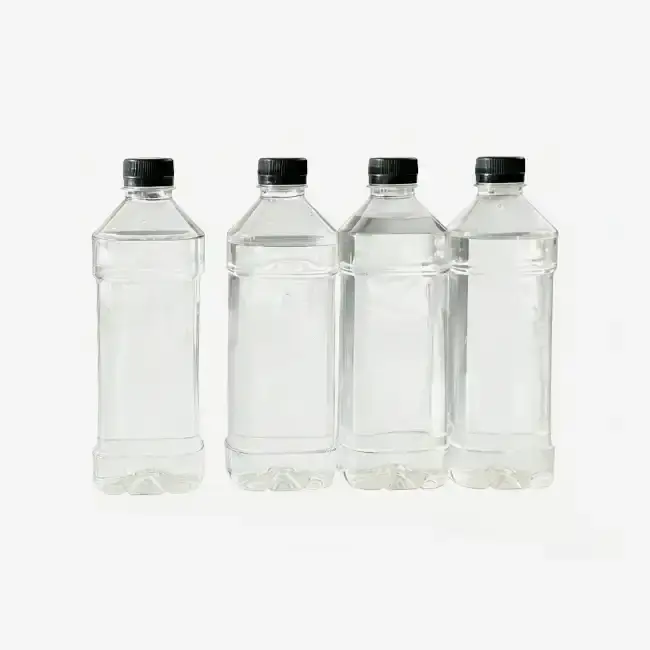
Yes, snow melting liquid potassium acetate (CAS NO.: 127-08-2)effectively prevents ice formation when applied before storms arrive. This non-chloride acetate-based solution works by creating a chemical barrier that lowers the freezing point of water on treated surfaces to approximately -35°C. Unlike reactive de-icing methods that require ice to form before treatment, potassium acetate liquid functions preventatively—bonding to pavement and infrastructure surfaces to interrupt ice crystal formation at the molecular level. The pre-treatment approach significantly reduces operational disruptions, labor costs, and safety hazards associated with post-storm ice accumulation across airports, highways, and industrial facilities.
Introduction
Being ready for a winter storm requires more than just reacting. In the United States, more and more people in charge of municipal infrastructure, airport operations, and industrial facilities are realizing that proactive ice prevention works better than traditional de-icing after a storm. Snow melting liquid potassium acetate has become the best option for groups that need reliable treatment plans before a storm.
The move toward preventative ice control is a result of how things work in the field. Highway repair companies face growing pressure to keep 24/7 accessibility while minimizing environmental effect. The people who run airports can't afford to close runways during critical weather windows. When factories have outdoor process equipment, it has to keep running even when the temperature drops. Chemical solutions that stop ice from sticking together before it starts to rain are needed in all of these different areas.
Snow melting liquid potassium acetate meets this need because it is chemically effective, doesn't damage infrastructure, and is good for the environment. It is being used more and more in important situations because it works well at temperatures where other chloride salts stop working. By understanding how this acetate compound works as a preventative step instead of just a reaction treatment, procurement teams can come up with winter maintenance plans that save money and make things safer.
Understanding Liquid Potassium Acetate for Ice Prevention
Chemical Composition and Properties
Using snow melting liquid potassium acetate (CH₃COOK, CAS 127-08-2) to lower the freeze point is a more advanced method. The solution is usually made with a 50–60% concentration, which makes a clear, slightly acidic liquid that is very stable at all temperatures. Snow melting liquid potassium acetate's chemical structure keeps it liquid at temperatures as low as -35°C. This means that it can be pumped and sprayed even when other deicers freeze or stop working.
The compound's low molecular weight of 98.14 makes it easy for it to quickly get into the tiny cracks on the surfaces of metal, concrete, and asphalt. For anti-icing purposes, this ability to penetrate is very important—the chemical needs to be on the surface before the snow starts to fall. When water touches the treated surface, the acetate solution breaks the hydrogen bonds that are needed for the ice crystal lattice to form right away.
Mechanisms of Pre-Storm Ice Prevention
De-icing and anti-icing are very different. Instead of breaking ice links thru mechanical force or heat production, snow melting liquid potassium acetate stops new ones from forming. The acetate ions mess up the alignment of the water molecules during the freezing process. This keeps the water in a liquid state at temperatures where it would normally solidify if it wasn't handled.
Timing of the application is very important. Surfaces that were sprayed two to four hours before it started to rain still have the right amount of chemicals to keep ice from forming. Because the solution is hygroscopic, it can absorb water from the air and form a film that keeps the surface from freezing. Instead of having to be reapplied during weather events, this film stays in place during the whole storm and keeps accumulation from happening.
Concentration Guidelines for Optimal Performance
For anti-icing to work, the right amount of water must be mixed with the forecasted weather. At a 50% concentration, the solution protects against temperatures as low as -35°C, making it ideal for harsh arctic circumstances. 30–40% ratios work well for moderate climate uses because they are cost-effective and keep working at temperatures above -20°C. For highway uses, the recommended application rates are between 25 and 40 gallons per lane mile. The exact amounts needed depend on the surface's porosity, the amount of traffic, and the expected intensity of the rain.
Industrial and Environmental Advantages of Liquid Potassium Acetate
Corrosion Protection for Critical Infrastructure
Electrochemical rust speeds up the breakdown of infrastructure when chloride-based deicers are used. Sodium chloride and calcium chloride solutions get into concrete and attack the steel reinforcement that is embedded in it. This damage, called spalling, costs U.S. cities and towns billions of dollars every year to fix. Snow melting liquid potassium acetate mixtures keep carbon steel's corrosion rates below 0.03g/m²·h, which is about the same as exposing it to pure water and meets the strict requirements of AMS 1435 for aircraft materials.
This non-corrosive formula is especially useful for bridge deck uses. Because they are exposed to air under the roads, highway overpasses and other raised buildings freeze and thaw more quickly. When frequent freeze-thaw stress and chloride entry happen together, they weaken structures and shorten their useful life. Acetate-based anti-icing gets rid of the chloride part while stopping the formation of ice, which causes mechanical stress.
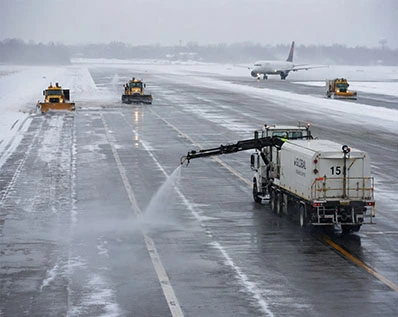
Material compatibility standards for airport structures are even stricter. Aluminum metals, magnesium parts, and certain carbon materials used in airplanes can't handle being exposed to chloride. Treatments for the runway and taxiways must protect these materials while keeping the friction levels needed for safe operations. Snow melting liquid potassium acetate meets both of these needs, which is why it is used in business flight ground activities around the world.
Environmental Impact and Biodegradability
More and more, buying choices for winter upkeep chemicals are influenced by environmental factors. More than 95% of snow melting liquid potassium acetate can be broken down naturally by microbes into carbon dioxide, water, and potassium ions, which are good for plants. This way of breaking down is very different from how chloride stays in groundwater and soil ecosystems.
Testing for aquatic toxicity shows that at operational concentrations, it has little effect on organisms that live in fresh water. The chemical doesn't reduce dissolved oxygen in receiving waters because its Biological Oxygen Demand (BOD) and Chemical Oxygen Demand (COD) values are low. This is important for sites that dump storm runoff into sensitive rivers. According to studies on vegetation tolerance, acetate formulations don't do much damage to nearby landscaping. This is in contrast to chloride salts, which build up in root zones and give roadside plants the infamous "winter burn"
In many places, environmental preference is driven by following the rules. National Pollutant dump Elimination System (NPDES) rules make it harder to dump stormwater because they limit the amount of salt that can be in the water. Facilities that switch to acetate-based anti-icing can show measurable decreases in the acidity of their waste, which supports applications for permit renewal and growth.
Operational Efficiency Gains
When it comes to operations, liquid de-icers are immediately better than powdered ones. Automated spray systems work perfectly with weather monitoring networks, so precise applications can be set off by temperature and humidity levels. Fixed Automated Spray Technology (FAST) installations on bridge decks work without any help from a person and use the right amount of chemicals exactly when the conditions call for it.
Response time changes have a direct effect on safety. Applying before a storm stops the initial ice forming that makes conditions dangerous when the rain starts. During stormy times, highway repair teams don't go out on emergency calls so they can move people to more important tasks. Airport operations stick to their stated schedules and don't cancel flights because of bad weather. This protects income and customer happiness measures.
Making it easier to handle materials cuts down on training needs and safety incidents. The low-toxicity, non-corrosive formulation doesn't need the special safety gear that is needed for concentrated chloride brines. Instead, it just needs standard chemical safety rules. Instead of expensive corrosion-resistant alloys, storage infrastructure uses regular polyethylene or fiberglass tanks. This lowers the capital investment for bulk storage facilities.
Procurement Considerations for Liquid Potassium Acetate
Supplier Qualification and Product Specifications
Thoroughly evaluating suppliers is the first step to successful buying. For industrial-grade snow melting liquid potassium acetate, the concentration must be exact every time; differences affect how well it freezes and how much it can be used. Manufacturers of good products give out Certificates of Analysis (CoAs) that list the purity parameters, such as chloride content below 0.01%, heavy metal concentrations that meet environmental standards, and pH stability within certain ranges.
Getting a manufacturing certification shows that you can control the process. Getting ISO 9001 quality control certification shows that you can make sure that each batch is the same. Getting ISO 14001 certification for environmental management shows that you are committed to using sustainable production methods. Food-grade and pharmaceutical facilities should keep their KOSHER and HALAL certifications, which show that they follow strict rules to prevent contamination that improve the quality of industrial products.
The ability to provide technical help is what sets strategic partners apart from commodity sellers. Manufacturers who offer formulation consulting, application training, and performance troubleshooting go above and beyond just delivering products. Having quick access to technical experts—usually within two hours of an inquiry—allows procurement teams to answer operational questions without holding up production.
Bulk Purchasing and Logistics Optimization
Anti-icing programs need efficient transportation solutions because they need to handle large amounts of goods. For moderate volume users, snow melting liquid potassium acetate is shipped in 1000L IBC (Intermediate Bulk Container) totes that can be stacked and have direct pump connections. Flexitank shipments are good for businesses that ship a lot of goods. These are single-use bladders that are put into standard shipping containers. They can hold up to 24,000 liters of goods and make handling them easier and less wasteful.
Transportation rules say that snow melting liquid potassium acetate solutions are not dangerous for shipping, so they don't have to follow the strict rules for paperwork and routes that apply to dangerous materials. Compared to corrosive or harmful alternatives, this rating lowers freight costs and gives carriers more choices. For proper storage, you need a dry, well-ventilated warehouse away from materials that don't go together, but you don't need special climate control or containment systems.
When planning lead times, you should think about when things are made and how demand changes with the seasons. Manufacturers usually keep standard formulations in stock for 5 to 7 business days, and they also keep security stock on hand for long-term customers. As part of strategic procurement, pre-season contracting locks in supply contracts before high demand times, when spot market availability gets tighter and prices are more likely to change.
Practical Guidance for Using Liquid Potassium Acetate Before Storms
Pre-Application Preparation and Timing
Effective de-icing starts two to four hours before it starts to rain. This gives the snow melting liquid potassium acetate time to reach the surface without being diluted too quickly or moving traffic. Integration of weather monitoring is necessary—forecasts from the National Weather Service, commercial weather services, and on-site sensors provide the data that applications use to make decisions. Trends in temperature are more important than exact readings. Windows that are defrosted when the temperature drops and the humidity rises are the best.
How well the surface is prepared affects how well the treatment works. When the ground is clean and dry, chemicals can stick to it better. Snow melting liquid potassium acetate can't get thru debris, standing water, or ice that is already there, which makes protection less effective. Before a storm, sweeping or air-blast cleaning the surface makes the treatment work better, especially on porous surfaces like asphalt where organic matter builds up in the spaces between the particles.
Dilution Protocols and Application Rates
Calibration of application tools makes sure that supply rates are correct. To keep the coverage that was agreed upon, spray systems need to have their nozzles checked, their pressures confirmed, and their flow rates tested on a regular basis. When GPS is combined with variable-rate controls, the rates can be automatically changed for traffic lanes versus shoulders, bridge decks versus highway parts, and other zone-specific needs that make the best use of chemicals while still protecting people.
Changing the concentration makes the chemical work better with the predicted intensity. When the temperature drops below -25°C, full-strength 50–60% solutions are needed to lower the freeze point as much as possible. Temperatures between -10°C and -20°C allow for 35–45% dilution, which saves money on materials without lowering security. When it's mildly freezing near 0°C, 25–35% concentrations are used at slower rates.
Monitoring and Performance Validation
Depending on the surface roughness and traffic flow, highway application usually uses 25 to 40 gallons per lane mile. Routes with a lot of traffic benefit from higher speeds that cancel out the effects of vehicles moving. Treatments for airport runways are based on manufacturer recommendations and AMS standards. For initial de-icing coverage, 100 to 150 gallons per acre are usually used. FAST systems treat bridge decks with 15 to 25 gallons of fluid per activation cycle. During a storm, more than one cycle is triggered.
Monitoring after the application is made confirms that the treatment worked and shows where more coverage is needed. A visual check before it starts to rain shows if the surfaces stay wet without ice sticking to them. Infrared temperature monitoring finds cold spots that mean there aren't enough chemicals present or that the freeze patterns aren't normal. Surface friction testing with movable devices measures levels of grip, proving that anti-icing keeps safe operational limits.
Documentation techniques help with growth all the time. By keeping track of application times, rates, weather conditions, and performance results, institutions gain information that is used to improve future processes. Integration of a geographic information system (GIS) into a program makes a map of the coverage area, which lets you figure out which areas always need higher rates or more frequent care. With this data-driven approach, winter maintenance goes from being an emergency response to being planned and streamlined operations.
Liquid Potassium Acetate vs. Alternative Solutions: A Strategic Comparison
Acetate Variants and Performance Differences
Different types of snow melting liquid potassium acetate, sodium, and magnesium acetates have different performance patterns. The cost of sodium acetate is lower, but it has a smaller freeze-point drop, which means it is less useful below -15°C. Magnesium acetate works about as well as other chemicals and is better for the environment in watersheds where chloride levels are low. Snow melting liquid potassium acetate is the best because it works better in cold temperatures, doesn't rust, and works with a lot of different materials. This means it costs more, but it is worth it for important uses where performance can't be compromised.
Calcium magnesium acetate (CMA) blends try to find a good mix between cost and performance, but they have trouble with stiffness at low temperatures and aren't as effective as pure potassium blends. When buying chemicals, it's important to choose ones that are right for the job. For example, applications that need to save money can get by with sodium acetate limits, but airports, bridges, and factories that need to be as reliable as possible need potassium versions.
Liquid Versus Solid Formulations
The choice of format affects how an application works and how flexible it is to use. Snow melting liquid potassium acetate(CAS NO.: 127-08-2) can be sprayed precisely by automatic systems, can be activated right away without dissolving first, and can cover complex shapes evenly. Solid formulations have lower costs per unit of active ingredient, but they need to be spread with mechanical equipment, leave behind residues that need to be cleaned up, and can cause problems with foreign object debris in flight uses.
Anti-icing before a storm works much better with liquid formulations. Solid products can't leave the long-lasting film on the surface that is needed for prevention—they need water to dissolve and work, which means that ice has to start to form before the chemical can do its job. Liquid solutions work to stop problems before they happen, giving you the proactive security that sets strategic winter maintenance apart from reactive emergency reaction.
Economic Analysis and Total Cost of Ownership
When comparing winter maintenance options, direct comparisons of material costs can be misleading. Infrastructure preservation (no need for expensive repairs due to corrosion), operational continuity (protecting revenue thru ongoing operations), liability reduction (lower risk of accidents), and environmental compliance (avoiding discharge violations and cleanup costs) are all parts of a thorough analysis. Total cost of ownership studies regularly show that premium acetate formulas produce better financial results, even tho they cost more per unit.
Quantitative examples show how these economics work. A city bridge that needs $2.8 million in repairs because chloride-induced concrete spalling is equal to the costs of premium acetate products for 15 to 20 years. If an airport can avoid even one weather-related cancelation during the busiest travel times of the year, it can save more money than a whole season's chemical budget. Because of these facts, smart buying teams see winter maintenance chemicals as investments in infrastructure rather than sales of goods.
Conclusion
Using snow melting liquid potassium acetate to keep ice from forming is a big step forward in the way winter care is done. The compound can stop ice from forming before storms happen instead of just responding to it when it does, which changes how well city infrastructure, airport operations, and industrial facilities work. Acetate-based anti-icing is the best choice for organizations that need to keep operations going, protect their infrastructure, and follow the rules because it has better freeze-point performance, works well with a lot of different materials, and is environmentally friendly.
When making purchasing choices that go beyond just comparing the costs of materials, it's clear that there are strong total cost benefits. Premium positioning is necessary for critical applications because it prevents corrosion damage, keeps operational revenue steady, lowers liability exposure, and makes environmental compliance easier. As winter maintenance moves toward more preventative methods supported by automated application systems and weather integration technologies, snow melting liquid potassium acetate (CAS NO.: 127-08-2)is the chemical base that makes operations reliable and long-lasting no matter what time of year it is.
FAQ
Is potassium acetate safe for use on concrete and metal surfaces?
Snow melting liquid potassium acetate is very good at mixing with other materials. According to AMS 1435 standards, corrosion rates on carbon steel are less than 0.03g/m²·h, which is about the same as being exposed to distilled water. Testing for compatibility with concrete shows that there is no faster decline, spalling, or corrosion of the reinforcements compared to controls that were not handled. The buffered alkaline pH (7.5–9.2) of the compound has mild passivation effects on metal surfaces, which is very different from chloride-based alternatives, which cause aggressive electrochemical corrosion.
How long does liquid potassium acetate remain effective after application?
How long a treatment lasts depends on the weather and how much traffic it sees. Surface films stay active for 48 to 72 hours when there is no rain or snow and the air is humid. This is because they absorb moisture from the air. When there is busy precipitation, the efficiency lasts the whole storm, usually for 6 to 12 hours straight. Moving traffic around makes persistence lessen; high-traffic roads may need to be reapplied in the middle of a storm for longer weather events, but sheltered areas like airport grounds stay covered the whole storm without extra treatment.
What environmental advantages does potassium acetate offer compared to road salt?
Snow melting liquid potassium acetate is broken down by natural microbes at rates higher than 95%. It turns into carbon dioxide, water, and potassium, which is good for plants. Chloride salts stay in the groundwater and soil for a long time, building up to dangerous levels that hurt plants, pollute drinking water, and hurt marine ecosystems. Acetate formulations have very little effect on aquatic life, need very little oxygen in the water they enter, and don't hurt plants growing next to roads. Using acetate chemistry makes following the rules easier, since NPDES discharge limits are getting stricter on chloride loading limits that limit the use of regular salt.
Partner with SHANXI ZHAOYI CHEMICAL for Reliable Winter Operations
SHANXI ZHAOYI CHEMICAL has been making acetate for more than 30 years and can help you with your winter maintenance problems. With the ability to make 150,000 tons of snow melting liquid potassium acetate every year, we provide the quality stability and supply predictability that vital infrastructure needs. Our enterprise-grade formulas lower the freezing point to -35°C while keeping rust rates below 0.03g/m²·h. This protects your assets and keeps your business running even in the worst conditions.
Our ISO 9001, ISO 14001, and ISO 45001-certified factory uses quality control methods that go above and beyond international standards. Our KOSHER and HALAL certifications show that we are dedicated to keeping things pure and free of contamination. We offer cost-effective flexitank shipments and flexible packing in 1000L IBC tanks. Our technical support teams are available within two hours to answer application questions and help you improve your anti-icing procedures. Get in touch with our experts at sxzy@sxzhaoyi.com to talk about your specific needs and get personalized formulation suggestions backed by detailed technical documentation. You can look at our full line of acetate solutions designed for successful winter maintenance in cities, airports, and factories by going to zhaoyichemical.com.
References
1. Transportation Research Board. Anti-Icing Technology and Practice in Winter Maintenance Operations. National Cooperative Highway Research Program Report 577, National Academy of Sciences, 2007.
2. Shi, X., et al. "Evaluating the Environmental Impacts of Alternative Deicing/Anti-Icing Products: A Holistic Approach." Journal of Environmental Engineering, American Society of Civil Engineers, Vol. 139, No. 4, 2013.
3. Federal Aviation Administration. Airport Winter Safety and Operations, Advisory Circular 150/5200-30D, U.S. Department of Transportation, 2019.
4. Nixon, W.A. and Williams, D. "A Guide for Selecting Anti-Icing Chemicals—Version 1.0." Iowa Highway Research Board Project TR-481, Iowa State University, 2006.
5. Fischel, M. "Evaluation of Selected Deicers Based on a Review of the Literature." Colorado Department of Transportation Report CDOT-DTD-R-2001-15, 2001.
6. American Society for Testing and Materials. Standard Practice for Maintaining Constant Relative Humidity by Means of Aqueous Solutions, ASTM E104-20, West Conshohocken, PA, 2020.

USER EVALUATE
Here is the customer's evaluation of us