



Why Zhaoyi Chemical Liquid Potassium Acetate is Best for Deicing
Zhaoyi Chemical's deicing liquid potassium acetate is the best option for businesses that are having trouble with their infrastructure in the winter. This non-chloride, biodegradable mixture with 50–60% potassium acetate (CAS 127-08-2) meets the important needs of city governments, airport owners, and highway maintenance contractors who need anti-icing agents that protect infrastructure while keeping the environment safe. This acetate-based deicer works better than chloride salts in terms of performance, durability, and asset protection. It can freeze at -60°C and has been shown to have a rusting rate of ≤0.03g/m²·h on carbon steel.

Understanding Global B2B Procurement Dynamics in Winter Maintenance Solutions
Figuring out how global B2B buying works in winter maintenance solutions requires understanding that professionals in infrastructure upkeep who are in charge of buying things are under more and more pressure from different groups. As winter storms approach, people expect roads to be safe and usable, but municipal funds are getting tighter. Airport managers have to balance strict environmental rules with keeping operations running smoothly. This conflict makes companies change the way they rate deicing liquid potassium acetate products in a basic way.
The Sustainability Imperative Reshapes Sourcing Decisions
Environmental rules that control the quality of waste water have changed the standards for buying things. Because the U.S. Environmental Protection Agency keeps an eye on Biological Oxygen Demand in streams near airports, companies that use urea-based deicers have had to give up on them, even though they were cheap. In the same way, highway departments have had to look for options because chloride has contaminated groundwater sources. Companies now look at both short-term performance requirements and the overall effect on the environment. This is because they know that governmental fines and damage to ecosystems are hidden costs that old ways of buying things didn't take into account.
Infrastructure Longevity Drives Total Cost Analysis
Bridge officials all over North America have found that salt entry speeds up the breakdown of concrete. According to the Federal Highway Administration, chloride-induced rusting costs more than $8.3 billion a year in repair and replacement costs. Lifecycle pricing methods that take into account infrastructure decline are being used more and more by procurement teams. A deicer option that stops corrosion adds value by making assets last longer, reducing the number of times they need to be maintained, and putting off major expenditures. This way of looking at things shows that special anti-icing mixtures are often cheaper than regular rock salt when looking at the whole system over ten years.
Supply Chain Reliability Becomes Non-Negotiable
Recent problems in chemical supply lines have made seller dependability a key factor in choosing a supplier. People who work in procurement know that the lowest bid doesn't mean much if the material comes late or doesn't meet specs during bad weather. Companies give more weight to sellers who can show they have strong production capacity, inventory buffers, and well-established transportation networks. In today's buying world, the difference between strategic partners and transactional suppliers is their ability to increase supply during the busiest winter months.
Essential Criteria for Selecting Reliable Acetate-Based Deicer Suppliers
Finding suppliers who can consistently offer high quality takes a thorough analysis of many factors. Procurement teams make detailed scorecards that look at more than just price to see if a partnership will work in the long run. When companies buy deicing liquid potassium acetates, they should make detailed evaluations across several dimensions.
Quality Certifications Signal Manufacturing Excellence
Even though ISO 9001 approval shows that quality management is systematic, more advanced sellers of deicing liquid potassium acetate go above and beyond this standard. Zhaoyi Chemical has both ISO 14001 and ISO 45001 standards for workplace health and environmental management, which shows that they follow strict rules in everything they do. Even though KOSHER and HALAL approvals might not seem related to deicing, they are a reflection of the strict controls on pollution and tracking systems that make sure the product is pure. When companies buy acetate deicers, they should make sure that the sellers test each batch for chloride content (≤0.01%), heavy metals (≤0.01% Pb), and concentration uniformity (50–60% CH₃COOK). These factors have a direct effect on how well the products work in the field and how well they comply with regulations.
Production Capacity Determines Supply Assurance
A supplier's annual production capacity shows how well they can handle big orders without sacrificing quality. Facilities that make 150,000 tons of acetate products every year have the economies of scale that allow them to offer competitive prices and keep extra stock on hand in case of emergencies. People who work in procurement should ask about lead times—standard production processes of 5–7 working days show that operations are running smoothly—and make sure that sellers keep emergency supplies on hand in case of bad weather. The difference between makers and distributors is very important. Dealing directly with producers cuts out delays caused by middlemen and gives you access to technical knowledge that you can't get through trade companies.
Transparent Communication Builds Partnership Trust
The quality of future teamwork can be predicted by how responsive suppliers are during the review phase. Partners who offer expert support teams that can help with application advice, product testing, and performance improvement are good for businesses. Zhaoyi Chemical offers free testing services so that purchasing teams can make sure that the product specs match their needs before placing large orders. When suppliers are ready to talk about formulation details, manufacturing methods, and quality control procedures, it shows that they are honest, which is what builds trusting long-term relationships.
Leveraging Technology to Optimize Anti-Icing Procurement Efficiency
Digital transformation tools help purchasing teams choose suppliers based on facts, and they also make buying and managing inventory easier. Using technology helps organizations improve the efficiency of buying deicing liquid potassium acetate.
Data Analytics Enhance Supplier Performance Monitoring
Modern procurement platforms combine past usage data, research of weather patterns, and information on how well suppliers send goods to find the best times and amounts to place orders. By connecting the amount of acetate deicer used with weather records and the number of storms that happen, companies can make forecast models that lower the costs of keeping inventory while still making sure there is enough during times of high demand. These systems set off automatic reordering alerts based on how quickly items are being used up and what the weather is expected to be like. This cuts down on human monitoring and keeps supplies from running out during important operations.
Digital Documentation Streamlines Compliance Verification
Blockchain-based supply chain tracking for deicing liquid potassium acetate keeps permanent records of where products came from, when they were made, and the results of quality tests. Suppliers who offer digital certificates of analysis, safety data sheets, and regulatory compliance paperwork that can be accessed through secure websites are helpful for businesses that have to go through environmental checks. This system for documentation makes administration easier and gives inspectors proof of responsible sourcing practices that they can check. Zhaoyi Chemical's desire to provide detailed paperwork to support foreign trade needs shows that they are operationally sophisticated, which is something that technology-forward procurement teams value.
Automated Ordering Systems Reduce Lead Times
When Enterprise Resource Planning (ERP) tools and supplier order management platforms are integrated, buying processes are smooth. Purchase requisitions made by inventory management systems are quickly turned into supplier orders. This cuts down on mistakes made when entering data by hand and speeds up the delivery process. Real-time insight into inventory lets procurement teams match delivery plans with storage space and expected application needs. This cuts down on logistics costs and makes sure that materials are available when they are needed.
Strategies for Building Long-Term Relationships with Chemical Suppliers
For sustainable buying to work, relationships must go beyond transactions and create value for both parties by working together to solve problems and make things better all the time. Building a long-term relationship with a deicing liquid potassium acetate supplier is the key to supply chain resilience.
Transparent Negotiation Establishes Mutual Expectations
Honest talks about operating needs, quality standards, and business terms are the first step in building good relationships with suppliers. Organizations should be clear about their number promises, the flexibility they need in their delivery schedules, and the performance measures that will be used to evaluate suppliers. Suppliers respond by talking about production limits, problems finding raw materials, and changes in prices that affect the security of long-term costs. This openness lets both sides make deals that take into account the facts of the market while also setting clear rules for who is responsible for what. Volume-based price tiers in multi-year contracts credit suppliers for their loyalty while giving procurement teams a way to plan their budgets.
Collaborative Planning Optimizes Supply Chain Performance
When procurement teams and buyer account managers work together on business planning, they find ways to improve things that will help both groups. Suppliers can see how expected demand trends will change, which helps them make better production schedules and buy raw materials more efficiently. Procurement teams are told ahead of time about any possible supply problems or changes in the market that could affect inventory. This way of working together is shown by Zhaoyi Chemical's strategic partnerships with international shipping companies. These partnerships promise container space and cheap freight rates, which protect customers from handling problems that affect buyers on the spot market.
Performance Feedback Mechanisms Drive Continuous Improvement
Structured seller scorecards for deicing liquid potassium acetate that keep track of consistent quality, reliable delivery, and quick responses to technical help requests allow for an objective evaluation of performance. When these measures are talked about in quarterly business reviews, problems can be dealt with before they get worse, and great work can be recognized. Companies that use formal feedback systems say that their suppliers are more engaged and attentive than those that don't use organized communication. With this methodical approach, sellers are turned into partners who care about the success of their customers instead of just transaction-focused providers.
Navigating Compliance and Risk in International Chemical Procurement
If you buy deicing liquid potassium acetate from companies in other countries, you have to deal with more complicated regulations that need to be managed carefully to avoid costly problems and legal problems.
Import Regulations Demand Diligent Documentation
When chemicals cross foreign lines, they are closely inspected by customs officials. Procurement teams have to make sure that sellers give them correct Harmonized System codes, material safety data sheets, and certificates of analysis that meet the needs of the target country. U.S. Customs and Border Protection requires specific product makeup declaration for chemicals that are brought into the country. If chemicals are misclassified, they can be fined and shipments can be delayed. Zhaoyi Chemical has experience shipping to North American markets, which makes sure that all paperwork is correct and that all regulations are followed. This lowers the clearance risks that companies face when they work with less experienced providers.
Quality Consistency Mitigates Operational Risk
Changes from batch to batch in the amount of potassium acetate or contaminants cause practical risks. If deicing products don't have enough of the active ingredient, they can't stop ice from forming, and if they have too much chloride, they speed up infrastructure damage, even if the label says "chloride-free." Contracts for buying things should include acceptable values for important factors like CH₃COOK content ±2%, salt ≤0.01%, and pH 7.5–9.2, and they should allow for testing by a third party. Suppliers with complete quality control systems that allow full batch tracking give buying organizations that don't like taking risks the peace of mind they need.
Contractual Safeguards Protect Against Supply Disruptions
Clauses like "force majeure," "guaranteed minimum supply commitments," and "penalty provisions for late delivery" help buyers and sellers share risk in a healthy way. Companies that need a steady supply of deicer during the winter should talk to their providers about putting in place inventory margin requirements that require them to keep safety stock. If the primary partners have problems with production, alternative sourcing deals with secondary providers give fallback choices. However, keeping these relationships going needs small volume commitments that balance the value of redundancy against the cost of doing business.
Enhancing Procurement ROI Through Data-Driven Acetate Deicer Selection
Procurement teams can show that choosing high-end products is worth the money by looking at things like product performance, total cost of ownership, and business results. Increasing procurement ROI by choosing deicing liquid potassium acetate based on data provides measurable benefits.
Performance Testing Validates Supplier Claims
The usefulness of deicing liquid potassium acetate under controlled settings has been shown through laboratory tests and field trials. Through BOD testing, organizations should check the melting point at different temperatures (-10°C, -20°C, -30°C), the rate of weathering on common building materials (carbon steel, aluminum alloys, concrete), and the impact on the environment. Zhaoyi Chemical's potassium acetate solution works well at -60°C and has rust rates below 0.03g/m²·h. This can be proven by independent tests. With this information, procurement teams can safely choose high-end goods, knowing that the better performance makes the higher prices worth it compared to cheaper alternatives.
Total Cost Modeling Reveals Hidden Savings
A full cost study looks at the price of the product, how often it is used, the costs of maintaining infrastructure, cleaning up the surroundings, and following the rules. Acetate-based deicers, which need 30 to 50 gallons per lane mile, work better than rock salt, which needs 200 to 300 pounds per lane mile, at keeping ice from sticking together. This saves money on material handling and application equipment wear. Getting rid of chloride-induced concrete scaling increases the service life of bridge decks by 15 to 20 years, which delays costly rebuilding projects. These savings later on are often much bigger than the difference in price between acetate and chloride deicers at first. However, standard procurement, which only looks at the cost of purchase, doesn't see this value proposition.
Supplier Analytics Optimize Procurement Strategy
Supplier consolidation choices are based on historical performance data that tracks things like on-time delivery percentages, quality reject rates, and quick technical support issues. Most of the time, companies get the best results when they buy 70–80% of their acetate deicer from a single strategic seller and keep ties with other suppliers for backup supplies and to compare themselves to competitors. To get better prices, this method strikes a mix between using volume to get better deals and making sure the supply chain is strong. This way, buying plans are made that are in line with risk tolerance and operational criticality.
Product Excellence: Zhaoyi Chemical's Liquid Potassium Acetate Technical Advantages
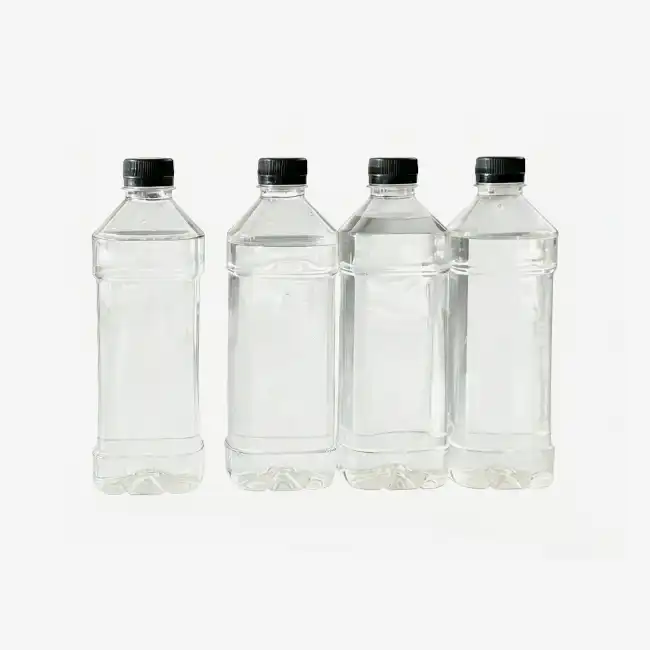
Zhaoyi Chemical's deicing liquid potassium acetate recipe meets the unique performance needs that set professional-grade de-icing solutions apart from regular ones. The molecular makeup (CH₃COOK, molecular weight 98.14), makes a clear, white liquid with a faint acetate smell, which means it is pure enough to meet high quality standards. Keeping the iron level below 0.002% stops coloring and the formation of particles that could clog spray systems. For uses that are sensitive to groundwater, arsenic levels below 0.0004% are safe for the environment. Limiting the sulfate level to 0.05% gets rid of competing anions that make deicing less effective.
The pH range of 7.5 to 9.2 is mildly alkaline, which stops rust, but not too acidic, which hurts painted surfaces and rubber parts in application equipment. The specific gravity of 1.25 to 1.30 makes sure that the solution gets under the ice layers and breaks up bound ice so that it can be easily removed by plows.
Putting things in 1000L IBC tanks or flexitanks makes it easier to handle and meets the needs of large applications at airports and cities. Keeping things in dry, well-ventilated places that don't need to be controlled for temperature lowers the cost of keeping things in stock compared to keeping things in cold or hot places.
Conclusion
Choosing Zhaoyi Chemical's deicing liquid potassium acetate for deicing operations was a smart purchase choice that balanced short-term performance needs with long-term protection of infrastructure and care for the environment. The technical specs of the formulation—50–60% concentration, -60°C efficiency, and low corrosivity that has been proven—meet the needs of airports, cities, and highway officials. Partnering with a company with 35 years of experience, a 150,000-ton annual capacity, and a wide range of quality standards is good for businesses. Moving from common chloride deicers to professional-grade acetate solutions requires an initial investment justification. However, the total cost analysis that includes extending the life of infrastructure, ensuring compliance with regulations, and protecting the environment provides a compelling return on investment that forward-thinking procurement professionals understand.
FAQ
What makes potassium acetate superior to traditional rock salt for deicing?
A solution of deicing liquid potassium acetate stops steel and concrete structures from rusting at temperatures as low as -60°C, which is much lower than the freezing point of rock salt, which is about -9°C. The biodegradable recipe gets rid of chloride contamination in groundwater and soil, which is important because environmental laws are making it harder to use regular salt near environments that are sensitive. 30 to 50 gallons per lane mile are used to avoid ice at the same rate as 200 to 300 pounds of rock salt. This saves money on transportation costs and wear on equipment. Airport managers really like potassium acetate because it works well with aircraft metal alloys. This means that landing gear and body parts don't get corroded like they do when chloride is exposed.
How should organizations store liquid potassium acetate to maintain product quality?
Potassium acetate solution should be kept in dry, well-ventilated stores in high-density polyethylene or stainless steel cases. The product can stay on the shelf forever as long as it is kept away from moisture and high temperatures. It doesn't need any special climate control. Keep packages closed so that water doesn't get inside and reduce the concentration of the active ingredients. Keeping storage away from things that don't go with it, like strong oxidizers, lowers the risk of pollution. When organizations get large orders in 1000L IBC tanks, they should check the containers for damage and make sure the seals are still good before moving the goods to application equipment. Following the right steps when moving keeps products from going missing and meets safety standards for people working with dangerous materials.
Inquiry: Partner with a Trusted Potassium Acetate Deicer Manufacturer
When municipal governments and infrastructure owners need solid anti-icing solutions, they can work directly with chemical makers who have a lot of experience. Zhaoyi Chemical is dedicated to quality, as shown by their ISO 9001, ISO 14001, and ISO 45001 certifications. This guarantees that their products always meet the most strict operating requirements. Our expert team gives application advice, tests samples, and makes suggestions for improving speed that are specific to the environment and infrastructure. Companies looking for suppliers of deicing liquid potassium acetate for the coming winter can email our team at sxzy@sxzhaoyi.com to talk about their volume needs, supply operations, and unique solutions. We support flexible trade terms and provide thorough paperwork that makes foreign purchasing legal. This sets up your organization for operational success during important winter weather events.
References
American Association of State Highway and Transportation Officials, "Guidelines for Selection of Snow and Ice Control Materials to Mitigate Environmental Impacts," Transportation Research Circular E-C063, 2004.
Federal Highway Administration, "Corrosion Costs and Preventive Strategies in the United States," Publication No. FHWA-RD-01-156, U.S. Department of Transportation, 2002.
Environmental Protection Agency, "Toxicological Review of Sodium Chloride and Potassium Acetate as Aircraft Deicing Chemicals," EPA/635/R-08/005, Office of Research and Development, 2008.
Transportation Research Board, "Snow and Ice Control: Guidelines for Materials and Methods," NCHRP Report 577, National Cooperative Highway Research Program, 2007.
International Civil Aviation Organization, "Airport Services Manual Part 2: Pavement Surface Conditions," Doc 9137-AN/898, Fourth Edition, 2002.
American Concrete Institute, "Guide to Deicer Scaling Resistance of Concrete," ACI 201.2R-16, Committee Report, 2016.

USER EVALUATE
Here is the customer's evaluation of us