

Composite Carbon Source
Composite Carbon Source
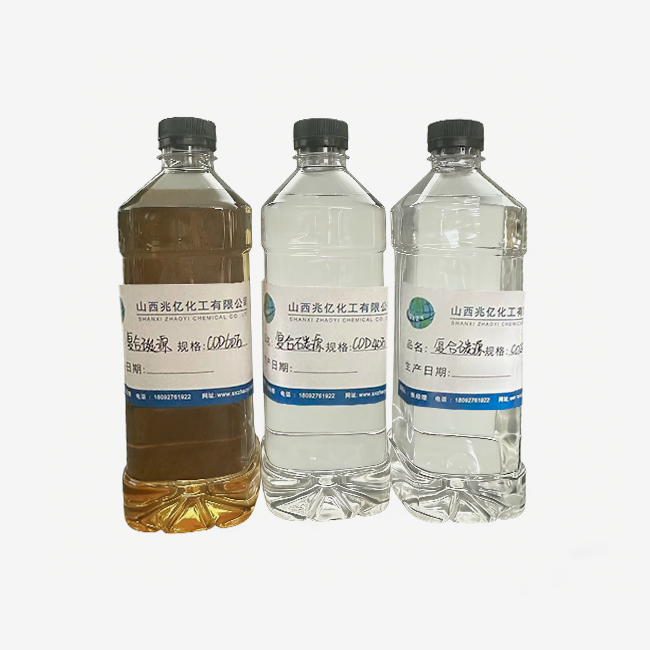
Composite carbon source — think of it as a carefully assembled blend of small-molecule organics that bacteria can digest without a warm-up period. Short-chain fatty acids, carbohydrate complexes, some alcohol derivatives. The idea is simple: instead of throwing a single carbon source at your denitrification system and hoping the microbial community adapts, you give them a staggered carbon release profile that feeds different populations at different rates. Some components hit fast, others break down more slowly. The bugs get what they need across the whole treatment cycle.
The results stack up fast. Denitrification speeds up. Sludge production drops. Total chemical cost runs 15–50% below what you'd spend on methanol or straight sodium acetate.
Specs: COD equivalent from 500,000 up to 1,000,000 mg/L — customizable to your water chemistry. BOD5/COD ratio at 0.6 or above, which means the biology can actually use it. Appearance is light yellow to clear, pH 5.0–7.0 straight, density 1.10–1.25 g/cm³ at 20°C. Freezing point: -10°C or lower. Non-toxic, non-flammable, ships as non-hazardous. Biodegrades to CO2 and water — no secondary pollution.
Municipal plants facing nitrogen compliance deadlines use this to bump denitrification efficiency 30–50% past what sodium acetate alone delivers. The multi-carbon approach cuts bacterial acclimation from a week or more down to 2–7 days. It keeps performing at temperatures below 15°C — where single-source carbons fall flat. Total chemical use drops 30–40%.
Industrial side: chemical plant effluent, pharma wastewater denitrification, printing and dyeing wastewater, and emergency bio-system startups when the biology needs to come back online fast.
How does it compare to straight sodium acetate? Faster denitrification, works colder, costs 15–50% less per kg of nitrogen removed, and produces less waste sludge — which means lower dewatering and disposal costs.
Can you customize the COD? Absolutely — 300,000 to 1,000,000 mg/L grades available, and we'll formulate to your process conditions.
Dosing guidance? Rough rule: 3–5 times your influent total nitrogen. But the right move is let us run a free lab test on your water and dial in the optimal rate.
Want a cost-effective composite carbon source that actually improves your denitrification numbers? Have our technical team do a free water quality assessment and custom formulation.