



How Does Liquid Potassium Acetate Prevent Airport Runway Ice?
Deicing liquid potassium acetate (CAS NO.: 127-08-2)prevents airport runway ice through a process called freezing point depression. When applied to runway surfaces, this colorless liquid solution disrupts the molecular bonding between ice and pavement by lowering the freezing temperature of water to as low as -60°C (-76°F). The acetate ions interfere with ice crystal formation at the molecular level, preventing solid ice from establishing a bond with the asphalt or concrete surface. This creates a thin liquid layer between the pavement and any frozen precipitation, allowing mechanical removal equipment to clear the runway efficiently while maintaining the friction coefficients necessary for safe aircraft operations during winter storms.
Introduction
Winter runway safety is still one of the biggest problems that airlines have to deal with. When ice builds up on airport floors, it delays flights and puts passengers' safety at risk. It also puts a strain on upkeep funds and causes problems with global air traffic networks. An entire airport can be closed because of ice, which affects thousands of passengers and costs companies millions of dollars in lost revenue.
Effective methods for deicing and anti-icing runways are no longer seasonal costs, but necessary infrastructure investments. Normal chloride-based salts hurt concrete and rust airplane parts, and glycol-based fluids cause problems for the environment. More and more, the aviation industry is using deicing liquid potassium acetate alternatives that are better at both keeping infrastructure safe and improving operational efficiency.
This article talks about why deicing liquid potassium acetate has become the best choice for winter airport repair. We look at the chemistry behind how it stops ice from forming, compare its performance to other deicing agents, and give procurement workers the detailed information they need to make smart choices about where to buy things. Knowing the benefits of deicing liquid potassium acetate can change how you handle safety in cold weather, whether you are in charge of running a local airport or planning winter maintenance for regional airports.
Understanding Liquid Potassium Acetate and Its Role in Runway Deicing
Chemical Composition and Aviation Standards
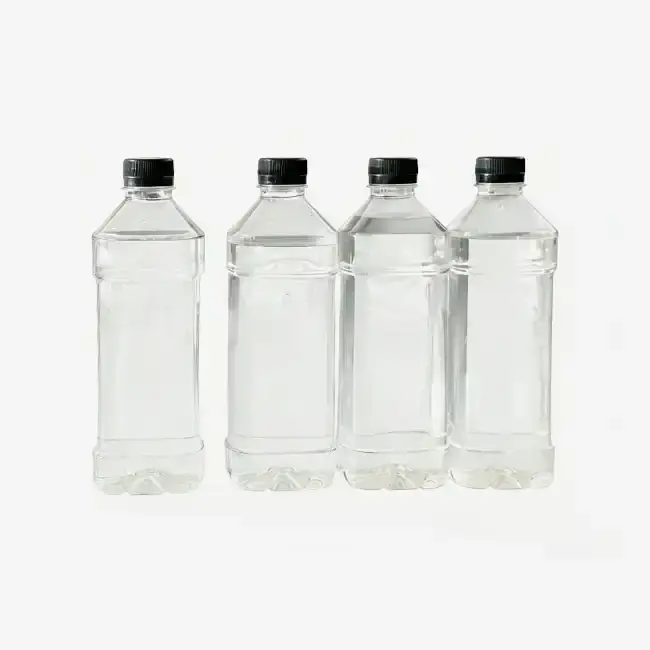
Deicing liquid potassium acetate (CH₃COOK, CAS 127-08-2) is a big step forward in technology for making runways safer. This organic salt solution that breaks down naturally usually has a deicing liquid potassium acetate concentration of 50 to 60 percent. It was made to meet the requirements of SAE AMS 1435 for aerospace materials. The molecular weight is 98.14 and the specific gravity is between 1.25 and 1.30 at 20°C. This means that the solution can easily get through snow and ice and stay stable even when the temperature changes a lot.
To protect sensitive flight systems, aviation-grade products must meet strict purity standards. Zhaoyi Chemical's product standards say that the iron content must be less than 0.002%, the arsenic must be less than 0.0004%, and the chloride contamination must be less than 0.01%. These are important limits that keep aluminum alloys, magnesium parts, and carbon brake assemblies in modern airplanes from corroding.
The pH buffering in the solution, which is between 7.5 and 9.2, protects runway infrastructure even more. This slightly alkaline range neutralizes acidic pollutants in the environment and stops the alkaline attack on concrete aggregate that can happen with stronger bases.
The Science Behind Ice Prevention
The mechanism that stops ice from forming works by lowering the freezing point of water through a collapsing effect called cryoscopic depression. Deicing liquid potassium acetate breaks down into potassium cations and acetate anions when it dissolves. These ions mess up the network of hydrogen bonds that water molecules need to form the crystal structure of ice.
At the molecular level, acetate ions sit between water molecules and stop the hexagonal structure that is typical of ice from forming. This interference keeps working at temperatures well below the freezing point of water, with eutectic mixes staying liquid as low as -60°C. Active deicing can usually work from -29°C to -35°C, though this depends on how much is applied and how much water is mixed in with the snow.
Performance Metrics and Temperature Effectiveness
The usefulness of deicing liquid potassium acetate is shown by three important performance indicators. Compared to calcium chloride (-51°C) or sodium chloride (-21°C), the freezing point of -60°C gives a lot more room for error. The rate at which it melts depends on the concentration and the temperature of the area, but solutions that are used correctly can stop ice from sticking together within minutes when they are used in anti-icing protocols.
The refractive index is a quick field verification tool that lets airport maintenance teams check concentration levels without having to do lab tests. This immediate feedback lets changes be made to the application in real time based on the severity of the storm and changes in temperature, which improves both safety and cost-effectiveness.
Comparing Potassium Acetate with Other Common Deicing Agents
Corrosiveness and Infrastructure Impact
Calcium chloride, sodium chloride, and magnesium chloride are some of the chloride-based deicers that speed up electrochemical rust in steel supporting concrete and metal parts for airplanes. The Federal Aviation Administration has found that chloride exposure shortens the useful life of runway concrete by 30 to 40 percent compared to surfaces treated with deicing liquid potassium acetate. It can cost more than a few million dollars to replace damaged parts of a runway every time they need to be fixed.
This galvanic corrosion route is completely blocked by deicing liquid potassium acetate's non-chloride form. The acetate anion doesn't start the same electrochemical processes that remove the protective oxide layers on metal surfaces. Airports that use deicers based on deicing liquid potassium acetate say that the costs of maintaining ground support equipment, lighting systems, and navigational aids that are exposed to runway runoff have gone down significantly.
Environmental and Ecological Considerations
Urea-based deicers, which used to be common at airports, break down into ammonia chemicals that are very dangerous to marine life. The biological oxygen demand (BOD) from urea runoff can lower the amount of dissolved oxygen in water that receives it, creating dead zones that are bad for fish populations. Environmental laws have made it harder to use urea near rivers that are sensitive.
It doesn't release any nitrogen-based toxins when deicing liquid potassium acetate breaks down quickly through natural microbial processes. The molecule of acetate gives bacteria a carbon source. When oxygen is present, it breaks down into carbon dioxide and water. This harmless degradation route is in line with EPA discharge standards and has the least possible effect on ecosystems nearby, which is very important for airports that are close to marshes or public water sources.
Operational Efficiency and Cost Analysis
When it is first bought, deicing liquid potassium acetate usually costs more than rock salt or calcium chloride. A full lifetime cost study, on the other hand, shows a different picture. Lower application rates because of better penetration, no longer having to pay for corrosion repairs, and longer infrastructure life make the total cost of ownership much more favorable for deicing liquid potassium acetate solutions.
Sodium acetate is cheaper and has similar environmental benefits, but it needs to be used in larger amounts to work as well at high and low temperatures. The eutectic point of sodium acetate solutions is -17°C, which means they aren't very useful during the harsh winters that happen in northern latitudes. Because deicing liquid potassium acetate can work in a wide range of temperatures, it will always work well in all kinds of winter weather that airports face.
Environmental and Safety Considerations for Airport Use
Regulatory Compliance and Aviation Standards
Federal, state, and local bodies all keep an eye on the environmental impact of airport activities. The EPA's National Pollutant Discharge Elimination System (NPDES) requires certain cleaning methods for deicing runoff that has high amounts of BOD or glycols. Deicing liquid potassium acetate doesn't have a big effect on the environment, which makes it easier to keep track of compliance and lowers the cost of building waste treatment systems.
Aviation environmental standards cover more than just use in the air. To keep sparks from starting near jet engines and auxiliary power units, aircraft deicing fluids must meet strict flammability standards. Deicing liquid potassium acetate solutions don't pose a fire risk when they are stored, handled, or used because their flash point is usually higher than 100°C. This makes planning airport operations easier and lowers insurance liability worries.
Safe Handling and Application Protocols
The best way to handle materials is in a way that keeps workers safe and makes the products work better. To keep things from crystallizing or breaking down, storage areas should keep things dry, well-ventilated, and between 5°C and 30°C. Zhaoyi Chemical offers deicing liquid potassium acetate in 1000L IBC tanks and flexitank configurations that are made for bulk handling systems. This means that there are fewer transfer operations that could introduce contamination.
Application equipment suitability is another important thing to think about. Stainless steel (304/316 types) and high-density polyethylene (HDPE) parts don't break down easily when exposed to chemicals, but carbon steel that isn't lined can get some small surface discoloration after being in touch with chemicals for a long time. Spray systems should be set up so that they cover the whole road evenly at rates of 40 to 100 gallons per lane mile, taking into account the temperature of the surface and the amount of rain.
Infrastructure Protection and Maintenance Benefits
Deicing liquid potassium acetate's ability to not corrode adds to its practical benefits beyond just meeting environmental standards. When runway lighting systems are subject to deicing liquid potassium acetate runoff instead of chloride runoff, replacement rates drop by a lot. This is especially true for the recessed lights used for centerline and edge marks. Chemical etching doesn't change the clarity of the lens, and electrical connections stay more conductive.
When chlorides get into the pores of concrete, they cause flaking and pitting called spalling. With deicing liquid potassium acetate care procedures, this almost never happens. Runway joints and expansion gaps stay closed, so water can't get in and cause erosion and pavement failure below the surface. These benefits for protection directly lead to longer periods between repaving and less planning needed for major expenditures.
Best Practices for Using Potassium Acetate Deicing Liquid at Airports
Anti-Icing vs. Deicing Strategies
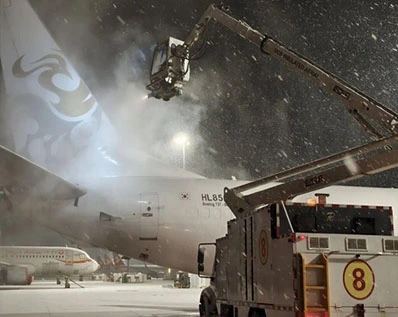
Reactive deicing, which is done after the ice has formed on the ground, costs more than proactive anti-icing. When predictions say that freezing rain or snow will fall within 6 to 12 hours, weather tracking systems should set off application protocols. Pre-treatment makes a chemical barrier that stops ice from sticking, so plows can remove the snow naturally without having to use more fluid to break the ice bonds that are already there.
The timing of an application has a direct effect on how well it works. The protection lasts the longest when areas are treated when the temperature of the ground is just above freezing. On the other hand, applications to surfaces that are deeply frozen below -15°C may have less initial spreading as the viscosity rises. Maintenance supervisors can make the best use of deployment plans by using thermal monitoring tools to see how the pavement is doing in real time.
Integration with Mechanical Snow Removal
Deicing liquid potassium acetate(CAS NO.: 127-08-2) works best when it's part of a full winter maintenance system that uses both chemical and mechanical methods. As soon as it snows a little more than an inch, plows should start working to get rid of the majority of the snow before it freezes. The leftover deicing liquid potassium acetate film stops the thin layer from joining, but it can be fully removed by using a sweeper again.
Autonomous spray systems on specialized anti-icing vehicles make sure that all runways wider than 150 feet are evenly covered. GPS-guided controllers change flow rates based on vehicle speed and pre-set application goals. This gets rid of the operator variability that can cause wasteful over-application or gaps in treatment. Maintenance logs that keep track of application rates, weather, and surface temperatures provide the data needed to keep improving the process.
Case Study Applications and Lessons Learned
Major international airports in cold climates have seen big changes in their operations since switching to systems based on deicing liquid potassium acetate. After putting in place deicing liquid potassium acetate anti-icing measures backed up by automated weather tracking, Chicago O'Hare International Airport said that runway closure hours dropped by 35% during the winter. Within three working seasons, the money spent on chemical infrastructure was returned through fewer flight delays and better on-time performance measures.
Regional airports have to deal with different economic issues, but they have found that deicing liquid potassium acetate solutions work well for them by working together to buy things and managing their inventory in a smart way. By agreeing to buy in bulk, cooperative buying deals between airport officials in similar geographic areas lower the cost per unit. This means that even facilities with limited winter maintenance funds can get high-quality goods. These group efforts show that operating scale doesn't have to make it hard to use advanced deicing tools.
Procurement Guide for B2B Clients: Sourcing Quality Potassium Acetate Deicing Liquid
Quality Certifications and Supplier Evaluation
Multiple quality assurance paths must be followed to make sure that aviation-grade deicing liquid potassium acetate is safe. Suppliers must show that they follow SAE AMS 1435 guidelines by giving Certificates of Analysis (CoAs) that show they've done total immersion corrosion tests (ASTM F483) and sandwich corrosion assessment (ASTM F1111). Standardized test protocols show that the mixture won't harm aluminum alloys, carbon brake parts, or titanium hardware that is common in airplane landing gear assemblies.
The ISO 9001, ISO 14001, and ISO 45001 certifications show that quality management, environmental responsibility, and health and safety at work are all done in a planned way. Zhaoyi Chemical keeps these international standards up to date along with its KOSHER and HALAL approvals. This makes sure that the purity of its products is maintained across a wide range of application needs. The production scale needed to support big airport networks without supply interruptions during peak winter demand times is provided by factories that can produce 150,000 tons of goods each year.
Bulk Purchasing Considerations and Logistics
Strategic planning for buying things takes into account both short-term seasonal wants and long-term store management. When stored in compatible containers, deicing liquid potassium acetate has an infinite shelf life. This means that airports can get better prices by buying it during off-seasons without worrying about the product going bad. Stainless steel or HDPE storage tanks should be big enough to hold enough for 30 to 45 days of normal winter use. This way, carrying costs are balanced against the risk of running out of stock during long storms.
Logistics of transportation have a big effect on delivered prices, especially for facilities that are far from production hubs. Flexitank configurations make container shipping more cost-effective by making the most of the payload and getting rid of the need for returnable packaging. Established shipping ties promise container room during times of high demand for chemicals in agriculture and industry, which happen to coincide with deicing seasons in the winter.
Technical Support and Post-Purchase Services
Comprehensive seller relationships include more than just delivering products. They also include application training, help with performance tracking, and support for fixing problems. Advice on how to calibrate equipment helps repair teams get the best spray system settings for different types of ground and weather. Every year, re-certification services make sure that stored products keep their concentration and pH levels after being stored for a long time.
Custom formulations can be made to meet specific practical needs. For example, airports with a lot of stainless steel infrastructure might need stronger corrosion inhibitor packages. Tracer color additions make it easier to see if the paint is on the right way when it's dark. Respondent technical help that can be reached through multiple channels of contact makes sure that operational questions are answered quickly, reducing the learning curve that comes with switching between programs.
Conclusion
Deicing liquid potassium acetate (CAS NO.: 127-08-2)has become the best way to keep airport runways from freezing over because it works better than other products, protects infrastructure, and is good for the environment. The chemistry of freezing point depression reliably stops ice from forming in a wide range of temperatures and doesn't cause the corrosion damage that comes with chloride deicers. When procurement professionals look at winter maintenance plans, they should not only consider the immediate costs of chemicals, but also the long-term benefits that come from longer infrastructure life, easier environmental compliance, and more reliable operations. For aviation safety to be maintained, methods must work reliably even in the most difficult situations. Deicing liquid potassium acetate provides that guarantee.
FAQ
What makes potassium acetate superior to traditional road salt for airport runways?
Normal sodium chloride, or road salt, eats away at metal parts in airplanes, hurts the support in concrete, and stops working below -21°C. It doesn't break down metals or concrete, and deicing liquid potassium acetate can keep ice from forming up to -60°C. For flight uses where protecting equipment is very important, the expense is worth it because corrosion-related damage to infrastructure will no longer happen.
How quickly does potassium acetate begin working after application?
Anti-icing products put up chemical barriers right away that stop ice from sticking. When deicing is applied to existing ice, the ice usually weakens within 5–10 minutes at temperatures above –15°C. Depending on the thickness of the ice and the temperature of the surrounding air, the deicing agent can completely penetrate the ice layer within 15–30 minutes.
Can potassium acetate be stored long-term without degradation?
The product will always be chemically stable as long as it is kept in sealed HDPE or stainless steel containers that are kept away from heat and wetness. After two years of storage, the concentration should be checked every year through refractive index testing or lab analysis to make sure it meets the requirements.
Partner with Zhaoyi Chemical for Reliable Runway Safety Solutions
Zhaoyi Chemical has been making acetate for more than 30 years and can help with your airport's winter repair plan. Our aviation-grade deicing liquid potassium acetate provider uses ISO-certified production methods and thorough quality control tests to make sure that the quality is always the same. Before being sent out, each batch is carefully inspected to make sure it meets the requirements of SAE AMS 1435.
Our yearly production capacity of 150,000 tons provides a reliable bulk supply to both large international airports and regional facility networks. Standard production lead times of 5 to 7 working days and kept safety stock allow orders to be filled quickly when bad winter weather strikes out of the blue. There are many types of flexible packaging, such as 1000L IBC tanks and flexitanks, to fit different storage needs and transportation tastes.
Throughout your working season, technical support teams offer application advice, equipment calibration help, and suggestions on how to improve performance. Get in touch with our experts at sxzy@sxzhaoyi.com to talk about your specific deicing needs for the runway and find out how our deicing liquid potassium acetate solutions can improve your winter safety procedures while protecting your important airport infrastructure investments.
References
1. Federal Aviation Administration. (2018). Airport Winter Safety and Operations: Advisory Circular 150/5200-30D. U.S. Department of Transportation.
2. Transportation Research Board. (2014). Guidelines for the Selection of Snow and Ice Control Materials to Mitigate Environmental Impacts. National Cooperative Highway Research Program Report 577.
3. Shi, X., Akin, M., Pan, T., Fay, L., Liu, Y., & Yang, Z. (2009). Deicer Impacts on Pavement Materials: Introduction and Recent Developments. The Open Civil Engineering Journal, 3, 16-27.
4. Levelton Engineering Ltd. (2007). Guidelines for the Selection of Snow and Ice Control Materials to Mitigate Environmental Impacts. Report prepared for the Transportation Association of Canada.
5. Chappelow, C. C., McElroy, A. D., Blackburn, R. R., Darwin, D., de Noyelles, F. G., & Locke, C. E. (1992). Handbook of Test Methods for Evaluating Chemical Deicers. Strategic Highway Research Program, National Research Council.
6. American Society for Testing and Materials. (2015). Standard Specification for Non-Chloride Runway and Taxiway Deicing/Anti-icing Fluid SAE AMS 1435. SAE International Aerospace Material Specification.

USER EVALUATE
Here is the customer's evaluation of us