



Is Potassium Acetate Safe for Industrial Applications?
When treated according to established rules, industrial solid potassium acetate (CH3COOK) is a chemical that is generally safe for use in a wide range of industrial settings. This white, solid substance is not very harmful when it comes to acute poisoning, breaks down easily in nature, and doesn't pose as many rust risks as chloride-based options. EPA and OSHA, among others, say it is not dangerous when transported and stored in normal ways. This means it can be used for everything from de-icing airport runways to drilling in oil fields. The substance is safe because it is made up of organic compounds and has a neutral to alkaline pH, which keeps people and things safe while it is being handled normally.
Understanding Industrial Solid Potassium Acetate
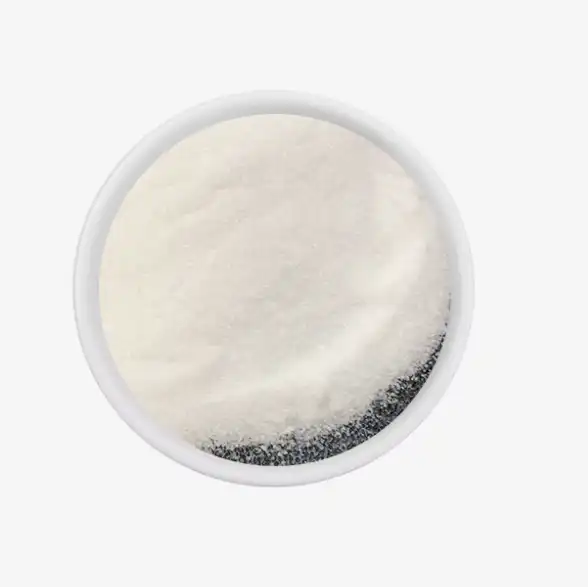
The molecular formula for potassium acetate is CH3COOK, which means it is the potassium salt of acetic acid and has a molecular weight of 98.14 g/mol. This solid substance comes in the form of white grains or powder and dissolves very easily in water, up to 253 grams per 100 millilitres at 20°C. This substance is very stable at high temperatures; it can withstand temperatures up to 292°C without breaking down.
Physical and Chemical Properties
Our industrial-grade product stays as pure as or higher than 99.0%, so it works the same way in all kinds of tough situations. Because the crystals are deliquescent, they naturally take in water from the air and turn it into concentrated solutions that are easier to prepare for use in liquids. Because it absorbs water, this hygroscopic property needs special packing but helps when quick breakdown is needed.
Standard 5% water liquids have a pH range of 7.5 to 9.0, which makes them slightly alkaline and stops metal from rusting. In our production standards, chloride residues must stay below 200 ppm, and iron levels must stay below 50 ppm. These strict purity levels keep catalysts from becoming poisoned during chemical synthesis and keep drilling equipment's sensitive metal parts safe.
Industrial Applications Overview
There are different ways that potassium acetate is used in different industries. In airport operations, the substance lowers freezing points to -60°C at eutectic amounts, which works better than salts and doesn't damage the infrastructure. When compared to urea-based goods, the acetate anion breaks down naturally through microbial processes, which lowers the biological oxygen demand in waste water.
The special way that potassium cations combine with clay rocks is used in oilfield digging. In shale drilling, potassium ions and sodium ions move back and forth in the crystal structures of the clay. This stops the clay from growing and becoming wet, which would otherwise make the shaft unstable. This shale stabilisation happens without making the drilling mud more rigid, so the rock stays permeable so that the most oil and gas can be recovered.
The chemical is used as a catalyst in the making of polyurethane, speeding up the reactions between isocyanate and hydroxyl. Textile makers use it as a neutralising agent, and drug companies value its ability to act as a cushion when they are making new medicines. Agricultural uses include spraying on leaves and adding to the soil to improve its pH while also providing potassium nutrition.
Emerging Safety Trends
Recent changes in the business put more emphasis on working efficiency as well as environmental compatibility. Because of rules about protecting waterways and making sure composite materials work together, airports are choosing acetate-based de-icers that meet SAE AMS 1435 standards more and more. Because of stricter rules on how to get rid of produced water and cuttings, drilling companies are switching from potassium chloride systems to acetate formulas.
The compound's GRAS (Generally Recognised As Safe) standing in food uses shows that solid potassium acetate is naturally not very poisonous. This chemical's legal status makes it easier for multiple industries to use it without having to follow the complicated warning rules that come with more dangerous industrial chemicals.
Safety Considerations and Storage Conditions
Understanding the material's level of danger and putting in place the right rules along the supply chain are the first steps in comprehensive safety management.
Safety Data Sheet Highlights
According to GHS guidelines, the Safety Data Sheet for industrial solid potassium acetate does not pose any risks for acute poisoning, carcinogenicity, or reproductive effects. In tests with rodents, the oral LD50 values are higher than 3,000 mg/kg body weight. This puts it in Category 5 (lowest worry level) for immediate oral poisoning. When particles come in touch with the skin or eyes, they may cause mild mechanical discomfort rather than chemical reaction. This can be fixed by cleaning normally.
Inhaling dust is the main way that workers are exposed to it when they do working tasks. The substance itself is not very harmful to the lungs, but high levels of dust can hurt nasal membranes and make you feel bad for a short time. Engineering controls, such as local exhaust airflow, keep the amounts of floating particles well below the standards for work exposure.
There is no proof that long exposure to this substance causes cancer, mutations, or birth defects. There are no warnings about reproductive danger for this substance, which makes it different from many industrial chemicals that need special handling instructions.
Best Storage Practices
To keep the purity of the product, the climate must be carefully monitored during storage and shipping. To keep things from absorbing water and caking, we suggest storing them in climate-controlled spaces where the relative humidity stays below 50%. The best shelf life is between 5°C and 30°C, but the material can handle wider temperature ranges without breaking down chemically.
For 25 kg pieces, our normal packaging uses multi-layer polyethylene-polypropylene weave bags. For big amounts, we use strengthened ton-bags. These moisture shields are made up of desiccant packets and heat-sealed caps that keep the contents safe during normal distribution times. For palletised storage, the highest stacked level should be limited to four layers. This will keep lower bags from caking due to compression.
Separation rules say that things must be kept physically separate from strong oxidising agents, volatile metals, and acids that don't mix. Even though potassium acetate doesn't react much on its own, oxidisers could make localised heat events happen when it absorbs water. Separate storage areas keep materials that need different environmental controls from getting contaminated with each other.
Environmental Considerations
In comparison to other options, the product is better for the environment. Biodegradation tests show that under aerobic conditions, the material mineralises completely in 28 days, meeting the OECD 301 standards for being easily compostable. Tests on marine toxicity show LC50 values above 1,000 mg/L for fish and crabs. This means that it is not harmful to aquatic species according to normal assessment systems.
Local rules for non-hazardous commercial chemicals tell us how to get rid of them. If allowed, small amounts may be pH-neutralized before being sent to city sewer systems. Larger amounts need to be taken to approved landfills that are able to handle organic salt. Agricultural situations make land application possible, turning trash into potassium fertiliser value.
Comparative Analysis to Aid Procurement Decisions
To choose the right chemicals like industrial solid potassium acetate strategically, you need to know how the different choices affect performance. Procurement managers weigh the usefulness of technology solutions against the costs and the amount of work that needs to be done to follow rules.
Potassium Acetate versus Sodium Acetate
These two acetate salts have a lot in common when it comes to how they work, but they are different in important ways that are special to certain uses. Sodium acetate is about 15 to 20 percent less expensive per tonne, which can help businesses that are trying to save money right away. But the potassium version works better in shale drilling because the potassium ion has a bigger atomic radius and interacts with dirt more strongly.
Corrosion tests show that the two substances are not very different from each other. Both have much lower metal attack rates than chloride salts. The environmental effects are still the same, but potassium acetate has the extra benefit of providing potassium nutrition in agriculture waste situations. This feature that can be used for two different things can make environmental permits easier for sites that have land application choices.
When making a concentrated fluid, changes in solubility become important. Potassium acetate can reach higher maximum amounts, which lets liquid de-icer stocks be stored in smaller spaces. This density benefit cuts down on the size of the tank farm needed and the cost of transporting liquid products.
Solid versus Liquid Forms
The choice of material form affects the facilities for dealing and the organization of operations. Shipping potassium acetate as a solid powder instead of watery solutions that are 40–60% water by weight lowers the cost of freight per unit of active ingredient. Buyers who can prepare solutions on-site save a lot of money by buying solid materials in bulk and putting them together in batches.
Liquid goods are useful for situations where you don't have the right mixing tools or need to use them right away. When you handle pre-dissolved solutions, you don't have to worry about dust, and they can be pumped directly into application systems. But the liquid form limits how long it can be stored because diluted solutions can allow microbes to grow, which means pesticide must be added or inventory must be turned over more often.
Different forms are very sensitive to temperature in very different ways. Solids don't change much in temperature, but liquids can freeze in storage that isn't warm, so in cold places, heating systems or glycol mixing are needed. These system needs add costs over time that cancel out the ease of beginning handling.
Comparison with Calcium Acetate
In some situations, like when adding calcium to dirt, calcium acetate is useful because it adds extra calcium to the mix. Compared to potassium and sodium versions, there aren't as many of these on the market because fewer suppliers keep up regular production. This lack of supply can make the supply line weak during times of high demand.
Calcium acetate usually has lower purity standards; industrial types have 95–97% active ingredient, while 99%+ active ingredient is found in potassium goods. The lower quality is due to more complicated production chemistry and crystallisation. The way prices are set varies by area, but in North American markets, calcium acetate usually trades at a small premium.
Navigating the Procurement Process for Industrial Potassium Acetate
For buying relationships to work, suppliers' skills need to be carefully evaluated and needs to be clearly communicated.
Supplier Evaluation Criteria
The first step in evaluating a supplier of solid potassium acetate is to check their manufacturing qualifications and quality system certifications. The ISO 9001 certification shows that quality management standards have been met, and the ISO 14001 certification shows that environmental management systems have been met. We have both of these certificates, along with ISO 45001 for managing health and safety at work, which gives us full system proof.
Assessing production potential keeps supplies from being interrupted when demand changes. Our 150,000-ton yearly capacity across all of our acetate product lines makes sure that we have enough on hand when seasonal demand for deicing goes up or drilling activity goes up. With manufacturing wait times of 5 to 7 days, orders can be filled quickly without buyers having to commit to too much inventory.
Superior sellers are different from basic vendors because they can provide technical help. Our team helps with preparation to make drilling mud work better, application advice for de-icing work, and suitability tests for specific chemical synthesis needs. This consultative method helps buyers get the most out of the things they buy.
Pricing Structures and Sampling
Clear price models help with budgeting and making deals for more than one year of supplies. With tiered systems that reflect package size and annual commitment levels, volume-based pricing takes into account savings of scale in transportation and production. Minimum order amounts usually start at a single box load for test purchases and go up to truck or container loads for long-term supply relationships.
Samples are available so that buyers can evaluate before making a purchase decision. We give away free samples that come with full analysis paperwork, such as a Certificate of Analysis that shows the purity, moisture content, and impurity profiles. Before making a final purchase choice, buyers gain trust by trying the software in their own application settings.
Logistics and Shipping Considerations
For chemicals to be sent across international borders, the means of shipping and customs paperwork must be carefully coordinated. Usually, it takes 3–4 weeks for ocean freight to get to U.S. ports, which includes production, packing, and transport to export points on land. Buyers who need faster delivery can choose air freight, but they will have to pay more for faster service.
We keep in touch with qualified customs dealers who know how to import chemicals, which makes sure that the process goes smoothly through the U.S. Protection of Customs and Borders. All packages come with the right MSDS paperwork in English, business bills with HS codes, and certificates of origin. This paperwork package makes it easier to process imports in a way that is legal and lowers the risk of delays.
For pallet and truckload amounts, common carrier trucking is used for domestic shipping from ports to buying sites. We work with well-known chemical shipping companies that have the right safety certifications. Potassium acetate is not considered dangerous, which makes it easier to choose a carrier and lowers the cost of goods.
Why Choose Our Industrial Solid Potassium Acetate?
Zhaoyi Chemical has been making industrial solid potassium acetate for more than 30 years and can meet the needs of demanding commercial users. Our plant in Shanxi Province has been running nonstop since 1988, with many technological updates to keep its quality and efficiency ahead of the competition.
High Purity and Consistent Quality
Our production methods meet or exceed the highest standards for quality, with more than 99.0% potassium acetate content. Advanced crystallisation methods get rid of impurities to amounts well below what the industry requires. For example, the chloride content stays below 200 ppm, and heavy metal residues are almost completely removed. This stability in purity keeps buyers from having to deal with the recipe mistakes and application fails that happen when they use lower-grade materials.
Before it is released, every output batch goes through a lot of tests in the lab. Our quality control lab uses titration to find out how pure something is, ion chromatography to find out what kinds of impurities are present, and physical tests to see how the particle sizes are spread out. Real-time monitoring during production lets process changes be made right away, stopping the production of materials that don't meet specifications.
Certifications from groups that are known all over the world back up our claims of quality. We have ISO 9001:2015 quality control certification, as well as KOSHER and HALAL certificates for uses related to food. These third-party checks give procurement managers the proof they need for compliance checks and the seller qualification process.
Customizable Solutions
Standard packing choices include 25 kg multi-layer weave bags that can be handled by hand and 1,000 kg super sacks that can be put down by a truck and dumped in large amounts. Custom packing configurations can be made to fit the needs of each customer, ranging from small lab bottles for research and development projects to medium-sized large cases for automatic pouring systems.
We change the output specs to fit the needs of each application. Buyers who need ultra-low chloride content for pharmaceutical synthesis get special processing, and buyers of drilling fluids get better particle size distributions that speed up dissolving. Because we are flexible, we go from being a seller of goods to an expert partner.
Reliable Supply Chain
Our large production capacity protects buyers from changes in the market and problems with supply. There are many places to get raw materials and many ways to transport them, so business can keep going even when there are problems in the area. Strategic inventory management keeps a safety stock for important customers so that orders can be filled quickly when demand suddenly rises.
After-sales help includes more than just completing the order. It also includes ongoing technology assistance. Customers come to our team to solve problems with applications, improve usage rates, and come up with new formulas. By focusing on relationships, this method creates ties that last through multiple buying rounds.
Conclusion
Industrial solid potassium acetate offers a great mix of safety, performance, and care for the environment in a wide range of uses. The compound's low toxicity, low rust, and quick biodegradability meet the needs of industries that want more environmentally friendly chemical options. Handling and storing things the right way keeps the workplace safe and protects the quality of the product during distribution and use.
When making decisions about what to buy, it helps to know the detailed differences between different types of acetate and different material forms. Instead of just looking at unit prices, supplier selection factors that stress quality systems, expert support, and transportation skills improve overall value. The material has been used successfully on challenging surfaces like Arctic airports and deep rock layers, showing that it can be relied on to work in harsh circumstances.
FAQ
Is protective equipment necessary when handling potassium acetate?
Despite potassium acetate's relatively low toxicity classification, personal protective equipment remains advisable during industrial handling. Safety glasses protect against mechanical eye irritation from dust particles, while dust masks prevent respiratory tract irritation in environments with elevated airborne concentrations. Gloves made from nitrile or vinyl prevent skin contact during bag handling and solution preparation. These basic precautions align with good industrial hygiene practices and satisfy workplace safety requirements.
Can potassium acetate be stored near other industrial chemicals?
Storage compatibility requires attention to chemical segregation principles outlined in the SDS. Potassium acetate should remain physically separated from strong oxidizing agents like peroxides or chlorates, which could react with organic acetate components. Reactive metals including alkali metals and alkaline earth metals warrant separate storage zones. Compatible chemicals include most organic compounds, weak acids, and other salt products. Proper segregation prevents contamination and eliminates reaction hazards.
How does potassium acetate compare to sodium acetate for de-icing performance?
Both acetates provide effective freeze-point depression and environmental advantages over chloride salts. Potassium acetate achieves slightly lower eutectic temperatures around -60°C versus -58°C for sodium acetate, offering marginal performance gains in extreme cold. The potassium variant presents advantages for vegetation adjacent to treated surfaces, as potassium serves as a plant nutrient while sodium can accumulate to toxic levels. Corrosion characteristics remain comparable between the two compounds. Material selection often depends on regional pricing, availability, and specific environmental permit conditions rather than dramatic performance differences.
Partner with Zhaoyi Chemical for Premium Potassium Acetate Solutions
Zhaoyi Chemical is ready to meet your needs for industrial solid potassium acetate with high quality, skilled scientific knowledge, and quick service. Our factory is ISO-certified and consistently makes high-purity materials that meet the strictest requirements for use in drilling, chemical synthesis, wastewater treatment, and de-icing. As a well-known provider of industrial solid potassium acetate with more than 30 years of experience, we can help you get the best deals by giving you cheap terms, a variety of packing choices, and full expert support. You can email our team at sxzy@sxzhaoyi.com to talk about your specific needs, ask for samples of our products along with full analysis reports, or make special supply deals that fit your business's needs.
References
National Association of Corrosion Engineers. (2021). "Corrosion Performance of Acetate-Based De-icing Chemicals on Transportation Infrastructure." NACE International Technical Report Series.
Society of Petroleum Engineers. (2020). "Shale Stabilization Mechanisms in Water-Based Drilling Fluids: The Role of Potassium Ions." SPE Drilling & Completion Journal, Volume 35, Issue 2.
Environmental Protection Agency. (2019). "Biodegradation Assessment of Runway De-icing Compounds Under Aerobic and Anaerobic Conditions." EPA Office of Research and Development Technical Document.
American Association of Airport Executives. (2022). "Best Practices for Aircraft and Airfield De-icing Operations: Environmental and Performance Considerations." AAAE Safety Standards Manual.
International Organization for Standardization. (2018). "Quality Management Systems for Chemical Manufacturing: Implementation Guidelines for ISO 9001:2015 in Acetate Production Facilities." ISO Technical Committee 176 Guidance Document.
Occupational Safety and Health Administration. (2020). "Hazard Communication and Safe Handling Procedures for Industrial Organic Salts." OSHA Compliance Directive CPL 02-02-079.

USER EVALUATE
Here is the customer's evaluation of us