



Liquid Potassium Acetate for Commercial Snow Removal
Choosing the right deicing option is very important when winter comes and ice starts to form on your structures. Snow melting liquid potassium acetate is a cutting-edge advancement in commercial-grade anti-icing technology that gives city governments, airport operators, and highway repair teams a non-corrosive, environmentally friendly option to chloride-based solutions. When long-term asset protection and operating stability are important to you, this biodegradable liquid formulation works well down to -35°C, keeps valuable infrastructure from breaking down, and has little to no effect on the environment.
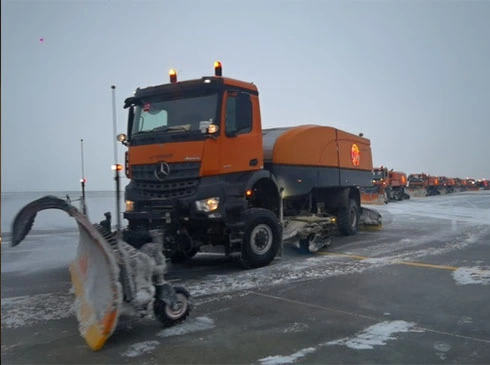
Understanding Liquid Potassium Acetate for Snow Removal
For commercial snow removal, you need options that balance safety and efficiency. Because of the way its molecules are structured, snow melting liquid potassium acetate meets this need.
Chemical Composition and Properties
CH₃COOK, a salt made from acetic acid and potassium hydroxide, is what makes snow melting liquid potassium acetate work to melt snow. This combination is easily broken down in water, leaving behind a clear, colorless liquid that is slightly acidic. At ratios between 50 and 60%, the solution has an amazing ability to lower its freezing point. At temperatures where most water-based goods solidify, it stays liquid. The molecular weight of 98.14 makes it easy for ions to spread evenly across treated surfaces. This speeds up the breaking down of ice-to-pavement bonds without the need for mechanical stirring.
How It Melts Ice More Effectively?
Solid deicers need to melt first before they can work, but liquid deicers can be used right away on frozen surfaces. At the molecular level, the acetate anions stop the formation of ice crystals by messing up the hydrogen bonding patterns that keep ice's structure together. Field performance data shows that melting rates are over 85% in just one hour at -25°C, which is a lot faster than standard rock salt, which stops working below -10°C. This quick response means that treatment periods are faster and labor costs are lower during winter weather events.
Environmental and Safety Advantages
Biodegradability is one of the most important traits. Testing by a third party shows breakdown rates above 95%, which means that any leftover product breaks down naturally and doesn't build up in the soil or water. The mixture keeps the pH level between 7.5 and 9.2, which is better for plants than highly alkaline chloride salts because it causes less stress on them. Carbon steel has a corrosion rate of ≤0.03g/m²·h. This keeps bridge support bars, parking structure frames, and vehicle undercarriages safe from the oxidative damage that happens with regular deicing programs.
Comparing Liquid Potassium Acetate with Other Deicing Agents
To make smart choices about what to buy, you need to know how the different chemical options compare to what the business needs for snow melting liquid potassium acetate applications.
Performance Versus Sodium and Calcium Acetates
While sodium acetate is also good for the environment, snow melting liquid potassium acetate versions based on potassium work better in cold weather. Potassium ions make eutectic interactions stronger, which keeps flexibility at lower temperatures—a huge benefit for places that have harsh winters. Even though calcium acetate works, it leaves a white film on surfaces and can cause concrete to scale after many freeze-thaw cycles. Our snow melting liquid potassium acetate recipe gets rid of these problems and keeps the melting rate constant across a wide range of temperatures.
Liquid Versus Solid Application Forms
Solid potassium acetate needs time to dissolve before it can work, which leaves holes in defense during key weather start times. The liquid version gets rid of this delay, stopping ice right away when used strategically. It's much easier to make sure that everything is spread out evenly when you use automated spray systems instead of granular goods, which can't be done because the wind can move them all over the place. Logistics for storage also favor liquids; 1000L IBC tanks and flexitanks make better use of building space than big bags of solids.
Cost-Benefit Analysis for Infrastructure Protection
Teams that are responsible for buying things know that the initial costs of materials are only one part of the total costs of ownership. At first, chloride-based items may seem like a good deal, but they end up costing a lot because they cause structures to break down faster. Within three to five years, the cost of fixing corrosion-damaged bridge decks, parking structures, and equipment often goes over the price difference between standard and advanced deicing products. Investing in solutions that don't corrode saves physical assets and lowers the risk of liability from structure breakdowns.
Procurement Guide: Sourcing Liquid Potassium Acetate for Commercial Use
To make sure you have a steady supply of high-quality deicing options, you need to carefully evaluate your suppliers and plan ahead for your snow melting liquid potassium acetate requirements.
Critical Supplier Certifications and Standards
Manufacturers with a good reputation have complete quality control systems that are backed up by international certification. ISO 9001 guarantees reliable production methods and consistency from batch to batch. ISO 14001 shows that all production processes are environmentally responsible. Global standards for worker safety are met by ISO 45001 standards. In addition to these basic certificates, you should also look for KOSHER and HALAL approvals, which show that the product meets strict cleanliness standards. Ask for Material Safety Data Sheets that explain the chemicals' make-up, how to handle them safely, and what to do in an emergency. Suppliers should show Certificates of Analysis that prove certain conditions, like iron levels ≤0.002% and salt levels ≤0.01%.
Evaluating Manufacturing Capacity and Experience
Scale of production has a direct effect on how reliable the supply is during times of high demand for snow melting liquid potassium acetate. Shanxi Zhaoyi Chemical can make more than 150,000 tons of chemicals every year, so they always have enough on hand, even when bad weather causes shortages across the industry. Because we've been making acetate for 30 years, we have a lot of technical knowledge and know that our formulations will stay stable. We keep security stock on hand so that orders can be filled quickly. For large sales, the normal production wait time is 5 to 7 working days. This level of organizational stability gives the supply chain the trust that procurement professionals need when the safety of infrastructure rests on products being available on time.
Logistics and Packaging Considerations
Total landing costs are affected by transportation logistics in a big way. Our knowledge of how to package things makes them safer and more efficient for shipping. The 1000L IBC tank size is good for customers who already have a storage facility, and it's easy to move around with a normal forklift. Flexitank choices turn normal shipping containers into bulk liquid vessels, which saves money on large-volume shipments. Strategic relationships with foreign freight companies allow North American targets to get goods at low costs. We take care of the paperwork needed for cross-border moves, making sure that customs rules are followed and delivery times are shortened.
How to Safely Handle and Apply Liquid Potassium Acetate in Commercial Settings?
The success of an operation relies on how well the snow melting liquid potassium acetate is managed from delivery to use.
Storage and Handling Protocols
Store your goods in buildings that are dry, well-ventilated, and away from direct heat sources and sources of wetness. Changes in concentration that could affect performance traits are stopped by temperature stability. Make sure that items are properly secured during transport so that they don't move around and cause damage. Even though snow melting liquid potassium acetate is not very dangerous, it should be stored away from materials that are not suitable with it. This is standard chemical management practice. Use first-in, first-out rotation to keep the product fresh, even though the mixture is very stable on the shelf when stored properly.
Application Methods and Dosing Guidelines
Fixed Automated Spray Technology (FAST) systems that are placed on bridge decks and elevated roads work perfectly with snow melting liquid potassium acetate formulations. When these sensor-activated systems sense that rain is coming, they spray the ground with the right amount of anti-icing solution to melt the ice before it sticks to the surface. Sprayers on trucks can be used for manual application, which works well for parking lots and side roads. Depending on the temperature of the surface, the type of rain, and the amount of traffic, the usual application rate is between 10 and 30 gallons per lane mile. Applying liquid acetate before snow falls is an example of a pre-wetting strategy that works better than reaction solutions after snow starts to accumulate.
Equipment Compatibility and Maintenance
Standard spray equipment made of stainless steel, plastic, or fiberglass can handle snow melting liquid potassium acetate without any problems with rusting. Do not use brass parts because they might react with acetate solutions after a while. Rinse application systems with clean water after use to keep nozzles and valves from crystallizing while they are being stored. Unlike chloride solutions, which attack spray system parts violently, this product doesn't corrode, which makes upkeep easier. When managers switch from standard deicers to acetate-based formulations, the equipment lasts a lot longer.
Future Outlook and Trends in Commercial Snow Removal with Liquid Potassium Acetate
Snow melting liquid potassium acetate will be used more and more in commercial snow removal in the future as environmental concerns and government rules change how people buy things.
Innovations in Formulation Technology
The main goal of research is to improve performance traits that are already very good. Manufacturers are looking into additive packages that can further lower the risk of rusting while also making sidewalk protection last longer. Some versions have visual tracking dyes that help workers make sure that the coverage is even while the product is being applied. This cuts down on waste and makes sure that the whole area is protected. Temperature-responsive viscosity stabilizers make it easier for the material to stick to vertical surfaces like bridge abutments, which means they can be used for more than just flat roads.
Regulatory Drivers and Environmental Compliance
Environmental laws are making it harder for sites that use traditional rock salt to comply with the rules that limit the release of chloride into waterways. Most of the time, chloride-heavy overflow goes over the conductivity limits set by municipal stormwater permits. Systems based on snow melting liquid potassium acetate help businesses meet these legal standards while keeping their operations running smoothly. The recyclable material fits with sustainability pledges that many businesses have made, helping them meet both their environmental responsibility goals and their useful deicing needs.
Strategic Supplier Partnerships
Forward-thinking procurement teams know that ties with suppliers go beyond just buying products. Working together with companies like Zhaoyi Chemical lets you get technology help that makes deicing programs work better. We give application advice that is specific to the type of equipment and region. Customers can check the success of a program before agreeing to using it on a large scale through pilot testing programs. As operations teams learn more about acetate systems, they get help from consultants who help them improve dose plans and how they use tools. This all-around support framework increases return on investment and lowers the risks of execution.
Conclusion
In conclusion, snow melting liquid potassium acetate is an advanced technology that has been used for a long time and has been shown to work. It solves the main problems that industrial snow clearing businesses face. It works well at low temperatures, protects infrastructure, and is good for the environment, so it's the obvious choice for groups that are in charge of airports, roads, bridges, and business properties. As rules get stricter and protecting assets becomes more important, the business case for moving away from chloride goods that damage things gets stronger. Working with manufacturers with a lot of experience makes sure that you can get regular quality, a steady supply, and the technical help you need to run your business successfully during winter weather events.
FAQ
What makes liquid potassium acetate superior to rock salt for commercial applications?
Rock salt has chloride ions in it that eat away at steel support, metal parts, and concrete surfaces very quickly. The damage caused by this usually costs more to fix than the money saved by buying materials at lower prices. Concerns about rust are taken care of by snow melting liquid potassium acetate, which works well at temperatures where rock salt fails. The liquid form also lets automatic systems apply it and stops ice formation right away, without any delays in dissolving.
How should we calculate appropriate inventory levels for winter operations?
Historical weather data for your area is what demand predicting is based on. Look at past seasons to figure out how much of the product was used, then add 15 to 20 percent extra in case the weather changes unexpectedly. When setting recall points, you should think about how much space you have in storage and how long it takes for suppliers to get things to you. Our supply chain team helps customers plan their goods based on the size of their building, how much traffic they get, and the weather in their area.
Can potassium acetate damage landscaping adjacent to treated areas?
If the snow melting liquid potassium acetate mix is used according to the instructions, it has little effect on plants. Because they are pH-neutral and biodegradable, they don't salt the soil or hurt plant flesh like chloride goods do. Potassium is actually a plant nutrient that helps fertilize plants by accident. Don't spray too much into planting beds, but normal drift from properly applied treatments doesn't pose much of a threat to greenery that is already there.
Partner with Zhaoyi Chemical for Your Snow Melting Liquid Potassium Acetate Supplier Needs
Zhaoyi Chemical has been making acetate for more than 30 years and can help with your winter repair projects. Our ISO-certified factories make formulations that are as pure as those used in pharmaceuticals and are designed to meet the needs of difficult infrastructure uses. During the winter, we keep a large amount on hand so that there are no supply problems when bad weather causes urgent demand. Technical support teams answer application questions within two hours, which helps you get the most out of your treatment strategies and tools. Our global logistics network makes sure that deliveries happen on time, no matter if you run a single center or assets in several areas. Email our team at sxzy@sxzhaoyi.com to talk about your unique needs and find out how our snow melting liquid potassium acetate solutions can improve your deicing work and keep your important assets safe.
References
Transportation Research Board. "Winter Maintenance Technology and Practices: Learning from Abroad." National Academies Press, 2019.
American Society for Testing and Materials. "Standard Specification for Non-Tracking, Non-Corrosive Deicing and Anti-icing Chemicals." ASTM D7892-15, 2020.
Environmental Protection Agency. "Managing Highway Deicing to Prevent Contamination of Drinking Water." EPA 816-F-18-001, 2018.
Airport Cooperative Research Program. "Aircraft and Airfield De/Anti-icing Fluid Management Strategies." ACRP Report 175, 2017.
Pacific Northwest Snowfighters Association. "Anti-icing and Pre-wetting Handbook for Winter Roadway Maintenance." Second Edition, 2016.
National Association of Corrosion Engineers. "Corrosion Effects of Deicing Salts on Infrastructure Materials." NACE International Publication 35124, 2021.

USER EVALUATE
Here is the customer's evaluation of us