



Potassium Acetate in Agriculture: Performance, Stability, and the Real Cost of Supply
When looking for good potassium nutrition for speciality crops or precision agriculture systems, fertiliser solid potassium acetate stands out as an excellent choice because it doesn't contain chloride and is very easy to dissolve. This organic potassium product (CH3COOK) gives off about 46-48% K2O equivalent and is very bioavailable. This makes it very useful for fertigation systems, spray feeding programs, and crops that are sensitive to chloride, like citrus, grapes, and tobacco. Knowing how it works, how stable it needs to be, and how much it really costs to supply helps buying pros make choices that balance long-term value with agronomic effectiveness.
Understanding Solid Potassium Acetate Fertilizer and Its Agricultural Role
Chemical Composition and Nutritional Profile
The formula for potassium acetate is CH3COOK, and its molecular weight is 98.14. This white solid substance is the potassium salt of acetic acid. It is different from potassium chloride (KCl) or potassium sulphate (K2SO4), which are artificial potassium sources. The compound gives plants potassium in its most plant-available ionic form, and the acetate anion does two things: it acts as an easily metabolised organic carbon source and helps keep the pH level of the soil stable. This material is usually more than 99% pure in agricultural grades, so it gives plants concentrated nutrition without the chloride load that hurts sensitive crops or the sulphate buildup that can change the soil's chemistry over time.
Mode of Action in Crop Nutrition
Potassium is essential to plant health because it controls the opening of stomata, turns on enzymes, makes proteins, and moves sugars around. This acetate form is different because it can be taken in quickly. Because they are biological and have a low molecular weight, they can quickly pass through the leaf layers when applied to the leaves. This gets around problems in the root zone during times of stress. In soil, microbes break down the acetate part, which releases energy that helps good bacteria and fungus grow in the rhizosphere. This cellular stimulation makes the general process of food cycle work better. The substance dissolves very easily in water (253g/100ml at 20°C), which means roots can take it up quickly. This makes sure that potassium gets to tissues faster than with less soluble options.
Soil Interaction and Microbial Health
The acetate anion breaks down naturally in the soil by microbes, while chloride-based fertilisers can build up and cause osmotic stress. Agricultural soil science journals have research that shows that heterotrophic bacteria breaking down acetate briefly raises soil respiration rates, which means that there are more microbes active. This organic activity makes the soil structure and food supply better in a roundabout way. The substance stays close to neutral in solution (7.5–8.5 at a concentration of 5 percent), so it doesn't have the acidity problems that come with some nitrogen sources or the alkaline changes that come with some calcium products. This ability to buffer helps keep the rhizosphere steady, which is especially helpful in heavy greenhouse production where pH control for nutrient solutions is very important.
Environmental Sustainability Advantages
More and more, modern farming needs tools that leave less of an impact on the environment while still keeping output high. The soluble acetate part of potassium acetate is different from chloride ions, which can stay in the groundwater or build up in grounds that are affected by salt. The low salt index of the substance (about 20–30 compared to 116 for KCl) makes roots and other soil organisms less sensitive to osmotic stress. When used with fertigation devices, it provides nutrition effectively with little risk of waste. Heavy metals and lingering organic pollution are not present, which is in line with standards for organic and healthy farming. Because of these environmental qualities, it is perfect for businesses that need to be close to sensitive waterways or that want third-party proof of their sustainability.
Performance and Stability of Solid Potassium Acetate Fertilizer
Manufacturing Quality and Chemical Stability
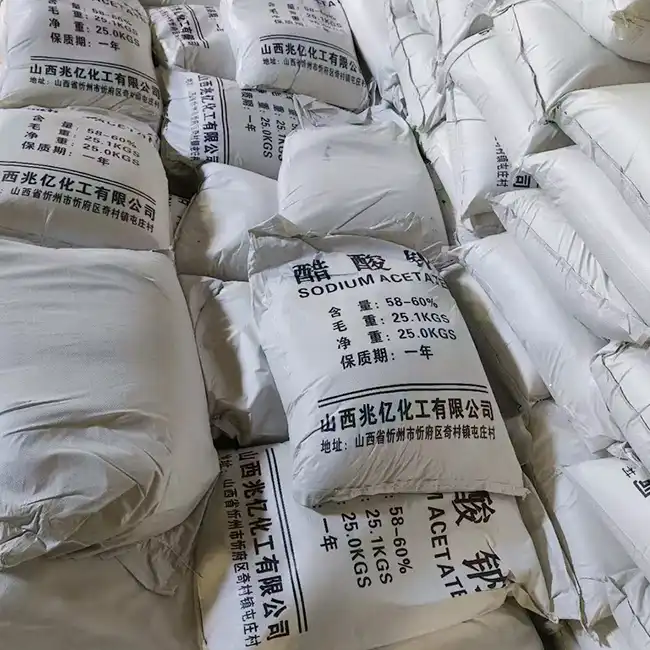
Any fertilizer's success with solid potassium acetate starts when it is used for production. For making high-quality potassium acetate, the reaction between acetic acid and either potassium hydroxide or potassium carbonate needs to be carefully managed, and then the crystals need to form under controlled conditions. Shanxi Zhaoyi Chemical's production process is ISO 9001-certified and makes sure that the quality is always above 99%. Each batch is tested carefully before it is released. Chemical stability stays high as long as the material is stored properly; it doesn't break down or lose its effectiveness over time in a building. The main issue with stability is hygroscopicity: potassium acetate easily takes water from the air, which can make it hard to handle and clump. This is taken care of by good makers who package their goods in moisture-barrier bags (25 kg woven polyethylene or 1000 kg bulk bags with inner covers) and suggest keeping them in dry, well-ventilated places away from sources of humidity.
Comparative Efficiency Metrics
Field tests with different types of crops show clear performance benefits. In a study done on greenhouse tomatoes in 2021, applying a potassium acetate solution to the leaves led to measurable increases in potassium levels in the leaf tissue within 48 hours. This was in contrast to applying potassium sulphate to the soil, which took 5–7 days. This ability to make changes quickly is very important during the fruit growth stages, when the need for potassium is highest. Fertigation tests on California table grapes showed that the same yields could be achieved with 15-20% less total potassium when it came from acetate instead of chloride. This is because acetate is more efficiently absorbed by the plants. Different performance is especially clear when the soil is cold. When the soil temperature drops below 50°F (10°C), roots can't absorb potassium sources from other sources as quickly. However, acetate is still more available because it dissolves better and is organic. These improvements in speed mean that nutrients are applied less often and cost less overall, even though they cost more per unit.
Environmental Impact Assessment
Life cycle studies show that potassium acetate is good for the earth. The process of making it releases fewer greenhouse gases than digging and processing potassium chloride from sylvinite sources. The economy of transportation goes up because there are more nutrients per unit of weight. Because it is biodegradable, once it is sprayed, it doesn't leave behind any leftovers that will stay in the soil. Because it doesn't contain chloride, you don't have to worry about it getting into groundwater or making dirt saltier in dry areas. Because the substance works with both integrated pest control systems and protecting useful insects, it can be used in businesses that care about the environment. As regulations get stricter and customer tastes change toward food that is grown in a way that doesn't harm the environment, these environmental benefits become more important in purchasing decisions.
Safety Guidelines for Handling and Application
Potassium acetate is not very poisonous; it is not classified as a dangerous element in the U.S. that only standard personal safety equipment (gloves and dust masks when handling powder) be used during handling. Unlike some acidic fertilisers, the material doesn't eat away at stainless steel or normal spray tools for farming. To keep leaves from getting burnt by foliar sprays that are too concentrated, application safety is all about using the right dilution rates. For most crops, 2 to 5 pounds of concentrate per 100 gallons of water is enough. Most nitrogen sources, vitamins, and herbicides can still be mixed well, but it is still best to test in a jar before mixing big amounts in a tank. Strong oxidisers and acids must be kept away from the material while it is being stored, but the material itself does not pose a fire or blast risk. These simple safety profiles make it easier for farm companies to avoid training requirements and legal issues.
Practical Usage Guide: Application and Dosage for Optimal Results
Crop-Specific Application Recommendations
There are different ways to use solid potassium acetate potassium and different crops that need it. Potassium acetate's expensive properties usually work best for high-value speciality crops. Take a look at these customised approaches:
- Tobacco production needs to avoid salt at all costs to avoid burn quality problems. During rapid growth stages, apply 10-15 lbs per acre through drip irrigation, and add extra foliar sprays (3 lbs/100 gallons) before topping.
- Before veraison, applying aerial applications that improve sugar transport and cold hardiness to wine grapes works very well. Two treatments of 4-5 lbs/acre during the lag phase and early veraison maximise berry potassium levels without making the vines too vigorous.
- Continuous fertigation at 50–75 ppm potassium from acetate sources is good for greenhouse veggies that are being grown in large quantities. The amount is changed every week based on tissue testing to keep the ideal 3.5–4.5% potassium levels in the leaves.
- When citrus farms are under a lot of root disease pressure or cold stress, they use foliar sprays (5 pounds per 100 gallons) to get around the weak root systems and quickly fix problems that show up as marginal chlorosis or smaller fruits.
These uses take advantage of the material's ability to be quickly absorbed and not contain salt to solve certain production problems that regular potassium sources can't handle well.
Integration with Fertigation and Foliar Systems
Fertilisation, which injects liquid nutrients through watering systems for efficient, focused delivery, is a big part of modern precision agriculture. Potassium acetate is over 20 times more soluble than potassium sulphate. This makes it perfect for making concentrated stock solutions that won't solidify in cold weather or clog emitters. The amount of potassium in fertigation is usually between 50 and 200 ppm, but this depends on the crop stage and the results of a soil test. Root burn is less likely when the salt index is low, even when seedlings are still young and easily hurt. The material dissolves quickly, so it is evenly spread throughout the watering zone. Injection can happen continuously or in spurts. When acidic nitrogen sources are added to stock tanks, the pH needs to be watched to make sure it stays stable. However, the stabilising property of acetate helps stop pH swings that can be problematic. Regularly cleaning the system with clear water keeps salt from building up at the emitter points, which keeps the equipment working for a long time.
Soil Testing and Monitoring Strategies
Correct diagnoses of the soil and tissue are needed for fertilizer solid potassium acetate plans to work. Set a baseline for the potassium amounts in the soil by checking it before the growing season. Keep in mind that normal soil tests measure exchangeable potassium, which may not show how readily available potassium is to plants right now. During active growth, tissue testing gives more useful information—sample newly developed leaves once a month and aim for potassium concentration ranges that are specific to the crop. Instead of following a plan, potassium acetate apps should react to real problems. Making changes during the growing season based on tissue data improves both crop output and input prices. If you use fertigation, keep an eye on the soil's electrical conductivity (EC) to see if any salt builds up. However, because potassium acetate has a low salt index, this shouldn't happen very often. Keep thorough records of all the applications you make, including rates, time, and crop reaction, so that you can learn more about the site and make future programs more effective. This method, which is based on data, gets the best return on fertiliser investments while also avoiding waste from using too much.
Procurement Insights: Navigating Supply, Pricing, and Quality Assurance
Evaluating Manufacturer Credentials and Certifications
To choose trusted providers, you need to do a lot of research on their quality systems and producing skills. Look for companies that have ISO 9001 certification for quality management and ISO 14001 certification for environmental management. These systems make sure that production standards are met and that products can be tracked. Even if it's just used as fertiliser, agricultural-grade potassium acetate should meet food safety standards like KOSHER and HALAL approvals. These make sure that the production is clean and that the ingredients are pure. Ask for certificates of analysis (COA) for the most recent production lots to make sure they are at least 98% pure and don't contain any heavy metals. When it comes to supply stability, manufacturing capacity is important. Producers whose annual output is more than 100,000 tonnes usually have more stock on hand and can handle large orders without having to wait for long lead times. Premium providers are different from basic suppliers because they offer technical help. For example, having access to agronomists who know about application methods adds value to the material itself.
Understanding Pricing Structures and Cost Drivers
Potassium acetate is more expensive than potassium chloride or sulphate because it costs more to make and has a specific place in the market. The most expensive part is the acetic acid and potassium hydroxide that are used as raw materials. Prices change based on world chemistry markets. Making potassium salts more complicated costs more than making them easier. Transportation costs go up with distance and order size. Combining bigger packages can cut per-unit freight costs by a lot. The type of packaging you choose affects the total cost. For example, when handling facilities allow it, large 1000 kg bags are a better deal than 25 kg pieces. Prices change with the seasons. For example, during the spring application season, supplies are usually tighter and prices are higher. Long-term supply deals that include promises to quantities can often get better prices and make sure that supplies are distributed during times of high demand. When figuring out costs, you should use the price-per-pound of supplied K2O instead of the price-per-pound of product, since changes in concentration between sources make it hard to compare easy prices.
Logistics and Inventory Management Considerations
Effective buying is more than just discussing prices; it also means lowering the costs of the whole supply chain. Because potassium acetate absorbs water, it needs to be stored in a climate-controlled environment so that it doesn't clump and keeps its free-flowing properties. Find the best amount to order by weighing the benefits of big prices against the costs of storage and the capital that is locked up in inventory. Asian makers usually have lead times of 30 to 45 days, which includes production and ship freight. This means that you need to plan ahead to make sure that your application dates are met. Domestic sellers, such as Zhaoyi Chemical's U.S. delivery partners, can usually deliver within 5 to 10 days, which is helpful for when you need something quickly but the unit cost might be higher. For big seasonal needs, think about splitting supplies. Spreading out smaller packages over several weeks will cut down on on-site storage needs while still making sure the product is fresh. Set up backup sources to keep the supply chain running smoothly, but it takes time and tests to make sure the options are good enough. Building smart relationships with makers who offer technical support, flexible payment terms, and priority placement during tight markets gives you benefits over your competitors that go beyond price.
Conclusion
Fertilizer solid potassium acetate fills a unique role in farming nutrition by providing chloride-free potassium that is very easily dissolved and absorbed by plants. It does this by solving certain production problems that regular potassium sources can't. Its better performance in foliar feeding, fertigation systems, and speciality crops makes it worth the higher price when used correctly and according to known needs. Managing wetness is more important for stability than chemical breakdown, and proper keeping will keep the quality of a product forever. True supply costs include more than just the price of the materials. They also include transportation, quality control, and expert support. These are all things that favour well-known makers with a track record of success. As the market moves toward precision agriculture and environmental sustainability, demand will continue to rise. This will make smart ties with suppliers and staff knowledge more valuable. When procurement professionals understand these performance, security, and cost factors, they can use this specialised information successfully in larger fertility projects.
FAQ
What kinds of plants do potassium acetate fertiliser help the most?
The best benefits go to speciality crops that are sensitive to chloride. For example, tobacco, wine grapes, fruits, tree nuts, and some veggies all get better quality. It dissolves very easily, which is great for greenhouses that use fertigation systems. Foliar applications work well for crops that are growing in cold soil or need potassium repair quickly. Because of the high cost, it is usually only used on high-value crops where quality prices or yield benefits make the investment worth it.
When it comes to fertigation, how does potassium acetate compare to potassium nitrate?
Both materials dissolve easily in water and can be used in pumping devices. Potassium nitrate (13-0-44) adds nitrogen, which is helpful when the plant needs both nutrients. Potassium acetate (0-0-46) has a slightly higher potassium content than nitrogen, which is better when nitrogen amounts are enough or when controlling plant growth. The organic nature of acetate helps earth life more than the artificial nature of nitrate. Because they are more expensive, nitrate is usually better for everyday uses, while acetate is only used when chloride-free potassium that is easy to get is needed.
How should potassium acetate be stored to keep its quality?
Keep in dry, well-ventilated storage in sealed, moisture-barrier packing. Changes in the ambient temperature aren't a big deal, but high humidity makes things clump together because it absorbs water. To get more air flow, don't store things directly on concrete floors. Instead, use boxes. As usual, keep away from strong acids and oxidisers when storing chemicals. If you store things the right way, they will keep their quality for years without going bad, but it's still a good idea to rotate your inventory every year based on usage.
Partner with Zhaoyi Chemical for Reliable Potassium Acetate Supply
Since 1988, Shanxi Zhaoyi Chemical has been making high-purity acetate products. Their ISO 9001-certified factories can make 150,000 tonnes of these products every year for farming, industrial, and speciality markets. Our fertiliser solid potassium acetate is at least 99% pure, completely soluble, and performs the same way batch after batch. It comes with full certificates of analysis and foreign approvals like KOSHER and HALAL. We know that people who work in buying need more than just reasonable prices. They also need stable supply lines, quick technical help, and factory partners who know how to use their products in farming settings. Our team helps you with application, offers unique packing options, and makes shipping plans that work with your yearly needs. Zhaoyi Chemical has the quality consistency and supply stability your business needs, whether you're a fertiliser maker looking to buy potassium acetate in bulk, a dealer building up regional stock or a farming service provider looking for inputs for client programs. Email our farming solutions team at sxzy@sxzhaoyi.com to talk about your unique needs and find out how our 30 years of experience making acetate can help your business.
References
Mengel, K., Kirkby, E.A., Kosegarten, H., Appel, T. (2001). Principles of Plant Nutrition, 5th Edition. Kluwer Academic Publishers, Dordrecht, Netherlands.
Havlin, J.L., Tisdale, S.L., Nelson, W.L., Beaton, J.D. (2014). Soil Fertility and Fertilizers: An Introduction to Nutrient Management, 8th Edition. Pearson Education, Upper Saddle River, New Jersey.
Marschner, P. (2012). Marschner's Mineral Nutrition of Higher Plants, 3rd Edition. Academic Press, London, United Kingdom.
Brunner, P.H., Capri, E., Marcomini, A., Ginebreda, A. (2019). Emerging Contaminants in European Groundwater: Occurrence, Monitoring, and Risk Assessment. Environmental Science and Pollution Research, Volume 26, Issue 8.
Kafkafi, U., Tarchitzky, J. (2011). Fertigation: A Tool for Efficient Fertilizer and Water Management. International Fertilizer Industry Association and International Potash Institute, Paris, France.
Snyder, C.S., Bruulsema, T.W., Jensen, T.L., Fixen, P.E. (2009). Review of Greenhouse Gas Emissions from Crop Production Systems and Fertilizer Management Effects. Agriculture, Ecosystems and Environment, Volume 133, Issues 3-4.

USER EVALUATE
Here is the customer's evaluation of us