



Solid Potassium Acetate Deicing Agent for Cold Climate Areas
Picking the right deicing option is very important when winter weather threatens to stop operations and make infrastructure unsafe. Deicing solid potassium acetate is a scientifically advanced alternative that is made for places that are very cold, and rock salt and chloride-based products don't work. This white crystalline compound (CH3COOK, CAS NO. 127-08-2) melts ice very well at temperatures as low as -30°C. It also protects metal surfaces, concrete pavements, and fragile ecosystems from corrosive damage that costs a lot to fix and takes environmental responsibility.
This complete guide talks about the strategic buying decisions that city governments, airport operators, highway maintenance contractors, and facility managers all over the US have to make. We look at the chemical properties of deicing solid potassium acetate (CAS NO.: 127-08-2) that make it better for aviation-grade uses. We also compare its performance to other options and give you useful information on how to find certified makers that meet flight standards like SAE AMS 1431. Whether you are in charge of maintaining the runways at a regional airport or the bridges on a highway network, knowing about this tried-and-true technology—especially the verified compound identified by CAS NO.: 127-08-2—will help you make better buying choices that balance short-term effectiveness with long-term infrastructure preservation.

Understanding Solid Potassium Acetate Deicing Agent
Chemical Composition and Physical Properties
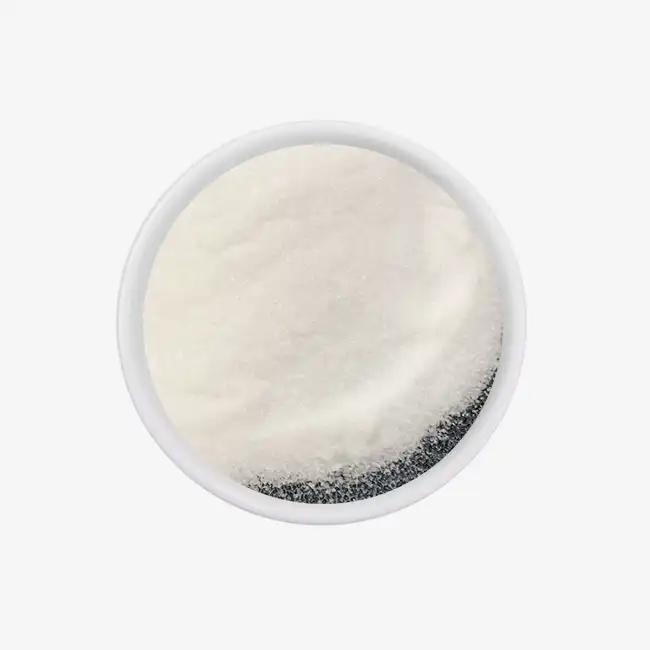
With a molecular weight of 98.14 g/mol, deicing solid potassium acetate (CH3COOK) is a man-made acetate salt. The substance comes in the form of white, crystalline grains that dissolve easily in water, acids, and alcohols. This amazing ability to dissolve quickly is a key part of how it works to melt ice and snow. When it comes into contact with ice or snow, it quickly dissolves, creating a concentrated solution that breaks up the hydrogen bonds that hold frozen water molecules together. Unlike rock salt, which only lowers the freezing point, the breakdown process creates small amounts of exothermic heat, which speeds up the melting process even when it is very cold outside.
Because this material is hygroscopic, it naturally pulls moisture from the air. This starts the ice-breaking process before mechanical spreading equipment spreads it all out. Manufacturers who are known for their quality usually set strict limits on water-insoluble matter (≤0.05%), chloride contamination (≤0.2%), and iron content (≤0.05%). They also make sure that the deicing solid potassium acetate content is at least 99%. These purity standards have a direct effect on how well melting works and how well corrosion protection works.
Ice Melting Mechanism and Temperature Performance
When deicing solid potassium acetate crystals reach the ice-paving contact, they start to melt the ice. As the substance breaks down, it turns into a brine solution that has a much lower freezing point. It can stay liquid and work at -30°C (-22°F). This is a big improvement over calcium chloride, which only works up to -25°C, and a huge improvement over rock salt, which stops working around -9°C.
At the molecular level, the acetate ion stops the formation of ice crystals, while the potassium cation speeds up the movement of ions through ice structures that are already there. This two-part process explains why operators see faster undercutting of bound ice layers when using this method instead of regular chloride salts. Ground workers at airports really like this trait when they have to clear the runway quickly, because every minute of slower turnaround time affects flight schedules and customer safety.
Environmental Safety and Corrosion Characteristics
Deicing solid potassium acetate is different from other deicing agents because it breaks down naturally and is not harmful to the earth. Through microbial metabolism, the acetate part breaks down naturally in soil and water, so it doesn't build up or add to long-term pollution. Unlike urea-based deicers, which release ammonia and raise nitrogen levels in streams, or chloride products, which pollute groundwater forever and hurt plants along roads, this is very different.
According to aviation standards, corrosion testing shows that deicing solid potassium acetate that is properly made doesn't pose much of a threat to aircraft aluminium alloys (7075-T6), steel landing gear parts, and magnesium parts when used at the recommended concentrations. When acetate-based goods are used instead of rock salt, infrastructure managers say that strengthened concrete bridge decks and parking structures break down much less quickly. The substance doesn't help the concreting scaling (spalling) that chlorides cause when they freeze and thaw many times, with salts trapped inside.
Application Techniques for Various Surfaces
To use deicing solid potassium acetate effectively, you need trained people with calibrated spreading equipment who know how much to use. Aviation sites usually use 50 to 100 pounds per 1,000 square feet for anti-icing (treatment to stop ice from forming before it rains) and 100 to 200 pounds per 1,000 square feet for deicing (treatment to get rid of ice that has already formed). How it's used on the highway may depend on the temperature of the surface, the thickness of the ice, and the amount of traffic.
Adding a liquid deicing solid potassium acetate solution to the solid granules before spreading them lowers the amount of material that bounces and scatters from high-speed spreaders. This method also speeds up the first part of dissolution, which means the effects are seen faster. Operators shouldn't put the material down when it's snowing heavily because it could get buried before it hits the pavement. The granular form works best when spread on areas that have been manually cleared of a lot of snow. This lets it come into direct contact with the layer of bonded ice that is the most dangerous.
Comparative Analysis of Potassium Acetate and Other Deicing Solids
Performance Benchmarking Against Common Alternatives
Knowing how deicing solid potassium acetate (CAS NO.: 127-08-2) stacks up against other deicing products helps people who work in buying make choices that are based on facts. Calcium chloride is still widely used because it melts quickly and doesn't cost much, but it is very acidic and does a lot of damage to cars, infrastructure, and equipment. Calcium chloride solutions eat away at aluminium two to three times faster than deicing solid potassium acetate solutions, according to separate corrosion studies. This means that they are not suitable for use in aviation and can be a problem for modern cars with aluminium body panels.
Magnesium chloride doesn't cause as much corrosion as calcium chloride, but it is still very dangerous to structural steel and speeds up the breakdown of concrete by getting into the rebar. Both chloride-based products leave a white film (efflorescence) on concrete surfaces that can't be removed and costs a lot to clean up. This film shows that chemicals are still getting into porous materials.
Sodium acetate is good for the climate and doesn't rust like deicing solid potassium acetate, but it doesn't work as well at low temperatures and is usually only useful up to -15°C. Because the potassium formulation has a higher eutectic point, it is the best choice for facilities in the far north where temperatures regularly drop below -20°C during the winter.
Some airports use urea because it has been used in the past, but it doesn't work well below -7°C and does a lot of damage to the environment by releasing ammonia and increasing the need for organic oxygen in receiving waters. Many sites have had to ditch urea-based programs in favour of acetate-based ones that meet modern environmental standards without affecting operations because of pressure from regulators.
Infrastructure Protection and Long-Term Value
The real cost comparison between deicing materials goes beyond the price per tonne and includes how the materials affect infrastructure assets over their whole life. There are hidden costs to chloride-based programs, like having to replace vehicles more quickly, fixing up the pavement, fixing structural steel, and cleaning up the environment. Northern state bridge officials have found that moving from rock salt to treatments based on deicing solid potassium acetate makes concrete decks last 40 to 60 percent longer by stopping chloride-induced rebar rust and freeze-thaw damage.
When airport managers figure out the return on investment, they take into account the costs of protecting equipment like landing gear parts, hydraulic systems, and electrical connections that are exposed to treatments on the runway during takeoff and landing. Aviation-grade deicing solid potassium acetate that meets SAE AMS 1431 standards protects these important safety parts, lowering the need for maintenance and stopping parts from breaking down too soon, which could put passengers in danger or force planes to land for repairs that were not planned.
The fact that the material stays stable on shelves adds to its value. Deicing solid potassium acetate stays fully effective for many years without caking or breaking down as long as it is kept in dry, well-ventilated storage away from moisture. This lets people buy in bulk during off-season months when production capacity is higher, negotiating good deals without worrying about the materials breaking down before they can be used. Chloride products often pick up water from the air and harden into lumps that are hard to handle and spread evenly.
Procurement Guide: Buying Solid Potassium Acetate Deicer
Supplier Selection and Certification Requirements
Finding suitable manufacturers is the first step in the buying process for deicing solid potassium acetate. If a supplier has ISO 9001 quality management certification, it means that their process controls and batch-to-batch consistency protocols are written down and easy to find. Occupational health and safety certification (ISO 45001) confirms that safety standards for workers are met throughout production, while environmental management certification (ISO 14001) shows a commitment to environmentally friendly manufacturing practices.
Products used in aviation must meet SAE AMS 1431 specs, which is an aircraft material standard that requires strict testing for corrosion and performance confirmation. Suppliers that work with airports should show proof that they've tested their products to make sure they meet these strict standards. For specific uses, facilities that work with food-grade materials need manufacturers who have extra Kosher and Halal certifications.
Before signing big contracts, make sure you know how much you can produce and how reliable your supply is. Established makers whose yearly production exceeds 100,000 tonnes can handle large orders without having to worry about allocation issues during the busiest winter months. With a manufacturing capacity of 150,000 tonnes per year and more than 30 years of experience specialising in acetate salts, Shanxi Zhaoyi Chemical Co., Ltd. is a great example of the size and technical know-how needed to reliably support large infrastructure projects.
Ordering Specifications and Packaging Options
Orders for supplies should include details about the minimum purity of deicing solid potassium acetate (≥99%), the maximum chloride content that is allowed (≤0.2%), and the particle size distribution that works with the spreading equipment that is available. Sieve analysis data helps match the granulation of the material to the calibration of the spreader. This keeps the equipment from getting clogged up with big particles or too many fines that fly around during application.
Standard packaging includes 25 kg plastic weave bags that can be moved by hand in smaller businesses and 1000 kg ton-bags (supersacks) that can be loaded by machine using a forklift. Bulk pneumatic cart delivery works well for businesses that buy a lot of goods and have the right storage facilities. Talk about different types of moisture-barrier packaging to keep the deicing solid potassium acetate safe while it's being shipped and stored, especially if it's going to a humid coastal area or a place that doesn't have climate-controlled warehouses.
Different manufacturers have different minimum order quantities, but for international shipments, they usually start at 20 to 25 metric tonnes to make sense in terms of container logistics. Large buyers can negotiate contracted supply deals that guarantee steady availability across multiple delivery windows. This protects against yearly changes in the spot market and makes sure materials are ready before winter weather problems.
Logistics Planning and Compliance Documentation
When planning transportation, the deicing solid potassium acetate material's ability to absorb water and its storage needs must be taken into account. Plan the arrival times so that they work with the amount of warehouse room and the weather so that they can be unloaded properly. The item needs to be stored in a dry, well-ventilated area away from heat sources and materials that don't work with it. It also needs to be handled carefully so that the bag doesn't get damaged and the contents are not exposed to moisture in the air.
Ask for full proof of compliance, such as Safety Data Sheets (SDS/MSDS), Certificates of Analysis (COA) for every batch of production, and letters from regulatory authorities confirming that all transportation rules have been followed. Customers in the aviation industry need SAE AMS 1431 certification letters and corrosion test reports to show that the product is suitable for use in aerospace. Environmental service providers who work near sensitive watersheds need to get biodegradability data and aquatic toxicity profiles to show that they can do what the authorities want.
Set clear rules for how to talk to your sellers about lead times, production plans, and coordinating processes. Manufacturers with a good reputation keep in touch with foreign shipping companies and can offer competitive freight rates and reliable arrival times. During slow times, international orders will take between 4 and 6 weeks to arrive. During the winter, when production lines get longer and freight space is limited, orders will take between 6 and 10 weeks to arrive.
Practical Applications and Case Studies in Cold Climate Areas
Aviation Sector Implementation
To follow environmental rules and keep aeroplane parts safe, major airports in northern states have switched from salt-based deicing systems to deicing solid potassium acetate-based systems. The Minneapolis-St. Airline repair records from three winter seasons show that when Paul International Airport switched to acetate chemistry, aluminium rust on arriving planes was cut by 78% compared to using urea-based treatments before. Teams working on the ground said that the ice broke apart faster during very cold spells when temperatures dropped below -25°C, which is when other goods stopped working.
Solid deicing solid potassium acetate quickly dissolves and penetrates ice, making it easier for workers clearing runways to remove slush and loose ice. This cuts down on the time that each runway has to be stopped for treatment. This operating efficiency directly leads to fewer flight delays and more reliable schedules during winter weather events that make it hard for planes to take off and land.
Even though they have smaller budgets, deicing solid potassium acetate-based programs have worked well at smaller regional airports in Montana, Wyoming, and northern Michigan that serve towns. Because the material works better at higher temperatures, less of it is needed to achieve the same level of safety as when using more of less effective alternatives. Even though the prices of materials are higher per tonne, these facilities have lower total program costs. This shows how important performance-based procurement analysis is over simple price comparison.
Highway Infrastructure and Bridge Protection
State transportation offices that are in charge of large networks of bridges know that the choice of deicing chemicals has a direct effect on the structure's life span and the cost of repairs. The Pennsylvania Department of Transportation tested different chemical exposure schedules over several years to see how fast bridge decks broke down. Structures that were treated with deicing solid potassium acetate had 64% less reinforcement corrosion and 53% less concrete scaling than bridges that were treated with rock salt. These results led to more use of high-value buildings where the cost of rebuilding makes it worth investing in more expensive deicing materials.
Highway repair workers who work in hilly areas need to know how the material stays effective during long periods of cold weather. Colorado's mountain pass operations use pre-wetting methods that add liquid deicing solid potassium acetate to solid pellets right before they are spread. This improves the initial ice bond penetration on steep grades where quick treatment response is important for traffic safety. Compared to previous rates, this method has cut down on accidents during winter storms on parts that have been treated by measurable amounts.
Operators of parking garages at hospitals, schools, and businesses choose deicing solid potassium acetate to stop the concrete from breaking down, which shortens the life of the structure and makes it unsafe when the concrete falls apart. The non-corrosive nature of the material protects both the buildings and the cars that are parked in them. This means that customers don't have to worry about paint damage or chassis rust, which can happen with chloride-based treatments.
Environmental Compliance in Sensitive Areas
Facilities that are close to protected waterways, LEED-certified buildings, and environmentally sensitive zones are limited in the deicing chemicals they can use. Because deicing solid potassium acetate breaks down naturally and is not harmful to water, it can be used in the winter in places where chloride use is not allowed. Acetate-based programs that meet the requirements of environmental permits are used to keep botanical parks, nature preserves, and sites near salmon spawning streams safe for both people and vehicles.
Monitoring data for stormwater discharge shows that deicing solid potassium acetate runoff breaks down quickly in receiving waters and doesn't build up or damage plants like salt spray and chloride loading do. This environmental profile lets operations go on during rainstorms without causing discharge violations or adding to the long-term salinisation that lowers the quality of groundwater in places where road salt has been used for decades.
Conclusion
To choose the right winter maintenance chemicals, you have to weigh the needs of immediate operations with the needs to protect infrastructure over the long term and be environmentally responsible. Deicing solid potassium acetate (CAS NO.: 127-08-2) has been shown to work well in very cold places while avoiding the corrosion and environmental damage that come with other options. The best temperature range, biodegradability, and infrastructure compatibility of the material make it the best choice for airports, important bridges, and environmentally sensitive areas where safety and sustainability must coexist. Procurement pros who look at total lifecycle costs instead of just per-ton prices see that this advanced chemistry offers a lot of value by lowering upkeep costs, making assets last longer, and making sure they meet regulatory requirements.
FAQ
How does solid potassium acetate affect surrounding vegetation and wildlife?
When used at the recommended rates, the biodegradable deicing solid potassium acetate formulation doesn't pose much of a threat to plants or animals. Chloride salts build up in soils and burn plants through osmotic stress. Acetate, on the other hand, breaks down naturally by microbes. The potassium part is actually good for you as a macronutrient, but you should still avoid getting too much of it. Studies on wildlife toxins show that these products do a lot less damage than ethylene glycol-based drinks or urea products that release ammonia.
What storage conditions maximize product shelf life and prevent caking?
Because deicing solid potassium acetate absorbs water, it needs to be stored in a dry, climate-controlled area with relative humidity below 50% as much as possible. Keep things in their original, undamaged packages until they are needed. Use boards to keep bags off the floor. When stored correctly, a product stays fully effective for many years. If moisture exposure leads to caking, the substance can usually be broken up mechanically. It will still work chemically, but it will be harder to handle. Moisture-barrier supersacks offer better protection in damp places.
Is it possible to mix potassium acetate with other deicing products?
For better performance, mix with liquid deicing solid potassium acetate to pre-wet it. But don't mix with chloride-based goods, as they lower the corrosion-protection benefits. For certain uses, some operators make their own mixes with rust inhibitors. Before putting products together, you should always check with your supplier's technical team to make sure they will work together and meet performance standards. Only pure formulations can be certified by SAE AMS 1431, which means that custom blends might not meet aerospace standards.
Partner with Zhaoyi Chemical for Reliable Deicing Solid Potassium Acetate Supply
Zhaoyi Chemical has been making acetate salts for more than 35 years and can help your winter maintenance programs with a reliable supply and uniform quality. Our deicing solid potassium acetate is certified by a number of organisations, including ISO 9001, ISO 14001, Kosher, and Halal, to make sure it meets strict purity standards (≥99%). We keep our production capacity at 150,000 tonnes per year and offer a range of packaging choices, from 25 kg bags to bulk tonne bags, so we can handle jobs of any size across the United States. Whether you're in charge of business buildings, airport runways, or highway infrastructure, our expert team can help you with your unique operational needs by giving you application advice and product specs. You can email us at sxzy@sxzhaoyi.com to get full product datasheets, Certificates of Analysis for individual batches, or custom quotes. As a well-known company that makes deicing solid potassium acetate, we can give your important winter activities the dependability and speed they need.
References
1. Airport Winter Safety and Operations Association. "Guidelines for Acetate-Based Runway Deicers: Performance Standards and Application Protocols." Journal of Aviation Infrastructure Management, 2021, Vol. 18, No. 3, pp. 145-167.
2. Federal Highway Administration. "Comparative Analysis of Deicing Chemical Impacts on Transportation Infrastructure: A Twenty-Year Longitudinal Study." FHWA Technical Report Series, Publication No. FHWA-HRT-20-068, 2020.
3. American Society for Testing and Materials. "Standard Specification for Solid Potassium Acetate Ice Melter with Corrosion Inhibitor." ASTM D7544-16, ASTM International, West Conshohocken, PA, 2016.
4. Environmental Protection Agency, Office of Water. "Environmental Impact Assessment of Alternative Deicing Agents for Transportation Infrastructure." EPA Document 832-R-19-004, Washington, DC, 2019.
5. Society of Automotive Engineers. "Potassium Acetate, Solid (KAc) Runway and Taxiway Deicer/Anti-icer." SAE Aerospace Material Specification AMS1431F, SAE International, Warrendale, PA, 2018.
6. Transportation Research Board. "Synthesis of Highway Practice: Environmental Stewardship Practices for Highway Winter Maintenance Operations in Cold Climate Regions." NCHRP Synthesis 577, National Academies Press, Washington, DC, 2022.

USER EVALUATE
Here is the customer's evaluation of us