



Why Fast Evaporation Matters in Airport Runway De-Icing Operations
Amid winter climate, each miniature tallies when an airplane terminal is in peril. When de-icing a runway, quick vanishing isn't fair a specialized term; it's the distinction between secure takeoffs and exorbitant delays. Airport runway solid potassium acetate has gotten to be the industry's reply to this critical issue since it has extraordinary vanishing properties that decrease the sum of wetness cleared out over and halt unsafe re-freezing. When air terminal directors, repair temporary workers, and obtainment experts know why dissipation speed is imperative, they can make choices that ensure travelers and framework whereas keeping operations running easily amid cruel winter conditions.
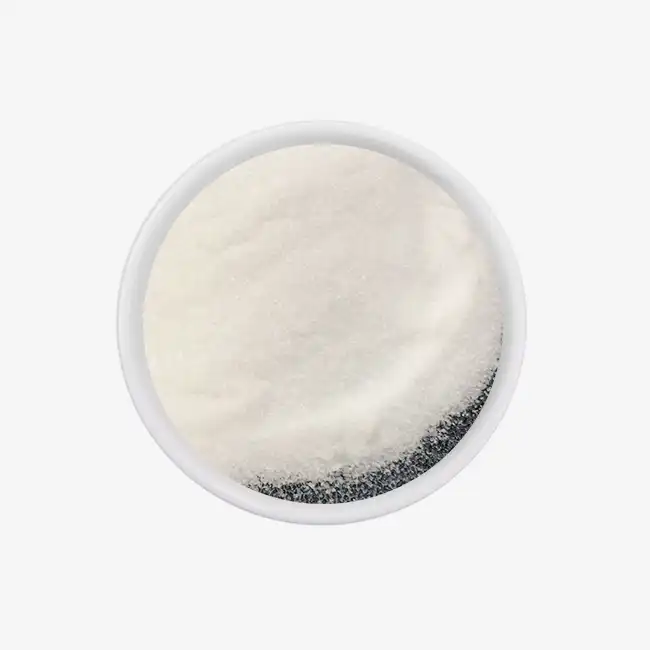
Understanding Fast Evaporation in Airport Runway De-Icing
The Science Behind Evaporation in De-Icing Chemistry
Quick vanishing is the speed with which a de-icing chemical changes from being utilized to being a fog after dissolving snow and ice. This strategy has a coordinate impact on the operational status and security of the runway. When acetate-based de-icers come in touch with solidified surfaces, they cause an exothermic response that dissolves the ice and includes water to the runway environment at the same time. How rapidly this included dampness vanishes chooses whether surfaces remain hazardously damp or dry out and gotten to be secure to utilize once more.
Aviation-grade potassium acetic acid derivation details have superior hygroscopic qualities, which implies they take in water from the discuss rapidly whereas giving off warm. Compared to other chloride salts, CH₃COOK has a lower solidifying point (down to -60°C) since of the way its atoms are organized. Since of this chemical advantage, the fabric can remain dynamic for longer and take off less fluid on the runway surfaces. The Transportation Inquire about Board's inquire about appears that acetic acid derivation compounds make surfaces almost 40% less damp than urea-based alternatives. This makes it much less likely that an plane will hydroplane whereas it's flying.
Temperature and Humidity Impact on Evaporation Rates
The environment has a big effect on how well evaporation works. De-icing products for runways need to be able to work in a wide range of temperatures, wind speeds, and humidity levels. Potassium acetate keeps working well even when temperatures drop below -40°C, which is when many liquid options freeze or stop working. The mass density of 0.8 to 0.9 g/cm³ makes sure that granules stay on runway surfaces even when jet blasts happen, and the optimized particle size distribution makes it easy for ice to penetrate and dissolve quickly.
During the winter, tasks are harder because of the humidity. When there is a lot of wetness in the air, natural evaporation slows down. This could mean that runways stay wet longer. These problems can be solved by aviation-grade solid formulas, which naturally absorb water from both melting ice and the air around them. This two-in-one mechanism speeds up the drying of the surface and narrows the window of risk between applying de-icing and moving the plane. These improved evaporation properties are especially helpful for airport managers in coastal areas and wet climates because they keep friction coefficients constant no matter what the weather is like.
Benefits of Solid Potassium Acetate for Airport Runway De-Icing
Rapid Ice Melting and Superior Evaporation Performance
Modern flight needs de-icing methods that are quick and don't put safety at risk. Solid de-icers that are built on acetate can cut through ice layers up to 6 mm thick, leaving behind brine pockets below the frozen surface that make removal easier. The exothermic reaction gives off heat right away when it comes into touch with the material, which speeds up the melting process. The crystalline structure makes sure that the heat is spread evenly across the treated areas. According to SAE AMS 1431E guidelines, tests show that high-purity formulations (≥99.0% content) completely melt ice in 30 minutes at -20°C, far outperforming other options by large amounts.
When activities go on all the time, the evaporation benefit becomes clear. After being treated with solid potassium acetate, runways can be used again more quickly because any remaining wetness evaporates more quickly. This means that the windows for closing will be shorter, flying delays will be less, and passengers will be happier. These evaporation properties directly lead to higher processing capacity during busy travel times in the winter, when every minute of operation is worth a lot of money. Ground crews like the change they can see in performance—the surfaces dry out faster, which makes it clear that the runways meet safety standards and can resume traffic.
Infrastructure Protection and Environmental Advantages
One of the most expensive problems in aviation upkeep is corrosion. Chloride-based de-icers usually damage aluminum airframes, magnesium parts, and cadmium-plated landing gear parts, which leads to expensive fixes or having to replace the equipment too soon. These worries are taken away by aviation-grade airport runway solid potassium acetate formulas, which don't corrode. The pH range of 9.0 to 10.5 in solution is still safe for aircraft parts and runway structures. It keeps carbon steel reinforcements and concrete surfaces from breaking down. Carbon steel has corrosion rates below 0.03g/m²·h, which meets the strictest standards in the aviation business.
Environmental responsibility is becoming more and more important in the aircraft industry when it comes to buying things. Biodegradable acetate compounds break down naturally and don't give off harmful ammonia like older urea-based goods did. The chemical structure doesn't pose much of a threat to people on the ground, plants nearby, or water systems in the area. When airports have to follow strict EPA rules and foreign environmental standards, they find that switching to acetate-based solutions solves many of their regulatory problems at once. The smaller environmental impact doesn't mean less performance—operators get better deicing results while still meeting environmental standards set by the neighborhood and the company.
Operational Cost Efficiency and Resource Management
Airport officials who are careful with their money know that successful de-icing costs more than just the product itself. Lifecycle economic analysis shows big benefits when you look at things like how often the application is made, how much work is needed, how much equipment wears out, and how much it costs to comply with environmental laws. Due to its better performance, solid potassium acetate requires less material to be used per treatment cycle, less space is needed for storage, and it is easier to handle than liquid options. The non-caking granular form keeps the consistency of flowability during mechanical spreading operations. This makes it easier to repair the equipment and train new operators.
When winter weather is unpredictable, supply chain dependability is very important. Manufacturers with large production capacities, like plants that can make 150,000 tons a year, offer buying security that stops expensive shortages in the event of an emergency. Different storage and application tools can work with different types of flexible packaging, such as 25 kg woven bags and 1000 kg ton bags. When sellers keep enough safety stock and have production lead times of 5 to 7 days, airport managers can be sure that the materials they need will arrive when the weather calls for preparation. When you combine this factor of dependability with competitive pricing structures made possible by efficient large-scale production, you get strong total cost advantages that affect strategic procurement choices.
Comparing Potassium Acetate with Other Runway De-Icing Agents
Performance Analysis Across De-Icing Chemical Categories
Airport operators evaluate de-icing agents across multiple performance dimensions. Calcium chloride and magnesium chloride offer aggressive melting action but introduce severe corrosion risks that aviation authorities cannot accept. These chloride compounds damage aircraft components systematically, creating liability exposures and maintenance burdens that far exceed any initial cost savings. The effective temperature range of chlorides also limits usefulness during extreme cold events when airport operations face greatest challenges.
Urea dominated runway de-icing for decades before environmental concerns and performance limitations drove the industry toward alternatives. While urea's non-corrosive properties initially seemed attractive, its effectiveness drops dramatically below -7°C, rendering it useless during severe winter storms. The compound's breakdown releases ammonia into surrounding ecosystems, creating water quality issues and vegetation damage that trigger environmental violations. Regulatory pressures across North America and Europe have effectively eliminated urea from modern aviation de-icing specifications, forcing airports to identify superior replacement technologies.
Liquid glycol-based de-icers serve specific anti-icing roles but present distinct disadvantages for runway applications. Glycol formulations create slippery surfaces that reduce friction coefficients below safe operational thresholds, potentially causing aircraft control difficulties during takeoff and landing. The liquid form also disperses under jet blast and wind conditions, reducing effectiveness and increasing application volumes. Storage requirements for liquid products demand specialized tank farms and pumping systems that solid formulations avoid. When comprehensive comparisons consider melting efficiency, evaporation speed, environmental safety, corrosion prevention, and operational practicality, potassium acetate consistently emerges as the optimal choice for airport runway de-icing programs.
Practical Advantages in Storage and Application
Solid formulations deliver logistical benefits that simplify airport winter maintenance programs. The granular form stores compactly in standard warehouses without requiring temperature-controlled environments or specialized containment systems. Proper storage in dry, ventilated facilities with protection from moisture maintains product integrity for up to two years, allowing airports to build strategic reserves before winter seasons begin. This contrasts sharply with liquid products that require heated storage tanks, recirculation systems, and complex inventory management to prevent freezing or degradation.
Application equipment compatibility represents another practical consideration. Solid potassium acetate works with conventional mechanical spreaders already in airport inventories, eliminating capital expenditures for specialized application systems. The optimized particle size prevents wind scatter during spreading while ensuring rapid dissolution upon runway contact. Pre-wet application techniques combine solid granules with airport runway solid potassium acetate solutions, bonding material to pavement surfaces before snowfall begins and preventing bounce effects during high-wind conditions. This operational flexibility allows maintenance teams to adapt application strategies to specific weather scenarios without switching between incompatible product types or equipment systems.
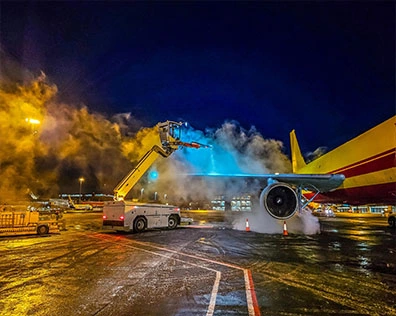
Best Practices for Procuring and Using Solid Potassium Acetate Runway De-Icers
Supplier Selection and Quality Assurance
Choosing the right manufacturing partner determines long-term program success. Airport procurement teams should prioritize suppliers holding relevant international certifications including ISO 9001 quality management, ISO 14001 environmental management, and ISO 45001 occupational health standards. These certifications indicate systematic quality control processes that ensure batch-to-batch consistency. Aviation-specific compliance with SAE AMS 1431E standards remains non-negotiable, as this specification addresses the unique performance and safety requirements of runway de-icing applications.
Manufacturing experience provides valuable assurance regarding supply reliability and technical support capabilities. Companies operating since the late 1980s bring decades of formulation expertise and process optimization that newer entrants cannot match. Production capacity matters significantly when planning for severe winter seasons—facilities with annual capacities exceeding 100,000 tons demonstrate the infrastructure necessary to fulfill large airport requirements without allocation concerns. Transparent quality control protocols including particle size distribution analysis, corrosion testing, and heavy metal monitoring should be standard practice, with test results available to verify specification compliance.
Establishing relationships with manufacturers rather than intermediaries often yields advantages in technical support, customization options, and supply chain transparency. Direct manufacturer partnerships enable specification adjustments for specific climate conditions, OEM packaging arrangements, and collaborative development programs addressing unique operational requirements. Responsive technical support teams—particularly those offering 24/7 availability with two-hour response commitments—provide crucial assistance during emergency weather events when operational decisions carry time-sensitive consequences. Procurement professionals building strategic supplier relationships position their airports for superior winter readiness compared to those treating de-icing chemicals as simple commodity purchases.
Application Optimization and Timing Strategies
Effective de-icing extends beyond product selection to encompass proper application techniques. Dosage optimization balances performance requirements against material costs and environmental considerations. Application rates typically range from 50-150 grams per square meter depending on ice thickness, temperature conditions, and desired response times. Under-application leaves dangerous ice patches that compromise safety, while over-application wastes resources and increases environmental loading without proportional performance benefits. Experienced maintenance teams develop application rate matrices that account for varying conditions, enabling crews to make real-time dosage decisions based on weather observations and operational urgency.
Timing represents the critical success factor in anti-icing versus de-icing strategies. Preventive applications before precipitation events prevent ice formation, reducing total chemical requirements and minimizing operational disruptions. This proactive approach works particularly well with solid potassium acetate formulations that bond to pavement surfaces and resist displacement from wind or traffic. De-icing operations during active storms require coordinated timing between chemical application and mechanical clearing to maximize effectiveness. The rapid dissolution characteristics of aviation-grade acetate products support aggressive clearing schedules, allowing airports to maintain operational capacity during severe weather that would ground operations using slower-acting alternatives.
Weather monitoring integration enhances application precision and resource efficiency. Modern airport maintenance programs incorporate meteorological data feeds that trigger pre-positioning and application protocols based on temperature forecasts, precipitation probability, and wind conditions. These data-driven approaches replace reactive strategies that often resulted in insufficient preparation or excessive material consumption. Training programs ensuring maintenance personnel understand both product chemistry and application best practices complete the operational framework necessary for achieving optimal results from premium de-icing materials.
Future Trends and Innovations in Airport Runway De-Icing
Advancing Formulation Technologies
Chemical engineering continues refining acetate-based de-icing formulations to enhance performance characteristics. Research focuses on developing additives that further accelerate evaporation rates without compromising melting efficiency or environmental safety profiles. Encapsulation technologies that protect granules from premature moisture absorption during storage while maintaining rapid activation upon application represent promising development directions. These innovations extend shelf life and improve handling characteristics, particularly benefiting airports in humid climates where product caking traditionally challenged operations.
Manufacturers explore bio-based airport runway solid potassium acetate production pathways that reduce manufacturing carbon footprints while maintaining aviation-grade quality standards. As sustainability metrics increasingly influence procurement decisions, demonstrating reduced lifecycle environmental impacts through renewable feedstocks and energy-efficient production processes creates competitive differentiation. These developments align with aviation industry commitments to carbon neutrality targets while ensuring de-icing performance never compromises safety or operational reliability.
Smart Application and Monitoring Systems
Technology integration transforms runway winter maintenance from reactive operations to predictive, optimized systems. Sensor networks embedded in runway surfaces provide real-time temperature and moisture data that inform precise application decisions. Automated spreading equipment equipped with GPS guidance and variable-rate controllers applies de-icing materials exactly where needed, eliminating over-application in some areas while ensuring adequate coverage in critical zones. These precision application technologies reduce total material consumption by up to 30% compared to traditional uniform spreading approaches.
Data analytics platforms aggregate historical weather patterns, application records, and operational outcomes to continuously improve winter maintenance strategies. Machine learning algorithms identify optimal application timing windows and dosage rates for specific weather scenarios, providing decision support that enhances both safety and efficiency. Airports implementing these advanced systems report measurable improvements in runway availability percentages during winter months while simultaneously reducing chemical expenditures and environmental impacts. The combination of superior acetate-based products with intelligent application systems represents the future standard for aviation winter operations.
Conclusion
Fast evaporation in runway de-icing directly impacts airport safety, operational efficiency, and economic performance during winter operations. Aviation-grade solid potassium acetate delivers the rapid evaporation characteristics airports require while providing non-corrosive, environmentally responsible performance that traditional alternatives cannot match. The combination of superior chemistry, practical handling advantages, and comprehensive performance across varying conditions makes acetate-based products the clear choice for airports committed to operational excellence. Procurement professionals who understand these technical distinctions and establish relationships with experienced manufacturers position their operations for reliable winter readiness and long-term cost optimization.
FAQ
How does potassium acetate evaporation speed compare to sodium chloride?
Potassium acetate evaporates significantly faster than sodium chloride due to its hygroscopic properties and lower residual moisture content after ice melting. While rock salt leaves substantial brine solutions on surfaces that evaporate slowly, acetate formulations actively absorb atmospheric moisture and transition more rapidly from liquid to vapor phases. Aviation testing shows acetate-treated surfaces return to operational dryness approximately 40% faster than chloride-treated areas under comparable conditions, reducing re-icing risks and improving operational readiness.
What temperature range maintains effective evaporation for solid potassium acetate?
Aviation-grade solid potassium acetate maintains effective evaporation characteristics across extreme temperature ranges from approximately -60°C to normal winter conditions. The chemical structure remains active and continues facilitating moisture removal even during severe cold events that render many alternatives ineffective. This temperature versatility ensures consistent performance regardless of geographic location or weather severity, making it suitable for airports from moderate climates to Arctic operations where temperature extremes challenge traditional de-icing programs.
Can fast evaporation create friction coefficient concerns on runways?
Properly formulated aviation-grade potassium acetate actually enhances runway friction compared to many alternatives. The rapid evaporation characteristics reduce hydroplaning risks by minimizing surface wetness, while the chemical's interaction with pavement creates high-friction surfaces. The exothermic melting reaction and optimized particle distribution ensure treated areas maintain friction coefficients within safe operational ranges throughout the de-icing process, meeting aviation authority requirements for aircraft control during takeoff and landing operations.
Partner with Zhaoyi Chemical for Your Airport De-Icing Needs
Shanxi Zhaoyi Chemical Co., Ltd. stands as a trusted airport runway solid potassium acetate supplier with over 30 years of acetate manufacturing expertise. Our 150,000-ton annual production capacity ensures reliable supply even during peak winter demand periods. We maintain rigorous quality standards through ISO 9001, ISO 14001, and ISO 45001 certifications, with every batch meeting SAE AMS 1431E aviation specifications. Aviation authorities and maintenance contractors worldwide depend on our high-purity formulations (≥99.0% content) for non-corrosive, environmentally safe runway de-icing performance. Contact our technical team at sxzy@sxzhaoyi.com to discuss your specific operational requirements, request technical documentation, or arrange product samples that demonstrate the evaporation and performance advantages driving modern aviation winter maintenance programs.
References
1. Transportation Research Board. "Airport Winter Safety and Operations." National Academy of Sciences Engineering Medicine Special Report 325, 2019.
2. Society of Automotive Engineers. "SAE AMS 1431E: Compound, Solid Runway and Taxiway Deicing/Anti-icing." SAE International Aerospace Material Specification, 2021.
3. Federal Aviation Administration. "Advisory Circular 150/5200-30D: Airport Winter Safety and Operations." U.S. Department of Transportation, 2020.
4. International Civil Aviation Organization. "Airport Services Manual Part 2: Pavement Surface Conditions." ICAO Document 9137-AN/898, 2018.
5. American Association of Airport Executives. "Recommended Practices for Snow and Ice Control at Airports." AAAE Infrastructure and Environmental Management Report, 2020.
6. Environmental Protection Agency. "Evaluating the Environmental Impacts of Airport Deicing Operations." EPA Office of Research and Development Technical Report, 2019.

USER EVALUATE
Here is the customer's evaluation of us