



Certification and Quality Standards for Potassium Acetate Deicing Liquids
When city governments, airport managers, and highway repair companies look at anti-icing options, certification is the most important thing they look at. Deicing liquid potassium acetate sticks out in the market because it has been rigorously certified to prove that it is chemically pure, safe for the environment, and reliable in its use. Instead of chloride-based acids that damage infrastructure or glycol products that are bad for the environment, approved deicing liquid potassium acetate solutions meet strict standards set by groups like ISO, ASTM, REACH, and EPA. These approvals show that the product meets standards for chemical composition, works regularly at high and low temperatures, and causes little damage to the environment. These are important factors for B2B buyers who are in charge of protecting airport runways and bridge decks. Certification takes the guesswork out of buying, turning it from a transactional process into a strategic relationship based on proven performance data and legal compliance.

Understanding the Importance of Certification for Potassium Acetate Deicing Liquids
In business settings with a lot at stake, trust is built on certification. When airport operations depend on runway friction coefficients during freezing weather or when automatic bridge spray systems need fluids that don't get clogged, certification papers provide proof that the deicing liquid potassium acetate is genuine.
Why Certification Matters for Airport and Infrastructure Applications?
Airports have to follow strict rules set by the Federal Aviation Administration (FAA) and other countries to keep everyone safe. Any anti-icing fluid used on runways needs to show that it meets the requirements of SAE AMS 1435 for aircraft materials. To make sure the solution doesn't hurt airplane metal alloys, carbon brake systems, or runway sensors, this standard requires strict corrosion tests, such as the ASTM F 483 Total Immersion Corrosion and the ASTM F 1111 Sandwich Corrosion tests. To keep waterways clean, municipal bridge repair programs also need goods that meet EPA environmental discharge standards. Certification proves that deicing liquid potassium acetate mixtures break down quickly and need little biological oxygen, which is good for saving marine environments and keeping infrastructure in good shape.
Key Certifications Procurement Teams Should Verify
ISO 9001 approval proves that quality management is used consistently throughout the producing process. Shanxi Zhaoyi Chemical has ISO 9001, ISO 14001 (for environmental management), and ISO 45001 (for workplace health and safety) certifications, which show that they have full control over the quality of all of their production processes. Registration under REACH makes sure that European rules on chemical safety are followed, which is very important for companies from outside of Europe that want to sell their goods in the EU. The EPA's Safer Choice designation means that they are less harmful to the earth than standard deicers. For each batch, buyers should ask for a Certificate of Analysis (CoA) that shows the specific gravity, pH levels, trace metal content, and amounts of rust inhibitors. These papers allow for transparency and tracking, so procurement professionals can make sure that goods meet project requirements before they are sent out.
How Certification Reduces Operational Risk
Certified goods are tested by a third party to make sure that what the maker says is true. If a seller says that their deicing liquid potassium acetate solution will still work at -60°C, certification papers show that this is also true in the lab. This openness lowers the chance that things won't work right during important weather events. Certification also makes sure that the supply chain is honest. Chemical qualities stay the same from the plant to the application site as long as products are stored, moved, and handled according to written rules. Working with approved providers makes it easier for highway workers to report to the government, lessens the risk of equipment breaking down unexpectedly, and lowers their liability.
Critical Quality Dimensions to Evaluate in Potassium Acetate Deicing Liquids
Aside from certification stamps, knowing the exact quality standards that make deicing products work helps you make better buying choices. How well deicing liquid potassium acetate works depends on its exact chemical make-up and physical features.
Chemical Purity and Concentration Standards
Deicing liquid potassium acetate of good quality usually has 50 to 60 percent CH₃COOK content by weight. Shanxi Zhaoyi's recipe stays in this range by carefully controlling the amount of impurities: arsenic below 0.0004%, sulfate below 0.05%, chloride below 0.01%. These details are important because even small amounts of contaminants can speed up rust or mess up packages that stop it. The pure chemical has the molecular formula CH₃COOK (CAS 127-08-2) and a molecular weight of 98.14. However, in real life, it is mixed with special inhibitors to protect metal infrastructure. To make sure that the product will work with their current tools, buyers should make sure that the product data sheets list both the content of the active ingredient and the chemistry of the inhibitor.
Physical Properties That Determine Field Performance
Specific gravity between 1.25 and 1.30 makes sure that the solution gets through the ice layers well, making an edge that makes it easier for plows to remove the snow. The pH range of 7.5 to 9.2 has enough alkalinity to neutralize acidic contaminants without damaging painted surfaces or the sensitive electronic sensors built into current airport systems. Lowering the freezing point to -60°C (-76°F) creates a safety gap that is much higher than normal operating conditions. This ensures that fluid flow continues even during extreme polar vortex events. Spray patterns are changed by viscosity. Products with lower viscosity cover more area through truck boom systems, while products with higher viscosity may work better for Fixed Automated Spray Technology (FAST) bridge uses that need to stick to vertical surfaces.
Environmental and Safety Data Requirements
Safety Data Sheets (SDS) that meet Globally Harmonized System (GHS) norms give you important knowledge about how to handle a substance. Deicing liquid potassium acetate solutions are usually thought of as non-toxic, non-flammable liquids with flash points higher than 100°C. Biodegradation studies should show that microbes can break down substances quickly in dirt and water without making harmful byproducts. Unlike urea-based deicers that break down into ammonia, certified deicing liquid potassium acetate is safe for marine life and doesn't have much of an effect on the organic processes that treat wastewater. Chemical Oxygen Demand (COD) and Biological Oxygen Demand (BOD) should be measured as part of environmental effect studies. Acetate formulations have much lower values than glycol or urea alternatives. When buying teams have to show they're following the rules for stream protection or meet the requirements of an environmental permit, these data points become very important.
Benchmarking Potassium Acetate Deicing Liquids Against Industry Alternatives
Knowing how deicing liquid potassium acetate stacks up against other technologies can help you make the case for buying something to budget officials and practical partners.
Performance Comparison with Chloride-Based Deicers
Calcium chloride and sodium chloride are the most common chemicals used to treat roads in cities because they are cheap. However, because they are acidic, they damage infrastructure every year by scaling concrete, breaking down rebar, and rusting the chassis of vehicles. Deicing liquid potassium acetate completely gets rid of these rust risks while melting ice just as well or better than other chemicals. Acetate versions work up to -60°C, while chlorides stop working below -18°C. The higher cost per gallon up front is balanced out by longer pavement life, lower bridge repair costs, and no more fleet corrosion upkeep. Because chlorides can damage planes, airports can't use them. This leaves deicing liquid potassium acetate as the only realistic choice for de-icing runways.
Environmental Advantages Over Glycol and Urea Products
Propylene glycol-based deicers work well and don't damage metals, but they are very bad for the environment. Their high BOD lowers the oxygen level in the water they enter, which hurts fish species. Different types of ethylene glycol can be harmful to wildlife. Urea gives off nitrogen molecules that pollute waterways and cause algae blooms. Certified deicing liquid potassium acetate breaks down naturally in a few days, turning into carbon dioxide and water without leaving any long-lasting effects on the environment. More and more, regulatory agencies are limiting the release of glycol and urea near sensitive waterways. This makes deicing liquid potassium acetate the best option for cities and airports that care about the environment.
Certification Rigor Across Product Categories
Chloride salts don't have to be certified for anything more than basic cleanliness; they don't have to go through the complicated testing procedures that aviation-grade deicers do. Environmental hazard tests are done on glycol goods, but they don't always have the full corrosion tests that are required for deicing liquid potassium acetate formulas by SAE AMS 1435. Deicing liquid potassium acetate have the strictest licensing requirements. They need to meet aerospace material specifications, be registered as a foreign chemical, and have their quality checked on a regular basis. This level of approval gives procurement teams the utmost trust in the performance of products and their ability to meet regulations.
Best Practices for Storage, Handling, and Application According to Quality Standards
To keep working well during the operational season, even the best approved deicing liquid potassium acetate needs to be stored and handled in the right way.
Container Selection and Storage Conditions
Solutions of deicing liquid potassium acetate should be kept in tanks made of stainless steel (grades 304 or 316), HDPE containers, or plastic vessels. Long-term keeping of carbon steel may cause some slight discoloration, but rust inhibitors lessen this effect. Products from Shanxi Zhaoyi are packed in 1000L IBC tanks or flexitanks for shipping in containers. Both are made to work with deicing liquid potassium acetate chemistry. Storage spaces need to be able to keep things safe from direct sunlight and big changes in temperature. Under normal circumstances, the product can stay on the shelf forever, but after every two years, the pH and concentration should be checked again to make sure they stay within acceptable limits.
Application Protocols for Maximum Effectiveness
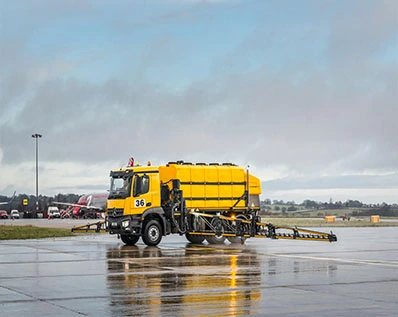
The best cost-to-performance ratio is found in anti-icing uses, where fluid is used before it starts to rain. Spray rates usually fall between 25 and 75 gallons per lane mile, but this depends on how hot the ground is and how bad the storm is expected to be. When you apply the treatment is important. Treating between one and three hours before it snows stops ice from sticking together, which makes it easier to remove the snow. For deicing applications—which treat ice that has already formed—higher amounts and longer stay times are needed for the solution to get under the layer of ice. Tanker spray booms should keep the pressure steady to make sure the spray is spread out evenly. FAST systems, on the other hand, need to be calibrated to keep the nozzles from getting clogged and to check the coverage patterns.
Equipment Compatibility and Maintenance
Compared to chloride salts, deicing liquid potassium acetate doesn't corrode, which makes it easier to maintain equipment. Standard carbon steel spray systems work fine, but parts made of stainless steel or plastic last longer. To keep crystallization from building up, pump seals, hoses, and spray nozzles should be cleaned with clean water at the end of each operating season. Every year, maintenance checks on automated bridge spray systems make sure they are working properly by checking the mixture ratios and spray pattern coverage. As suggested by the SDS, people working with concentrated solutions should wear the right PPE, such as rubber gloves and safety glasses. However, because the product is not very poisonous, the risk is lower than with caustic deicers.
How to Verify and Source Certified Potassium Acetate Deicing Liquids?
To be successful at procurement, you need to carefully evaluate suppliers and build relationships with companies that are dedicated to quality and openness. Buyers must rigorously check certified deicing liquid potassium acetate before deployment.
Supplier Verification Checklist
Manufacturers with a good reputation always provide full paperwork. Ask for up-to-date ISO certifications with valid dates—expired certifications mean that quality systems have stopped working. Look at more current Certificates of Analysis that show real test results for several batches instead of general specification sheets. Ask for customer examples from people who use your product in similar ways, like airport operators, city governments, or highway builders, and make sure they are happy with how it works and how reliable the supply is. Check how much they can make. Suppliers with dedicated deicing liquid potassium acetate factories are safer when it comes to supply security than dealers who buy from a lot of different makers. Shanxi Zhaoyi Chemical has been making chemicals for 35 years and can make 150,000 tons of them every year. This shows that they have the scale and skill to keep the quality high.
Critical Questions for Supplier Evaluation
When screening suppliers, ask specific questions that show how knowledgeable they are in your field and how committed they are to quality. Ask for more information about the chemistry and amounts of corrosion inhibitors. Proprietary formulas protect intellectual property, but providers should explain how they protect infrastructure. Ask about batch monitoring tools that let you keep track of a product from the time it is made to the time it is delivered. Talk about the management rules that must be followed to keep the quality of the product intact while it is being shipped, especially when shipping in cold weather. Learn about lead times, minimum order amounts, and managing your inventory. Reliable sellers keep safety stock on hand so that they can quickly fill emergency orders during bad weather.
Bulk Purchasing and Supply Chain Considerations
Buyers and manufacturers both gain from long-term supply deals. Volume agreements allow for better prices and make sure that supplies will be available during times of high demand. Make it clear what kinds of containers are available. IBC tanks work well with city storage facilities that can move tanks, and flexitanks are the best way to save money on shipping costs for faraway places. Check shipping arrangements that promise on-time arrival. Shanxi Zhaoyi's partnerships with foreign logistics providers ensure low freight costs and reliable transit times. Set up clear ways for technical help to communicate so that you can respond quickly to questions about how to use the deicing liquid potassium acetate or when the weather calls for changes in doses. Quality sellers don't just see themselves as suppliers; they see themselves as partners in the success of the business.
Conclusion
With certification and quality standards, deicing liquid potassium acetate solutions go from being common chemicals to being valuable assets that protect infrastructure and keep operations safe. Procurement pros can be sure that goods meet strict performance standards by checking for ISO, ASTM, and environmental certifications. By knowing about important quality factors like chemical purity, physical properties, and environmental effect, it is possible to make smart comparisons between different deicing methods. The right way to store, handle, and use a product will make it work better and protect your equipment purchases. Buying from well-known companies with clear testing procedures, detailed quality systems, and dependable supply lines guarantees the same performance every season. When bad winter weather makes it impossible to keep operations going, approved deicing solutions give vital infrastructure the dependability and peace of mind it needs.
FAQ
Can potassium acetate deicer be mixed with other chemicals?
Even though deicing liquid potassium acetate can be mixed with some chemicals, it is not a good idea to do so while it is being stored. Blending weakens the ability to lower the freezing point and might mess up rust prevention kits that are made to work with deicing liquid potassium acetate chemistry. When you mix goods from different makers, the interactions that happen can be unpredictable and affect performance. Keep different deicing chemicals in separate storage areas and only use the right application tools to keep the purity of the products.
How does certified potassium acetate impact total cost of ownership?
Even though it costs more per unit than chloride salts, approved deicing liquid potassium acetate lowers the total cost of ownership by protecting infrastructure. Getting rid of rust increases the life of pavement by 30 to 50 percent, delays the need to rebuild bridge decks by decades, and lowers the cost of fleet upkeep. Using products approved by the EPA lowers the costs of following environmental rules. Reliable anti-icing performance leads to better safety records, which lowers the risk of being sued. For high-value infrastructure, lifecycle cost studies always show that deicing liquid potassium acetate options are the best choice.
What certifications are essential for airport runway applications?
As part of running an airport, you have to show that you follow SAE AMS 1435 by putting aircraft materials through ASTM F 483 and F 1111 weathering tests. ISO 9001 approval makes sure that the quality of the deicing liquid potassium acetate products is always the same. Chemical safety at foreign airports is confirmed by REACH registration. EPA environmental clearances prove that rainwater flow is safe for the environment. Manufacturers should show proof of all certificates, like Certificates of Analysis for each batch that support the specs.
Partner with Zhaoyi Chemical: Your Trusted Deicing Liquid Potassium Acetate Manufacturer
Shanxi Zhaoyi Chemical has been making acetate with great care for 35 years, which is why it is known as a top seller of deicing liquid potassium acetate. Our ISO 9001, ISO 14001, and ISO 45001 standards show that we are dedicated to quality, safety at work, and taking care of the environment. With the ability to produce 150,000 tons per year, we keep the level of inventory and supply dependability that airport and city officials need. Our deicing liquid potassium acetate solution (CAS 127-08-2) is clear and has no color. It works well at -60°C and keeps infrastructure from rusting. We offer flexible packing in 1000L IBC tanks and flexitanks. Production wait times are 5–7 days, and in-stock items can be delivered 24 hours a day. For all of your winter maintenance needs, email our expert team at sxzy@sxzhaoyi.com and they will give you detailed application advice, product samples, and cheap quotes.
References
Society of Automotive Engineers. "Potassium Acetate Aqueous Solution, Freezing Point -60°C (-76°F)." SAE Aerospace Material Specification AMS 1435B, 2019.
American Society for Testing and Materials. "Standard Test Method for Total Immersion Corrosion Test for Aircraft Maintenance Chemicals." ASTM F483-18, West Conshohocken, PA, 2018.
Transportation Research Board. "Strategies for Managing Snow and Ice Control Materials to Protect Water Quality." NCHRP Synthesis 496, National Academies Press, Washington, DC, 2016.
U.S. Environmental Protection Agency. "Technical Development Document for the Airport Deicing Effluent Limitation Guidelines." EPA-821-R-12-005, Office of Water, Washington, DC, 2012.
National Research Council Canada. "Performance of Acetate-Based Pavement Deicing and Anti-Icing Products: Field Studies and Laboratory Research." NRC Technical Report TR-2008-03, Ottawa, 2008.
Federal Aviation Administration. "Winter Operations: Aircraft Ground Deicing and Anti-icing." Advisory Circular AC 150/5200-30D, U.S. Department of Transportation, Washington, DC, 2017.

USER EVALUATE
Here is the customer's evaluation of us