



Chemical Structure and Benefits of Potassium Acetate
Industrial solid potassium acetate (CH3COOK) is a very important chemical compound that is used in many fields that need high-performance products that are also good for the environment. This white, solid substance is made up of the cation potassium (K+) and the anion acetate (CH3COO-). Together, they make an organic salt that dissolves very easily and doesn't corrode much. This compound can be used to do a lot of different things, from melting snow off airport runways to keeping drilling fluids stable in oil exploration. It can solve problems that other compounds based on chloride can't without putting the environment or infrastructure at risk.
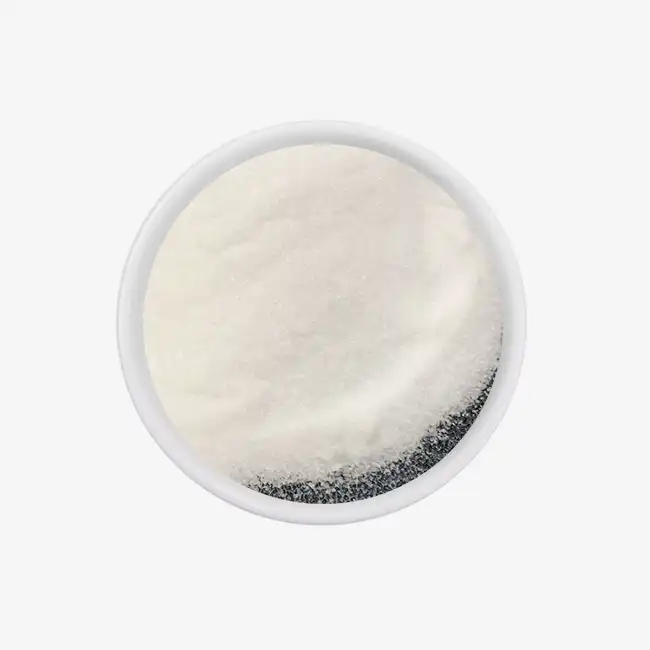
Understanding the Chemical Structure of Industrial Solid Potassium Acetate
Molecular Composition and Bonding Characteristics
Potassium acetate's basic structure can be seen in its chemical formula, CH3COOK. This molecule has a molecular weight of 98.14 g/mol and an ionic bond between the potassium cation and the acetate anion. The acetate part has a methyl group (CH3) connected to a carboxylate functional group (COO-), making an organic structure that is stable. This particular design makes it easy for the molecule to break apart in water, releasing potassium ions that are important in many industrial processes.
When procurement workers understand this compound's chemical makeup, they can see why it works differently than inorganic salts. The organic acetate part helps it break down naturally, and the potassium ion is very important for many uses, from keeping rock stable to adding nutrients to food. Because it can do two things at once, this material is especially useful in fields that have to follow strict environmental rules and meet high performance standards.
Physical and Chemical Properties for Industrial Applications
The physical properties of industrial solid potassium acetate are very interesting and directly affect how well it works in different situations. The substance is a white powder or granule that is crystallised. It dissolves very easily in water—about 253 grams dissolve in 100 millilitres of water at 20°C. This high solubility makes it easy to make concentrated solutions quickly, which cuts down on mixing time and makes operations easier in the field.
With a breaking point of 292°C, the material is very thermally stable, which means it doesn't break down at high temperatures like those found in chemical production and manufacturing. The substance keeps the pH level between 7.5 and 9.0 in a 5% water solution, which keeps metal structures and equipment from rusting in acidic environments. Because it is deliquescent, it easily absorbs moisture from the air. This means it needs to be carefully packaged, but it also makes it easier to dissolve quickly when making working solutions.
Potassium acetate naturally breaks down into potassium ions and acetic acid, unlike chloride-based deicers that leave behind harmful leftovers. Low biological oxygen demand (BOD) and chemical oxygen demand (COD) numbers were confirmed in the lab. This means that when the compound hits rivers through waste, it will have little effect on the environment. Because of these qualities, it is a good choice for places that need to be careful with the environment, like airports near marshes or bridge decks over salmon-bearing streams.
Safety Data and Handling Guidelines
When working with industrial solid potassium acetate, you need to be aware of how it absorbs water instead of worrying about its immediate danger. Under normal working conditions, the material doesn't pose much of a health risk, but it should still be handled with care. Due to its alkaline nature, dust may cause slight discomfort when it comes in direct touch with the skin. Inhaling dust can also affect the nasal tract. Safety glasses, dust masks, and chemical-resistant gloves are some of the safety gear that can be used during material movement and mixing activities.
How a product is stored has a big effect on how long it lasts and how consistently it works. To keep the substance from absorbing water and caking, it needs to be stored in dry, well-ventilated buildings with a relative humidity below 50%. Containers should stay closed until they are used, and items that have been opened need to be resealed with moisture-proof seals. The material stays good for about two years if it is kept properly in multi-layer plastic or polypropylene bags away from things that don't work with it.
The transportation rules for solid potassium acetate stress the importance of keeping the product dry and preventing damage. Secure palletised loads so they don't move around while they're being moved, and keep packages whole to avoid contamination. The combination works well with normal warehouse equipment and doesn't pose any special risks for fire or explosion, which makes operations easier than with more dangerous industrial chemicals.
Key Industrial Benefits of Potassium Acetate
Performance Across Critical Industrial Applications
It's clear how useful potassium acetate is when you look at how it works in different business areas. The chemical is one of the main ingredients in runway deicers used in flight and infrastructure upkeep. It works well at temperatures as low as -60°C. Formulations based on acetate are used to keep major foreign airports, like those run by the Port Authority of New York and New Jersey, safe during winter weather. While urea-based goods damage concrete and sodium chloride corrodes plane parts, potassium acetate lowers the freezing point without these harmful side effects.
This chemical is used in water-based mud systems for

, where rock stabilisation is what makes the well strong. The potassium ions switch places with clay lattice ions, which stops the clay from getting wet and growing, which can make the wellbore fall. Field data from operations in the Permian Basin show that drilling fluids with potassium acetate improve productivity by keeping the wellbore stable through reactive shale rocks. Because the substance dissolves easily, it can be used to make thick brines without adding solid particles that could damage the permeability of the reservoir.
Potassium acetate is used as a catalyst and stabilising agent in chemical factories to make polyurethane and process textiles. Its high purity keeps catalysts from getting poisoned, which keeps reaction dynamics stable and affects product quality and yield directly. Agricultural uses benefit from the compound's dual role as a source of potassium nutrients and a pH cushion, which helps plants get the nutrients they need while saving sensitive crop types from alkalinity stress.
Environmental and Safety Advantages Over Traditional Alternatives
Taking care of the environment is becoming more and more important when making purchases, which makes potassium acetate's environmental image a big competitive benefit. Through natural biochemical processes, the substance breaks down into carbon dioxide, water, and potassium ions, all of which are good for plants. This is very different from chloride salts, which build up in topsoil, groundwater, and surface waters and hurt the environment over time.
Testing for aquatic toxins shows that amounts common in airport flow or industrial waste have little effect on fish and animal species. A study in the journal Environmental Toxicology and Chemistry found that potassium acetate had LC50 values (concentrations that killed 50% of the test organisms) that were orders of magnitude higher than chloride-based options. This showed that it is safe for streams that receive treated runoff. This lower level of toxins lets sites close to environments that are sensitive keep working well while still meeting environmental standards.
Keeping infrastructure in good shape is another important environmental benefit. Chloride deicers make it faster for concrete to break down and rebar to rust, which shortens the life of bridges, parking lots, and airport walkways. Because potassium acetate doesn't corrode, it saves these assets and lowers the carbon emissions and resource use that come with replacing them too soon. Lifecycle research shows that acetate-based projects have a lower total cost of ownership, even though the original material costs are higher. This is because they make facilities last longer and require less upkeep.
Operational Efficiency and Cost-Benefit Analysis
When purchasing managers look at potassium acetate, they need to think about more than just the unit price. They need to look at the total working costs as well. The substance dissolves more easily than options that are less soluble, which cuts down on the time and tools needed for mixing. Maintenance facilities can quickly make working solutions with simple mixing tools, so they don't need the hot holding tanks that some competing goods need.
Because they work better, application rates for industrial solid potassium acetate are often lower than those of chloride-based options. Airport operations say they use 20–30% less potassium acetate per square metre treated compared to using calcium chloride for the same freeze-point decline, which makes up for the difference in material cost. Because of less rust, spreading trucks, holding tanks, and mixing systems will last longer, which will lower the number of times they need to be replaced.
There are trade-offs between potassium acetate and sodium acetate that are important for certain uses. Not only does sodium acetate cost less, but it also doesn't work as well in very cold situations and doesn't add potassium to drilling or farming. Which of these compounds to use relies on the temperature ranges that will be used, how sensitive the compound needs to be to its surroundings, and its specific performance needs. Magnesium acetate is another option, but it is mostly used for deicing infrastructure, and its performance is usually somewhere between that of sodium and potassium forms.
Procurement Guide for Industrial Solid Potassium Acetate
Supplier Evaluation and Quality Assurance Standards
To find trustworthy providers, you need to carefully look at their production skills, quality control methods, and the security of their supply chains. Production capacity and wait times have a direct effect on supply consistency. Well-known producers usually keep their annual production capacity at 150,000 tonnes or more and their production cycles at 5–7 days. Buyers should check with sellers to see if they have dedicated production lines or multiproduct facilities. Dedicated lines lower the risk of cross-contamination and make sure that each batch is the same.
Protocols for quality assurance separate professional sellers from market traders. Comprehensive testing programs keep an eye on important factors in real time while the product is being made, test the end product before it is sold, and keep samples so that problems can be looked into later if they happen. Wet chemistry analysis, laboratory methods like ion chromatography, and physical tests of qualities like particle size distribution that affects breakdown rates and handling features should all be able to be done in the lab.
Documentation that shows you're following the rules is very important, especially for foreign trade. Export licenses, customs classification data, and compliance statements for REACH (Registration, Evaluation, Authorisation, and Restriction of Chemicals) in European markets or TSCA (Toxic Substances Control Act) in the US should be easy for suppliers to show. Companies that make goods for the food and drug industries need to show that their facilities have been inspected and that their products have been registered in ways that are appropriate for these highly controlled industries.
Packaging Options and Logistics Considerations
Standard packing layouts for solid potassium acetate protect items while also making them easy to handle. The most common unit for handling by hand is the 25-kilogram plastic weave bag. On the other hand, 1000-kilogram bulk bags, also known as super sacks or FIBCs, are better for automated processes and cut down on packing trash. Because the material absorbs water, moisture-proof covers are necessary. Multi-layer polyethylene or polypropylene construction is sufficient for safety during standard distribution times.
How containers are loaded affects how much it costs to ship goods and how good they are when they arrive. Standard 20-foot containers can hold about 20 to 22 metric tonnes of goods when using palletised 25 kg bags or 22 to 24 metric tonnes when using bulk bags. However, weight limits vary by target country and shipping route. When shipping goods by water, proper dunnage and load locking keep them from moving and causing damage. Moisture-absorbing desiccants keep containers from condensation when the temperature changes.
As a result of making batch amounts and shipping costs, minimum order quantities (MOQs) are set. Full container loads (FCL) usually have the best prices, but less-than-container loads (LCL) are available for users who need to move less, but are willing to pay more per unit. To find the best order frequency and quantity, buyers who plan to keep using an item should compare the costs of keeping it in stock to the savings that come with buying in bulk. They should also keep the item's two-year shelf life in mind.
Sample Testing and Delivery Terms
Buyers are protected against standard mistakes or quality differences when they ask for product samples before making big purchases. Reliable sources are happy to send samples, usually in amounts of 1 to 5 kilograms, which are more than enough for lab tests and small-scale application trials. Specifications like purity, moisture content, particle size, and dissolving rate should be checked through testing. The results should then be compared to seller COAs to make sure the paperwork is correct.
When doing business across borders, choosing the right Incoterms decides how costs are split and where risks are transferred. After loading at the starting port, FOB (Free On Board) terms put the responsibility for shipping and insurance on the buyer. CIF (Cost, Insurance, and Freight) terms, on the other hand, cover these costs to the destination port. If a buyer already has a goods forwarder relationship and sends a lot, they may prefer FOB terms. On the other hand, smaller buyers often find that CIF terms make operations easier, even though they cost a little more.
The terms of payment depend on how risky the buyer is seen to be and how creditworthy the buyer is. For the first time, transactions usually need an advance payment or a letter of credit as protection for the payment. Once a relationship is formed, net terms may be used. Buyers should find out if the price includes any fees and taxes that apply or if it only includes the value of the goods at the factory and doesn't include shipping costs. Knowing the total arrived costs lets you compare different sources accurately and keeps your budget from going over because of fees you didn't expect.
Conclusion
Compared to other options, industrial solid potassium acetate works very well in many different situations and protects the environment and infrastructure in ways that other options can't. It works well for de-icing, digging, making chemicals, and farming because it has a special chemical structure that combines potassium cations with recyclable acetate anions. Even though it costs more than chloride salts, the substance should be considered because it works better in cold weather, doesn't corrode, and doesn't harm the environment. To be a good buyer, you need to look at the quality systems of suppliers, know about shipping and packing, and follow the right rules for keeping and handling. When companies use this substance, they improve business efficiency while also meeting environmental care goals. This makes them look like responsible stars in their field who are committed to sustainable practices without lowering performance standards.
FAQ
What makes potassium acetate better than calcium chloride for deicing runways?
Calcium chloride is cheaper at first, but it speeds up the rusting of aeroplane parts, ground support equipment and concrete sidewalks. Potassium acetate lowers the freeze point just as well without causing corrosion, which protects expensive infrastructure investments. Because it breaks down naturally, it doesn't build up over time in nearby ecosystems, so it meets strict airport environmental permits. When infrastructure security and environmental compliance are taken into account, the total lifetime cost study shows that the product is a better deal, even though the materials are more expensive.
How can we keep hygroscopic potassium acetate from clumping together when we store it?
Dehumidification devices should be used to keep the relative humidity in the building below 50%. Multi-layer moisture-proof packaging should be used to keep packages covered until they are used. Store pallets far enough apart to allow air to flow between them, and use pallets or dunnage to keep them from touching the floor directly. As soon as the bags are opened, they should be resealed right away using heat sealers or strong mechanical seals. For longer protection, the leftover material should be moved to sealed drums with desiccant packs.
Can potassium acetate be used instead of sodium acetate in devices that remove nitrogen from wastewater?
Yes, potassium acetate works the same way as potassium supplementation as a carbon source for bacteria that break down nitrogen, but it may not be worth the extra money if potassium supplementation doesn't help the treatment process. Most of the time, sodium acetate is cheaper for pure denitrification tasks, while potassium acetate is better when adding potassium has extra benefits or when too much sodium could affect discharge permit limits.
Partner with Zhaoyi Chemical for Reliable Industrial Solid Potassium Acetate Supply
In the industrial acetate market, Zhaoyi Chemical brings more than 35 years of production experience. They make high-quality potassium acetate that meets the strict needs of airports, drilling companies, and chemical makers all over North America. Our ability to produce 150,000 tonnes per year guarantees a steady supply, even during the busiest winter months. Our quality control systems are backed by ISO 9001, ISO 14001, KOSHER, and HALAL standards. We have strict standards for cleanliness that go beyond 99.0% and a chloride level below 0.2%. This means that every batch of industrial solid potassium acetate performs the same way. As a seller of industrial solid potassium acetate with a lot of experience, we can offer flexible packing such as 25 kg bags and 1000 kg bulk bags, reasonable prices for large orders, and full expert support to help you make the best use of application methods. Please email our buying team at sxzy@sxzhaoyi.com to talk about your unique needs and request product samples. You can also learn how working with a committed maker instead of chemical dealers can help your business succeed by providing supply chain security and technical knowledge.
References
American Concrete Institute. (2018). Guide to Deicer Impacts on Concrete Pavements and Structures. ACI Committee Report 201.2R-16.
Environmental Toxicology and Chemistry Journal. (2019). Aquatic Toxicity Assessment of Acetate-Based Deicing Compounds Compared to Chloride Salts. Volume 38, Issue 4, pages 892-903.
Society of Petroleum Engineers. (2020). Shale Stabilization Using Potassium-Based Drilling Fluids: Field Performance Analysis. SPE Technical Paper 198764.
International Civil Aviation Organization. (2021). Airport Services Manual Part 2: Pavement Surface Conditions. Doc 9137-AN/898, Fourth Edition.
American Association of State Highway and Transportation Officials. (2017). Guidelines for the Selection of Snow and Ice Control Materials to Mitigate Environmental Impacts. AASHTO Publication Code SSCMGD-1.
Journal of Agricultural and Food Chemistry. (2020). Potassium Acetate as Dual-Function Nutrient and pH Buffer in Specialty Crop Production. Volume 68, pages 3421-3429.

USER EVALUATE
Here is the customer's evaluation of us