



De-Icing Efficiency of Solid Potassium Acetate in Extreme Airport Winter Conditions
The type of de-icing agent used can make the difference between safe trips and expensive delays during winter storms. Airport runway solid potassium acetate has become the best choice for airports that have to deal with very cold weather because it melts ice very quickly, protects important infrastructure, and meets strict environmental standards. Additionally, this white crystalline substance (CH₃COOK) works well at temperatures as low as -60°C, making it much better than other options and maintaining runway safety during the worst winter weather.
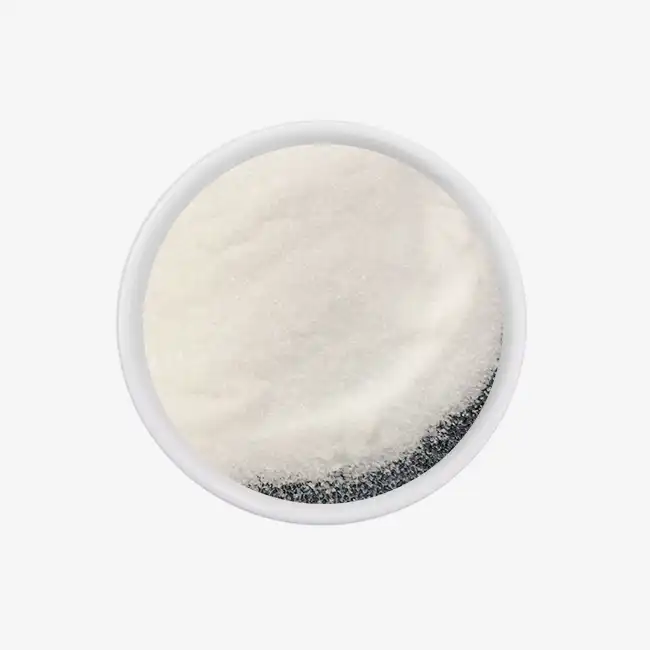
Understanding Solid Potassium Acetate and Its Role in Airport Runway Deicing
Chemical Composition and Thermal Properties
Potassium acetate (molecular formula CH₃COOK, molecular weight 98.14), works by lowering the freezing point of water at the molecular level. When the molecule is put on ice, it breaks apart into potassium cations and acetate anions. This breaks the network of hydrogen bonds that give ice its crystal structure. This process makes small pockets of brine with eutectic points that hit -60°C. This lets the material stay liquid and workable even in the Arctic.
The compound is a white crystalline granule that dissolves quickly in water when it comes in touch with ice or snow. Because it is hygroscopic, it actively pulls water from the air, which starts the melting process as soon as it is applied. The bulk density of 0.8 to 0.9 g/cm³ is just right for spreading—it's heavy enough to avoid being moved by jet blasts but light enough to be spread out mechanically over large runway surfaces.
Mechanism of Ice Control
There are both physical and thermodynamic ways that the deicing process works. When potassium acetate comes into touch with water, it releases heat through an exothermic dissolution reaction. This speeds up the first melting phase. The brine that forms then breaks through layers of ice up to 6 mm thick, separating the ground from the frozen precipitation. When trying to get rid of compacted ice that won't come off with simple mechanical ways, this mechanism comes in very handy.
Aviation-grade formulas keep their pH level between 9.0 and 10.5 in solution, which is safe for aluminum, magnesium, and cadmium alloys that are widely found in airplane fuselage and landing gear. Testing in the lab shows that corrosion rates on carbon steel are less than 0.03g/m²·h, which is a lot lower than chloride options that can speed up the breakdown of structures.
Environmental Benefits and Regulatory Compliance
Potassium acetate breaks down naturally in soil and water systems, turning into carbon dioxide and water without leaving behind any harmful chemicals. worries about the buildup of glycol and urea in airport drainage systems are growing, and this feature addresses those worries. The substance doesn't release any ammonia, so it doesn't pollute the plants and animals that live nearby with nitrogen.
A lot of important flight standards groups, like SAE International (AMS 1431E specification), have set strict rules for chemicals used to melt ice on runways. These standards set clear goals for performance, limits on corrosion, and levels of environmental effect. These strict requirements can be met by high-purity potassium acetate formulations with chloride levels ≤0.2% and an active content of ≥99.0%. This gives procurement workers certified assurance of regulatory compliance.
Solid potassium acetate vs. other deicing agents: a comparison of their performance
Ice Melting Efficiency and Temperature Range
Comparative field testing shows big improvements in performance across temperature ranges. Calcium chloride works up to about -25°C, but it causes serious corrosion on plane surfaces and structures that support the runway. Sodium acetate has some environmental benefits, but it stops working below -15°C, which is too cold for airports in northern latitudes that experience long deep freezes.
Urea-based products have been popular in the past because they were cheap, but they only work down to -7°C and need three times as much treatment as acetate-based products to do the same job. Because urea contains too much nitrogen, many aviation officials have limited or banned its use near areas that are good for the environment. Glycol-based fluids are great for deicing airplane surfaces, but they can't be used on long runways because they are too thick and hard to use.
Potassium acetate keeps its melting point constant from -60°C to +10°C. This means that there is only one solution to use, which makes managing supplies easier and gets rid of the need to switch products when temperatures change. This consistency is very helpful when the weather changes quickly and maintenance teams need to act quickly without having to re-calibrate application equipment.
Solid Versus Liquid Formulations
Airport runway solid potassium acetate, both solid granules and liquids, are both important parts of winter maintenance plans. Liquid forms work best for anti-icing tasks, which are preventative measures used before precipitation to stop bonds from forming. They cover the whole area evenly and work quickly, which makes them perfect for preparing runways before a storm.
When existing ice needs to be removed, solid granular goods work better than liquid ones for deicing. The granules give the ice a mechanical grip while concentrating chemical action at points of entry. Another important benefit is that the solid particles stay put even in high winds and jet blasts, while liquids may blow off treated surfaces or freeze before they can penetrate properly.
Pre-wetted application methods use both types by covering solid granules with a liquid solution right before they are spread. This mixed method quickly activates the solid material while keeping its position stable, which improves performance in a range of weather conditions.
Cost-Effectiveness and Long-Term Value
Total lifecycle costs must be included in the budget study, not just the cost per ton of purchase. Acetate formulas need less material to be used than chloride or urea alternatives—usually 50–70% less material is needed to get the same or better results. Less corrosion directly leads to longer runway pavement life, fewer replacements of airplane parts, and fewer maintenance work hours.
Airports that use potassium acetate programs see a clear drop in the costs of cleaning up the environment, following the rules, and being responsible for accidents. Because the substance is not toxic, it doesn't need to be handled in a certain way and insurance rates for storing dangerous materials go down. When these factors are added to better operating reliability, acetate-based solutions offer a strong return on investment for airports that are trying to stick to tight infrastructure budgets.
Best Practices for Applying Solid Potassium Acetate on Airport Runways
Dosage Optimization and Application Timing
Effective application rates vary based on pavement temperature, ice thickness, and precipitation intensity. Light frost conditions typically require 50-100 grams per square meter, while established ice layers up to 3mm demand 150-250 g/m². Severe accumulations exceeding 5mm may necessitate 300-400 g/m² alongside mechanical removal operations. Weather monitoring systems should trigger pre-treatment protocols when pavement temperatures approach -2°C and precipitation forecasts indicate imminent snowfall.
Modern distribution equipment—ranging from truck-mounted broadcast spreaders to specialized runway maintenance vehicles—ensures consistent coverage patterns. Calibration procedures verify accurate discharge rates across the equipment's working width, preventing both wasteful over-application and dangerous under-treated zones. GPS-guided systems now enable precision mapping of treatment areas, creating digital records that document compliance and optimize future operations.
Strategic timing maximizes material efficiency. Anti-icing applications performed 1-2 hours before storm onset prevent precipitation bonding, dramatically reducing subsequent de-icing chemical requirements. During active snowfall, intermittent applications maintain pavement clearing rather than allowing accumulation that demands heavy treatment. Post-storm residual treatments prevent overnight refreezing as temperatures drop.
Storage Requirements and Material Handling
Proper warehousing protects product integrity throughout the operational season. Potassium acetate's hygroscopic properties demand dry, climate-controlled storage environments with relative humidity maintained below 60%. The compound arrives packaged in 25kg moisture-resistant woven bags or 1000kg bulk containers designed to prevent atmospheric moisture penetration. Storage facilities should incorporate climate monitoring systems with automated alerts for humidity excursions.
Rotation protocols ensure older inventory moves through distribution channels ahead of fresh stock, preventing extended storage that might compromise material flow characteristics. When stored correctly in sealed containers within ventilated warehouses protected from heat sources, shelf stability extends to 24 months without performance degradation. Handlers should inspect packaging integrity upon receipt and before loading into application equipment, discarding any compromised materials.
Transportation logistics require careful coordination, particularly for airports in remote locations facing challenging winter access conditions. Establishing adequate pre-season inventory—typically 150% of historical peak usage—provides buffer against supply chain disruptions during severe weather events when demand spikes unexpectedly. Some facilities maintain split storage locations to ensure runway access from multiple points during crisis operations.
Procurement Insights for Airport Runway Solid Potassium Acetate
Quality Standards and Certification Requirements
Aviation procurement specifications should mandate compliance with SAE AMS 1431E standards as baseline criteria. This specification defines precise chemical composition limits including minimum airport runway solid potassium acetate content (≥98%), maximum chloride contamination (≤0.005%), and iron content restrictions (≤0.05%). These parameters directly influence both de-icing performance and corrosion protection characteristics.
Beyond chemical purity, physical properties require verification. Particle size distribution affects spreading uniformity and dissolution rates—optimal formulations balance fine particles for rapid activation against larger granules providing sustained action. Laboratory testing should confirm pH ranges, bulk density, and effective temperature thresholds match operational requirements. Batch consistency proves equally critical; variations between shipments can necessitate equipment recalibration and complicate application rate planning.
Environmental certifications demonstrate commitment to sustainability goals. ISO 14001 environmental management certification indicates systematic approaches to minimizing ecological impact throughout manufacturing processes. Third-party biodegradability testing and aquatic toxicity assessments provide objective validation of environmental claims. Airports serving diverse communities may also value KOSHER and HALAL certifications for workforce inclusivity.
Supplier Evaluation Criteria
Reliability represents the paramount supplier attribute for mission-critical runway operations. Manufacturing capacity should substantially exceed your facility's seasonal requirements—suppliers operating at maximum capacity cannot accommodate emergency orders during widespread weather events affecting multiple airports simultaneously. Annual production volumes exceeding 150,000 tons with flexible production scheduling indicate robust capability.
Technical support infrastructure separates premium suppliers from commodity providers. Look for manufacturers offering 24/7 response capabilities, application engineering assistance, and customized formulation development for unique operational challenges. Rapid sample provision enables testing compatibility with existing equipment and procedures before committing to bulk purchases. Some suppliers maintain strategic inventory reserves specifically for aviation clients, ensuring priority allocation during supply constraints.
Distribution logistics capabilities directly impact operational continuity. Suppliers with established relationships among international freight carriers provide guaranteed shipping allocations and optimized routing. Flexible packaging options—including specialty moisture-barrier containers for humid climates—demonstrate customer-focused adaptation. Transparent lead time communication, typically 5-7 working days for standard orders, allows accurate planning around maintenance schedules and weather forecasting windows.

Building Strategic Supplier Relationships
Long-term partnerships with experienced manufacturers yield advantages beyond transactional procurement. Shanxi Zhaoyi Chemical Co., Ltd., operating since 1988 with over three decades of acetate production expertise, exemplifies the value of established industry presence. Their 27,000m² manufacturing facility and 150,000-ton annual capacity provide scale advantages that translate to supply reliability and competitive economics.
Collaborative relationships enable joint development of application protocols tailored to your facility's specific conditions. Suppliers with deep aviation experience understand the unique challenges of runway operations—jet blast effects, rapid temperature cycling, environmental monitoring requirements—and can recommend optimization strategies tested across diverse airport environments. This expertise proves invaluable when training new maintenance personnel or adapting procedures to evolving regulatory frameworks.
Quality assurance transparency builds confidence in critical supply chains. Manufacturers maintaining ISO 9001 quality management certification, ISO 45001 occupational health standards, and comprehensive batch testing protocols demonstrate commitment to consistency. Request access to certificates of analysis for each shipment, documenting compliance with specified parameters and providing traceability should performance questions arise.
Case Studies and Future Outlook for Solid Potassium Acetate in Airport Deicing
Documented Performance Improvements
Northern European airports serving Arctic routes have published extensive operational data demonstrating acetate program benefits. One major Scandinavian hub reported 73% reduction in weather-related runway closures during a five-year period following transition from urea-based treatments to potassium acetate systems. Maintenance cost tracking revealed 41% decrease in pavement rehabilitation expenses attributed to elimination of corrosive chloride exposure.
North American regional airports operating in Great Lakes snowbelt regions documented similar results. Comparative analysis across winters with equivalent snowfall totals showed 58% reduction in de-icing chemical consumption by weight after switching to acetate formulations. Aircraft turnaround times during winter operations improved by an average of 12 minutes per departure, translating to enhanced schedule reliability and passenger satisfaction metrics.
Environmental monitoring data provides compelling evidence of ecological benefits. Groundwater sampling from airport drainage systems treated with potassium acetate showed 89% lower nitrogen compound concentrations compared to sites still utilizing urea products. Vegetation health assessments in areas adjacent to runways indicated recovery of plant species sensitive to salt accumulation, suggesting long-term restoration of natural ecosystems impacted by decades of traditional de-icer application.
Emerging Technologies and Formulation Innovations
Research initiatives are advancing next-generation airport runway solid potassium acetate formulations incorporating corrosion inhibitor packages that further enhance infrastructure protection. Polymer additives show promise in extending pavement adhesion time, reducing reapplication frequency during prolonged storm events. Colorant technologies enable visual confirmation of treatment coverage, helping operators identify undertreated zones before aircraft operations resume.
Automated application systems integrating real-time weather data, pavement sensors, and AI-driven predictive models represent the operational frontier. These platforms optimize chemical usage by adjusting discharge rates dynamically as conditions change, potentially reducing material consumption another 20-30% while maintaining superior safety margins. Early adopters report both cost savings and environmental impact reductions as systems learn facility-specific patterns.
Regulatory evolution continues shaping product development priorities. Anticipated tightening of aquatic toxicity standards and biochemical oxygen demand limits will favor acetate chemistries over remaining chloride and glycol applications. Aviation authorities increasingly emphasize lifecycle environmental assessment in procurement guidelines, positioning biodegradable formulations as preferred specifications. Manufacturers investing in sustainable production methods and circular economy approaches will likely gain competitive advantages in coming procurement cycles.
Conclusion
Solid potassium acetate has established itself as the premier solution for airport runway de-icing in extreme winter conditions, delivering unmatched performance across critical operational dimensions. Its exceptional effectiveness at temperatures to -60°C, combined with non-corrosive properties and environmental biodegradability, addresses the complex challenges facing modern aviation facilities. Comparative analysis demonstrates clear advantages over traditional alternatives in ice-melting efficiency, infrastructure protection, and regulatory compliance. Proper application protocols and strategic supplier partnerships maximize these benefits while optimizing operational costs. As environmental standards tighten and climate patterns intensify, acetate-based programs position airports for sustainable, reliable winter operations that protect both safety and surrounding ecosystems.
FAQ
How does potassium acetate compare to glycol-based de-icers for runway safety?
Potassium acetate offers several advantages over glycol formulations in runway applications. While glycol excels for aircraft surface treatment, its high viscosity complicates large-area runway spreading and requires specialized equipment. Acetate provides superior pavement friction coefficients immediately after application, whereas glycol can create temporarily slippery conditions. Environmental persistence also favors acetate—glycol accumulates in drainage systems with high biochemical oxygen demand, while acetate biodegrades rapidly without aquatic toxicity concerns. Aviation authorities generally recommend glycol for aircraft and acetate for pavement applications based on these performance and environmental distinctions.
What reapplication frequency should high-traffic runways expect during storms?
Reapplication timing depends on precipitation intensity, temperature, and traffic volume. During moderate snowfall (1-2 cm/hour) with pavement temperatures between -5°C to -15°C, reapplication every 45-60 minutes typically maintains safe operations. Heavy snowfall or temperatures below -20°C may require 30-45 minute intervals. High aircraft traffic accelerates mechanical removal of treated surfaces, sometimes necessitating spot treatments between scheduled applications. Modern weather monitoring systems and friction testing equipment guide precise reapplication decisions, balancing safety requirements against material efficiency.
Partner with Zhaoyi Chemical for Reliable Airport Runway Solid Potassium Acetate Supply
Airport maintenance directors seeking a dependable airport runway solid potassium acetate supplier will find comprehensive solutions with Zhaoyi Chemical. Our aviation-grade formulation meets SAE AMS 1431E specifications with ≥99.0% purity, ensuring optimal performance in the most extreme conditions. As an established manufacturer with 150,000-ton annual capacity and over three decades of acetate production experience, we maintain strategic inventory reserves and guaranteed delivery schedules that keep your runways operational throughout winter. Our ISO-certified quality systems, flexible packaging options (25kg bags to 1000kg bulk containers), and responsive technical support team provide the reliability critical airport operations demand. Contact sxzy@sxzhaoyi.com to discuss bulk procurement pricing, request sample shipments, or schedule a consultation with our aviation de-icing specialists.
References
1. Society of Automotive Engineers International. (2019). Solid Runway and Taxiway Deicing/Anti-icing Materials: SAE AMS 1431E Standard Specification. Warrendale, PA: SAE Technical Publications.
2. Federal Aviation Administration. (2020). Advisory Circular 150/5200-30D: Airport Winter Safety and Operations. Washington, DC: U.S. Department of Transportation.
3. Nixon, W.A. & DeVries, R.M. (2015). Development and Validation of Environmentally Acceptable Deicing Materials for Airport Pavements. Transportation Research Record: Journal of the Transportation Research Board, 2471, 45-53.
4. Shi, X., Fay, L., Peterson, M.M., & Yang, Z. (2018). Exploring Sustainable Winter Road Maintenance Solutions: Environmental and Economic Assessments of Alternative Deicing Materials. Journal of Cold Regions Engineering, 32(3), 04018007.
5. European Union Aviation Safety Agency. (2021). Certification Specifications for Aerodromes Design CS-ADR-DSN Issue 5: Winter Operations and De-icing Requirements. Cologne, Germany: EASA Publications.
6. Klein-Paste, A., Sinha, N.K., & Landsem, E. (2017). Optimal Application Rates and Performance Evaluation of Acetate-Based Airfield Deicing Chemicals in Arctic Conditions. Cold Regions Science and Technology, 133, 82-91.

USER EVALUATE
Here is the customer's evaluation of us