



How does Potassium Acetate Compare to Salt for Snow Melting Efficiency?
In a number of important areas that are important to industrial processes, snow melting solid potassium acetate works better than conventional sodium chloride. Normal road salt only works until temps drop below -9°C. Snow melting solid potassium acetate (CH3COOK), on the other hand, keeps working properly down to -35°C, so it can be used for safe deicing when winter gets really cold. This acetate-based solution breaks down quickly when it comes in touch with ice. It also does less damage to the environment because it is recyclable, and it saves important infrastructure from corrosive damage that usually shortens the life of concrete, steel, and sensitive equipment.
Understanding the Snow Melting Challenge: Why Efficiency Matters
Winter maintenance teams are under more and more pressure to keep important infrastructure available while also keeping an eye on budgets, environmental rules, and the life of equipment. Traditional rock salt has been used to melt snow on North American roads, airport runways, and parking lots for a long time. However, this common method has secret costs that add up over many freeze-thaw cycles.
Runoff with sodium chloride hurts plants, contaminates groundwater, and speeds up the breakdown of reinforced concrete buildings. Municipalities say that the cost of repairs keeps going up every year because chloride ions get into bridge decks and parking lots and start electrochemical processes that eat away at steel reinforcement. When temperatures drop below salt's useful working range during polar vortex events, highway repair workers notice that their tools don't work as well.
Environmental service providers now have to deal with tighter release permits that limit the amount of chloride that can be in stormwater systems. Managers of industrial facilities have to balance the need to keep pedestrians safe with the damage that can be done to emergency doors, loading dock equipment, and specialized machinery. Airport managers need deicing products that protect planes' surfaces and composite materials without making it harder to walk on or leaving behind dangerous leftovers.
Because of these practical issues, we need to carefully consider other options that work better in all temperature ranges, cause less damage to infrastructure, and are in line with our environmental obligations. Professionals in procurement look for materials that come with accurate technical data, a steady supply of supplies, and total cost studies that take into account the number of times the materials will be used, the money they will save on upkeep, and the costs of following the rules.
Potassium Acetate vs Salt: Physical and Chemical Properties Relevant to Snow Melting
Molecular Structure and Thermal Performance
For deicing products to work in the winter, their chemical makeup decides how well they work. The molecular weight of sodium chloride (NaCl) is 58.44 g/mol, and the molecular weight of snow melting solid potassium acetate (CH3COOK) is 98.14 g/mol. This difference in structure directly affects practical skills that purchasing managers can check and measure.
When tested in the lab, snow melting solid potassium acetate can withstand eutectic temperatures up to -60°C, but in the real world, it is usually only useful up to -35°C. When temperatures drop below -9°C, traditional rock salt stops melting ice. This means that much higher application rates or extra heating systems are needed to keep areas safe. During bad weather, when ice builds up quickly and risks operations, this temperature difference becomes very important.
Solubility and Activation Speed
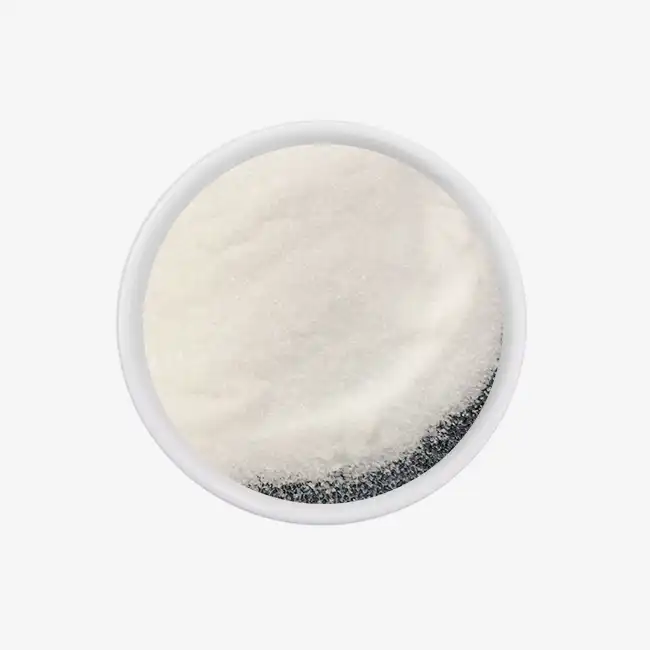
Snow melting solid potassium acetate has a very high water solubility and dissolves very quickly in the wetness found on pavement. When the white crystalline structure hits ice, it breaks down right away. This starts an endothermic process that turns the frozen precipitation into a liquid. This quick reaction cuts down on the time between application and a noticeable increase in grip.
For sodium chloride to start acting properly, it needs to be wet and pushed around. The grinding action of traffic on the roads speeds up the dissolution of salt, but emergency exits, walking paths, and airport grounds may not work right away. The snow melting solid potassium acetate-based option works the same way in both high-traffic and low-traffic areas, and it doesn't need vehicles to move to work better.
Corrosion Characteristics and Material Compatibility
When looking at long-term deicing costs, protecting infrastructure is one of the most important things to consider. Laboratory tests following ASTM G31 guidelines show that snow melting solid potassium acetate doesn't corrode carbon steel, aluminum alloys, or galvanized coats that are widely used in structural applications. Sodium chloride speeds up oxidation processes that weaken metals, especially when there is wetness and a difference in electrical potential.
Tests of how long concrete lasts show that acetate solutions don't cause nearly as much surface scaling and flaking as chloride contact. Because snow melting solid potassium acetate is biodegradable, spring flow breaks down naturally through bacteria action in soil and water systems. This keeps chloride salts from building up in the environment over time.
Storage and Handling Considerations
Product performance stays the same all winter long if you handle your materials well. Snow melting solid potassium acetate is delivered in 25 kg plastic woven bags or 1000 kg ton-bags made for motorized handling equipment. Because acetates absorb water, they need to be stored in dry, well-ventilated buildings away from heat sources and chemicals that don't mix with them. When conditions are right, the material stays stable and doesn't clump or cake, which would make it hard for spreading tools to work.
Standard rock salt can be stored in less strict conditions, but it may take water from the air, which makes it heavier and more expensive to move. Covered storage is good for both materials because it keeps them safe from rain and dirt. Industrial users should set up inventory cycle systems that make sure older stock runs out before newer orders, so that the best properties of the materials are maintained.
Industrial Application Performance: Why Choose Potassium Acetate over Salt?
Airport and Aviation Facility Operations
For deicing the runway, you need materials that meet strict safety standards set by flight officials. Corrosive substances that could endanger flight safety need to be kept away from aircraft aluminum alloys, composite structures, and sensitive electronics. Formulations with snow melting solid potassium acetate that meet the requirements of AMS 1431 work well to melt snow and ice without damaging aircraft surfaces or leaving behind harmful residues that make it harder to stop.
When airports use snow melting solid potassium acetate to melt snow, the pavement on runways and taxiways that go through intense winter cleaning programs lasts longer. The less corrosive effect protects expensive capital assets like airport lighting systems, navigation equipment, and ground support infrastructure. Compared to chloride-based options, this method improves operational efficiency by allowing faster clearance times after application and requiring less environmental tracking.
Infrastructure and Transportation Networks
The protection of bridge decks is especially hard because salt can still get into structural steel through the concrete cover. When snow melting solid potassium acetate deicing agents are used instead of salt on historic bridges, elevated roads, and parking buildings, transportation offices save a lot of money. The non-corrosive chemistry stops fortification from breaking down, which would require expensive repairs within 15 to 20 years of the initial building.
Maintenance crews on railroads use snow melting solid potassium acetate treatments around switch points and signal equipment where metal parts need to work effectively even when they're exposed to winter weather. The material's ability to work in very cold temperatures makes sure that important transportation equipment stays open during very cold spells when salt-based deicing wouldn't work as well.
Industrial Facility Management
For the safety of their workers and to keep their operations going, manufacturing plants, delivery centers, and processing facilities need to be accessible all year. When snow melting solid potassium acetate is used on loading dock areas, equipment like overhead doors, dock levelers, and material handling gear rusts less. Facility managers keep track of lower upkeep costs and longer replacement rounds for outdoor equipment that is exposed to chemicals used for deicing in the winter.
Emergency exit routes need to be able to reliably remove ice in a way that follows safety rules. Acetate coatings provide reliable grip without causing slip risks from too much residue buildup. The eco-friendly chemistry fits with companies' goals for sustainability and lowers worries about risk related to chemical exposure or damage to the environment.
Real-World Performance Data
Multiple independent field studies done during different winter seasons show that snow melting solid potassium acetate melts ice just as well as sodium chloride, even when used at lower rates and at the same temperature. The better performance means less material being used, fewer times of reapplication, and lower work costs for winter upkeep tasks.
Using ASTM E274 methods for pavement friction tests shows that surfaces treated with acetate keep their higher coefficient values even after being frozen and thawed several times. This performance edge lowers the number of accidents and the amount of risk that people are exposed to, while also making traffic safer for both cars and people walking. Environmental tracking shows that acetate flow has a much smaller effect on the quality of the water that it enters than chloride pollution, which lasts for many seasons.

Procurement Insights: How to Source High-Quality Potassium Acetate for Snow Melting?
Product Specifications and Quality Standards
For industrial procurement, there must be clear technical standards that spell out the qualities of a product that is accepted. High-purity snow melting solid potassium acetate that can be used for deicing should have at least 99.0% CH3COOK content and less than 0.05% water-insoluble matter. To keep the non-corrosive benefits that make acetate better than standard salt options, chloride contamination must stay below 0.2%.
Suppliers you can trust will give you all the paperwork you need, like Certificates of Analysis (COA) that prove the test results for each batch. Testing for iron levels below 0.05%, moisture levels, and particle size distribution that affects dissolution rates and the ability of spreader tools to work with the material should all be part of quality assurance processes. When factories use ISO 9001 Quality Management Systems, they show that they are dedicated to consistently high production standards that meet industry needs.
Supplier Evaluation and Certification Verification
Finding a trusted manufacturing partner takes more research than just looking at what they say they can do. Zhaoyi Chemical has been making acetate for more than 30 years and has ISO-certified facilities that use strict quality control throughout the whole manufacturing process. The company can produce 150,000 tons of goods every year, so there is always a steady supply, even during the busiest winter months when materials can run out and repair plans get thrown off.
Certification qualifications are an independent check of how products are made and whether they are safe. The ISO 14001 Environmental Management System approval shows that the ways of making things have little to no effect on the environment and help the company reach its environmental goals. The ISO 45001 Occupational Health and Safety certification shows that safety steps have been taken to protect workers, which leads to uniform quality in production. Certifications like KOSHER and HALAL make markets more accessible for a wider range of customers.
Before deciding on a source for snow melting solid potassium acetate, procurement teams should ask for samples to be tested in the field under real working circumstances. When a material is used in pilot uses, it shows useful traits that may not be fully captured by laboratory standards. How responsive a supplier is during the evaluation process is often a good indicator of how much professional help will be available during the business relationship.
Logistics and Supply Chain Considerations
Getting bulk deicing materials requires a lot of planning and organization to make sure they get there on time before winter weather hits. To avoid package damage and moisture contamination, snow melting solid potassium acetate must be handled carefully while being transported. International buying and customs clearance are made easier when suppliers offer flexible delivery options, such as FOB, CIF, and DAP.
The ability to load containers affects how quickly and cheaply a package arrives. Standard 25 kg bags can be handled by hand and applied precisely, while 1000 kg ton bags are better for operations that use forklifts and large storage facilities. Mixed container loading makes it possible for facilities to keep a wide range of acetate goods on hand in case they need them for different tasks, such as water treatment, drilling, or farming.
Pricing Structure and Total Cost Analysis
The prices of buying materials are only one part of a full study of deicing costs. Snow melting solid potassium acetate costs more per ton than raw rock salt, but to get the true cost, you have to look at changes in application rates, the value of protecting infrastructure, and the costs of following environmental rules. When compared to salt applied at high rates during very cold weather, acetate works better at lower temperatures and requires less total amount per treated area.
Corrosion protection saves money by making equipment last longer, requiring less upkeep, and putting off the cost of replacing capital items. Rehabilitating bridge decks costs a lot more than the extra money that acetate deicing programs cost in materials. Cleanup costs for chloride pollution in the environment are secret costs that acetate options don't have at all.
When you commit to a certain volume, you can usually get better price models that make the project more profitable. Supply deals that last a year give budgets peace of mind and protect against the usual yearly price changes that happen in the markets for commodity chemicals. Buyers should judge suppliers by how clear their price models are, how willing they are to talk about the total costs, and how flexible they are to meet changing operating needs.
Conclusion
In the areas of performance that matter most to business processes, snow melting solid potassium acetate is better than sodium chloride in ways that can be measured. The ability to work at higher temperatures, protect infrastructure, and care for the environment are all in line with modern buying goals that focus on minimizing total costs rather than just material prices. Acetate chemistry protects against rust damage and keeps deicing working reliably during harsh winter conditions, which is good for everything from airport runways to city infrastructure. For adoption to go smoothly, you need to work with experienced providers who can provide regular quality, technical knowledge, and practical support for operating needs all year long.
FAQ
What temperature range makes potassium acetate more effective than salt?
Snow melting solid potassium acetate can still deice things down to -35°C in the field, but sodium chloride quickly loses its ability to do so below -9°C. This temperature advantage is very important during polar vortices and very cold spells, when regular salt needs to be used at much higher rates or doesn't work at all to stop ice from forming.
How does acetate-based deicing protect infrastructure compared to salt?
Snow melting solid potassium acetate has little to no effect on steel support, concrete surfaces, or metal parts that are made of those materials. The biodegradable chemistry doesn't cause the electrolytic processes that happen when chloride ions go through concrete and touch metal that's buried in it. This makes the structure last much longer and costs less to maintain over time.
What certifications verify potassium acetate quality for industrial applications?
Reputable makers keep their ISO 9001 Quality Management approval up to date, which makes sure that production standards are always met. Both the ISO 14001 Environmental Management and the ISO 45001 Occupational Health and Safety standards show that a business is running at a high level of quality. Certificates of Analysis and other product-specific paperwork confirm the purity of the chemicals, the amount of contamination, and agreement with technical standards that affect deicing performance.
Partner with Zhaoyi Chemical for Superior Deicing Solutions
Since 1988, Zhaoyi Chemical has been making high-quality snow melting solid potassium acetate for melting snow. They serve corporate clients in environmental services, infrastructure upkeep, and specialized facilities that need to run reliably in the winter. Our ability to produce 150,000 tons per year and our ISO 9001, ISO 14001, and ISO 45001 standards show that we do excellent work in manufacturing. Technical teams help with the successful adoption of deicing programs by giving application advice, making formulas to order, and offering 24-hour consultation services. Email our experts at sxzy@sxzhaoyi.com to talk about your particular needs and get full product information. As a reliable provider of snow melting solid potassium acetate for melting snow, we offer low bulk prices, flexible shipping options, and full technical support that helps you get the most out of your winter maintenance work while saving your valuable infrastructure investments.
References
American Society for Testing and Materials. (2020). Standard Practice for Laboratory Immersion Corrosion Testing of Metals. ASTM G31-12a. West Conshohocken, PA: ASTM International.
Federal Aviation Administration. (2018). Aerospace Material Specification 1431: Compounds, Solid Runway and Taxiway Deicing/Anti-icing. Washington, DC: Department of Transportation.
National Research Council. (2014). Sustainable Practices for Winter Road Operations. Transportation Research Circular E-C186. Washington, DC: Transportation Research Board.
Shi, X., Fay, L., Gallaway, C., Volkening, K., Peterson, M.M., Pan, T., Creighton, A., Lawlor, C., Mumma, S., Liu, Y., and Nguyen, T.A. (2009). Evaluation of Alternative Anti-icing and Deicing Compounds Using Sodium Chloride and Magnesium Chloride as Baseline Deicers. Colorado Department of Transportation Report CDOT-2009-1. Denver, CO: Colorado Department of Transportation.
United States Environmental Protection Agency. (2013). Aquatic Life Ambient Water Quality Criteria for Chloride. EPA 820-R-13-001. Washington, DC: Office of Water.
Williams, D.J., Ragonese, D., and White, G.L. (2017). Comparative Performance Testing of Deicing Chemicals for Airport Pavement Applications. Journal of Cold Regions Engineering, 31(2), 04016009.

USER EVALUATE
Here is the customer's evaluation of us