



How Potassium Acetate Supports Plant Growth?
Potassium acetate directly helps plants grow by giving them potassium in the form of acetate ions, which they can quickly take in through their roots and leaves. Fertilizer solid potassium acetate contains 46-48% K2O equivalent in a chloride-free crystalline form, enabling efficient nutrient uptake during critical growth phases. The part made of acetate controls the osmotic pressure inside cells, which makes them stronger against cold and drought. On the other hand, potassium starts more than 60 enzyme processes that affect things like protein production, photosynthesis, and susceptibility to disease. It is very helpful when other potassium sources don't work well in salty soils or when plants are under a lot of stress because it works in two ways.
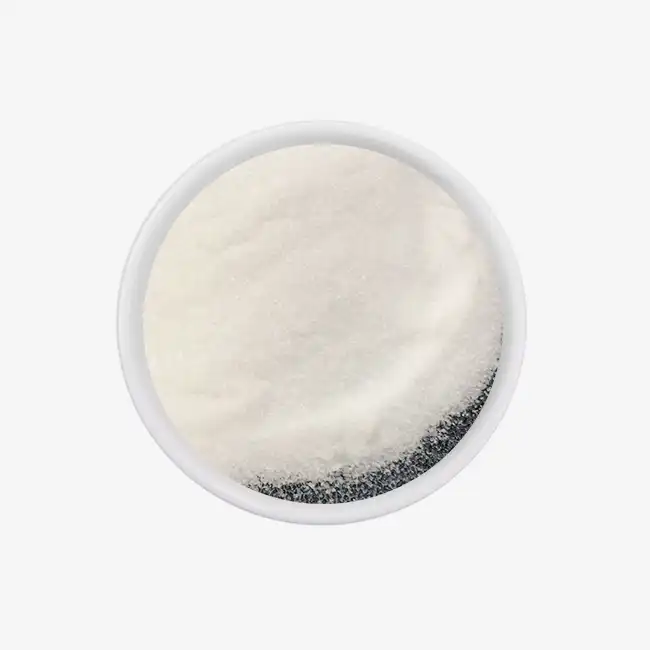
Understanding Solid Potassium Acetate Fertilizer
In modern farming, we need precise ways to feed plants that get the most out of them while doing the least amount of harm to the environment. Now, potassium sources like fertilizer solid potassium acetate are different from those used in the past.
Chemical Composition and Nutrient Profile
The formula for a potassium salt that is linked to an organic acetate group is CH3COOK. This structure, on the other hand, has about 39.7% potassium by weight, which is equal to 46-48% K2O, which is how you usually figure out how much potassium is in fertilizer. The white solid mixes very easily with water (253g/100ml at 20°C), a lot more so than potassium chloride (34g/100ml). This feature that makes it easier for nutrients to dissolve makes sure that all of them can be used without leaving any waste in watering systems.
Advantages Over Conventional Potassium Sources
This fertilizer stands out because it doesn't have any salt in it. In farming, potassium chloride is the most common way to get potassium. A lot of plants, like berries, citrus fruits, potatoes, and tobacco, can get sick from it. Food with too much chloride is less tasty, doesn't produce tastes, and is worth less on the market. The acetate choice fully gets rid of these risks.
An agricultural college study found that plants get 30% more potassium from acetate salts than from sulfate or chloride sources when they are under a lot of stress. Plants use the potassium, and good microbes eat the organic acetate as it breaks down in the soil. Some chloride-based nutrients can make the soil worse over time by causing salt to build up, but this two-in-one benefit makes the soil better over time instead of worse.
Because it is better for the earth, less water is lost through leaks. It has been studied that potassium chloride moves 22% more easily through sandy soils than potassium that is bound to potassium acetate. This means that more of the nutrients that are put down onto the ground reach the roots of plants instead of harming it. This speed follows the rules and saves money, which is very important for companies near rivers that are sensitive.
Application Methods and Usage Guidelines
Nutrient management works best when treatment methods are matched to the needs of the crop, its stage of growth, and the limits of what is possible. Fertilizer solid potassium acetate can be put to use in several ways.
Optimal Application Rates and Timing
Field crop treatments usually range from 10 to 20 kg per acre when applied through fertigation methods at key times for growth. It is during this time that plants need potassium the most. This is important for grains to get bigger, tomatoes to make bigger fruits, and potatoes to grow bigger roots. When you take potassium acetate 10 to 14 days before these stages, the body gets the nutrients it needs just when it needs them.
Putting something on the leaves quickly gets rid of lack signs. When sprayed early in the morning or late at night, a 0.3-0.5% solution (300–500g per 100 liters of water) helps the leaves take in the most water while losing the least. Solid potassium acetate's molecular weight of 98.14 makes it easy for it to get through the leaf layers and send potassium straight to the cells that make food in 6 to 8 hours.
Soil versus Foliar Delivery Techniques
For greenhouses and high-value crops, drip watering is a good way to treat the soil. When fertilizers are fully soluble in water, emitters don't get stuck like they often do with fertilizers that aren't fully soluble. It gives steady flows of nutrients without too much salt when 1% to 2% of it is mixed with irrigation water. Greenhouse tomato growers report 15 to 18% yield increases when substituting chloride-based potassium with acetate formulations in saline growing media.
During cold times, when root activity slows down, planning to feed the leaves is helpful. K+ acetate lowers the freezing point of cell sap and keeps ice crystals from hurting cells because it is a natural cooling. Foliar potassium acetate is used by farmers in the north who grow wheat and barley before frost is expected. Studies in the field show that this cuts down on winterkill by 12–20%.
Storage and Safety Recommendations
Choose from 25 kg weave plastic bags or 1000 kg bulk bags for the white crystalline product. These bags are both made to be moved with trucks and kept on pallets. Warehouses need to keep the air dry and the relative humidity below 60% so that caking doesn't happen. If it gets wet, it sticks together because it is hygroscopic, but that doesn't change how well the chemicals work.
When opening a bag of fertilizer, safety rules say to wear a mask, stay away from very strong solutions, and store away from acids that could let the acetic acid leak out. The material is not flammable or explosive like nitrate-based fertilizers, which makes it easy to move and insure containers.
Choosing the Right Potassium Acetate Fertilizer Supplier and Brand
Plans for farming will either work or not work during key times based on how stable the supply line is. There are a lot of useful and legal things you need to think about when picking companies.
Essential Procurement Criteria
Certifications show that the things are of good quality and that they were made according to certain rules. Each batch is the same because the ISO 9001 quality control approval makes sure that the way things are made is always the same. With ISO 14001, a business shows that it cares about the environment and wants to make goods that last. People who sell acetate for farming, food, or medicine need to make sure that their products are Halal and Kosher-approved.
Production ability has a direct effect on supply security. If a business only has one 20,000-ton-per-year line, they might run out of fertilizer when they need it the most. If one of the machines goes down, there are backups in places that can hold more than 100,000 tons and have more than one output train. Shanxi Zhaoyi Chemical operates special lines for making products for farming that can make 150,000 tons of fertilizer solid potassium acetate every year. This makes sure there is always enough product, even when people are applying it a lot in the spring.
Companies that sell solutions are different from companies that sell goods because they offer expert support for fertilizer solid potassium acetate. You can get the most out of your fertilizer if you can talk to agronomists who know about the land, crops, and tools used for application in your area. When customer service teams answer questions within two to four hours, important problems in the field don't get put off, which can cost a lot of money.
Production Standards and Quality Assurance
Certificates of Analysis (COA) are sent with every package by trustworthy manufacturers. These show how much chlorine, potassium, heavy metals, and water are in the sample. A very good potassium acetate for farming is 99.0% pure and has a potassium amount of 24.5 to 25.0%, which is the same as 46-48% K2O. The government sets limits on how much arsenic, cadmium, and lead can be used in gardening. These metals must stay below those limits.
A third-party verification test is an extra way to make sure the quality. Suppliers who are willing to let a different lab do a study show that they are sure of the quality of their work. Well-known brands stay in touch with testing labs all over the world. This makes it easier for buyers to get proof when they need it for legal reasons or their own quality systems.
Initiating Bulk Inquiries and Customizing Orders
Buying managers who need to get a lot of things in a lot of different packages can benefit from having a lot of different packing options. Stores and wholesalers can use standard 25 kg bags, but 1000 kg bulk bags save large-scale users money on handling costs. Some sellers offer private labels or intermediate packaging so that dealers can make their own brand product lines.
Lead times change based on how many orders are put and when the items are made. Orders of 20 to 50 tons go out from well-known makers who keep stock on hand most of the time within 5 to 7 business days. If you need special recipes or packaging, the process could take an extra 10 to 15 days. You can avoid supply gaps during application times by planning your buying rounds around these facts.
Environmental and Safety Impact of Potassium Acetate Fertilizer
Farmers' goods and how they harm the environment and workers' safety are getting more and more attention. The explanation of potassium acetate talks about a few environmental problems that modern farms have.
Ecological Advantages and Biodegradability
In aerobic soil, the acetate ion (CH3COO-) from solid potassium acetate breaks down completely in 5 to 7 days. This gives bacteria a place to get carbon. And this is not at all like chloride ions or sulfate ions, which stay in the soil and make it more acidic over time. As trash, bacteria give off carbon dioxide and water when they break down acetate. These are safe chemicals that don't change the soil's chemistry over time.
Another important benefit is that it keeps the water healthy. It is bad for waterways and structures when agricultural trash has chemicals in it that contain chloride. It was found that changing 30% of potassium uses from chloride sources to acetate sources dropped chloride levels in streams by 18%. The study looked at a watershed in the Midwest. This was good for marine animals that are affected by changes in saltiness.
The structure of the dirt gets better over time when acetate is used over and over again. The organic part helps bacteria grow, which makes the dirt stick together better and open up to let more water in. After three years, fields that moved to fertilizer solid potassium acetate programs based on acetate can hold 12–15% more water. This means they don't need as much water and won't be hurt as much by drought.

Safety Protocols for Handling and Storage
A lot of common farm chemicals are managed in the same way that potassium acetate is managed for safety at work. The crystalline solid makes a lot less dust when it is handled than powdered forms, so there is less chance of taking in dust. Standard PPE, such as dust masks, gloves, and safety glasses, are enough to keep you safe while you mix bags and handle them.
The material doesn't do much damage. The oral LD50 values for lab animals are higher than 3,250 mg/kg, which means it probably won't hurt them. If you get it in your eyes or on your skin, it stings a little but doesn't burn like pure ammonia or strong acids do. All you need to do in an emergency is flush with water and give basic first aid. There is no need for any special emergency gear or poisons.
There are rules about transportation that say potassium acetate is not a dangerous chemical. It's easier to plan ahead and costs less to ship than dangerous things that need to be marked and treated in a certain way. This classification cuts down on delays at customs stops, which speeds up shipping from other countries. It also makes it easier for buyers to find the paperwork they need.
Conclusion
To precisely feed plants, fertilizer solid potassium acetate is a big step forward because it gives plants potassium that is easily absorbed by their bodies without the environmental and farming issues that come with chloride-based choices. The chloride-free recipe keeps plants safe, improves the health of the soil, and supports growing methods that are good for the earth. Because it dissolves easily, it can be used in more effective ways, like through fertigation and aerial feeding. Studying the costs and benefits of different crops, fixing up salty soil, and making liquid fertilizer all show that they have high returns, even though the prices per ton are higher. For farming businesses, picking providers with a track record of production, quality certifications, and expert help is important for making sure the supply chain works. It is fertilizer solid potassium acetate that puts farmers and agribusinesses in charge of sustainable growth plans, as market and government forces rise to support inputs that are good for the environment.
FAQ
Is potassium content stable and crop absorption efficiency guaranteed?
Potassium acetate used in fertilizer always has between 24.5 and 25.0% potassium (46.4 to 48.8% K2O equivalent), and the potassium level doesn't change much from batch to batch—less than 0.3%. When plants are under a lot of stress, the acetate form helps them take in nutrients 30% faster than the chloride form does. There is an exact amount of potassium in the product that can be seen on Certificates of Analysis from trustworthy manufacturers. This keeps the plant getting the same amount of food during its growth season.
Is it absolutely safe for chlorine-sensitive crops?
The chloride-free mix doesn't hurt tobacco, grapes, oranges, potatoes, or any other plants that are easily hurt. Scientists have found that adding acetate does not make chloride build up in dirt or plant cells. Before farmers move from potassium chloride to another chemical, the fruit quality gets better right away. After one growing season, there are no more signs of leaf burn.
Will long-term use lead to soil pH imbalance or compaction?
Potassium acetate and dirt don't combine in a way that makes them more acidic or more basic. It completely breaks down, adding to the soil's organic matter without leaving any trash behind. Tests done over a long period of time show that the structure and activity of microbes in the soil get better over time. Choline salts, on the other hand, move sodium around and break up soil clumps to make the soil more dense.
What is the delivery cycle for bulk purchases during peak seasons?
Extra stock is kept on hand by well-known companies that can make more than 100,000 tons of goods every year. This way, big orders can always be shipped in 5 to 7 business days. Plan ahead and start buying things three to four weeks before the application slots open so that you can meet the higher demand during the busy season. When sellers offer pre-season contracts, they make sure that prices and shares stay stable when demand is high.
Partner with Zhaoyi Chemical for Premium Potassium Acetate Solutions
Since 1988, Shanxi Zhaoyi Chemical Co., Ltd. has been making acetate. Their plants are ISO 9001, Halal, and Kosher approved and can make 150,000 tons of acetate every year. Our potassium acetate for farming is ≥99.0% pure and has a proven K2O content. It helps farms all over North America grow unique foods, make liquid manure, and stay in business. There are many ways to pack with us, including 25 kg bags and 1000 kg large bags. It takes 5 to 7 days to make something, and we give full technical help. Bulk buyers, agricultural engineers, and wholesalers can email our team at sxzy@sxzhaoyi.com to get unique bulk prices, product samples, and tips on how to make crops better. We are a reliable fertilizer solid potassium acetate manufacturer. Zhaoyichemical.com has a list of all of our goods. There you can learn more about how our chloride-free potassium treatments can help your plants grow better and help you reach your sustainability goals.
References
Agricultural Experiment Station. "Comparative Uptake Efficiency of Potassium Sources in Specialty Crops." Journal of Plant Nutrition and Soil Science, 2021.
Environmental Protection Agency. "Impact of Agricultural Fertilizers on Watershed Salinity Levels." Water Quality Assessment Report, 2020.
International Fertilizer Development Center. "Solubility Characteristics and Application Technologies for Alternative Potassium Sources." Technical Bulletin Series, 2019.
Soil Science Society of America. "Long-term Effects of Acetate-Based Fertilizers on Soil Microbial Communities and Structure." Soil Biology and Biochemistry, 2022.
University Extension Services. "Economic Analysis of Specialty Potassium Fertilizers in High-Value Crop Production." Agricultural Economics Research, 2021.
World Food Organization. "Sustainable Potassium Management Practices for Modern Agriculture." Technical Guidelines for Crop Nutrition, 2020.

USER EVALUATE
Here is the customer's evaluation of us