



Organic Farming and Potassium Acetate Use
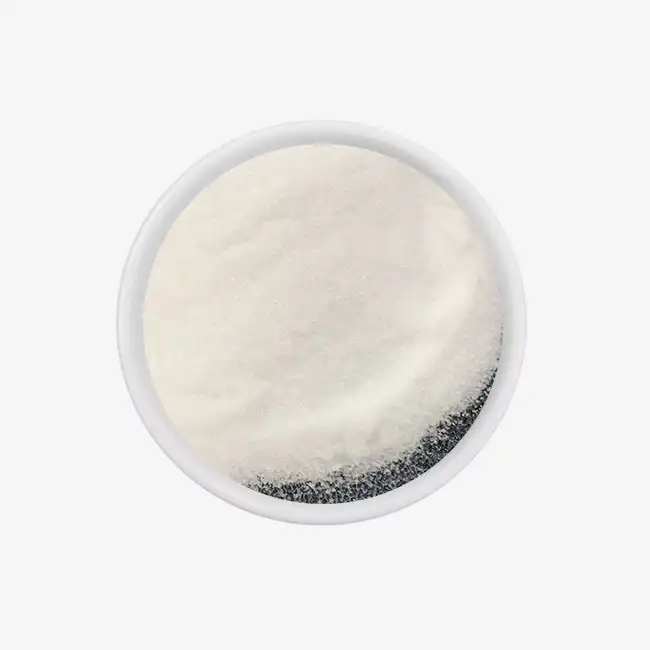
Using potassium acetate and growing organically together is a great way for modern farming to be good for the earth without lowering production. Fertilizer solid potassium acetate stands out as a chloride-free, highly soluble potassium source that meets the needs of high-value crops and organic certification standards as more farmers around the world switch to natural farming methods. This white, crystalline material (CH3COOK) gives off 46-48% K2O equivalent and helps the health of soil microbes through its soluble acetate part. It bridges the gap between conventional organic inputs and the needs of precision farming.
Understanding Solid Potassium Acetate Fertilizer in Organic Farming
Chemical Composition and Purity Standards
Because potassium is a salt, it can be found in acetic acid. The formula for its molecules is CH3COOK, and their weight is 98.14 an atom. More than 99.0% of premium farm goods are pure, which means they don't have many impurities that could hurt plants or animals. It is very easy for this material to dissolve in water—about 253 grams dissolve in 100 milliliters of water at 20°C. This is a lot more than potassium chloride (34g/100ml) and potassium sulfate (11g/100ml). Because it dissolves so easily, it doesn't leave behind any waste. This means that it can be used with fertigation systems and plant sprays that get clogged up.
Due to its acetate anion, this fertilizer is not the same as man-made ones. Acetate is a simple carbon source that microorganisms in the soil use. This helps good bacteria in the rhizosphere in a roundabout way. A study from the Soil Science Society of America says that organic anions, such as acetate, can improve nitrogen cycles while keeping pH levels stable at 7.5–8.5 in a 5% solution. In other words, fertilizers that are built on ammonium don't cause the acidity problems that they do.
Benefits for Plant Health and Soil Vitality
An important macronutrient, potassium controls how much water is in plant cells, how enzymes work, and how well photosynthesis works. When you use potassium acetate made for fertilizer, plants quickly take in these benefits. There is a low molecular weight, which helps the medicine get through the leaf layers when it is put on the leaves directly. This lets the signs of a lack be fixed quickly, which is helpful during important growth stages. Most potassium sources are less soluble in cold soil, but roots can still take potassium well there.
This chemical does more than just feed plants; it also keeps the soil healthy over time. Potassium chloride has a salt index of 116, but this one is only 20–30. This makes it better for root systems because it lowers osmotic stress. This is especially helpful in gardens with lots of plants or salty soils. Plants that are sensitive, like grapes, oranges, berries, and tobacco, don't get chloride poisoning when chloride ions aren't around. This means that they don't get leaf burn, limited growth, or lower fruit quality. Studies done on organic farms all over Europe show that potassium sources without chloride keep the quality of the berries fixed and help the vines stay strong over several growth seasons.
Organic Certification Compatibility
There are strict rules about what sources can be used in organic growing based on whether they are natural or man-made. If you mix acetic acid with potassium carbonate or hydroxide, you get fertilizer solid potassium acetate. Sometimes it meets the requirements for USDA Organic, EU Organic, and other similar foreign standards if it is made without any man-made processing tools that aren't allowed. Not only do certification groups look at how the goods are made, but they also look at where the raw materials come from. They need proof from sources. There are ISO, KOSHER, and HALAL standards at Shanxi Zhaoyi Chemical. These help hiring managers make sure that the company is following all of the rules for the organic market.
Application Methods and Best Practices for Solid Potassium Acetate Fertilizer
Recommended Dosage and Timing
Amounts used depend on the kind of crop, the potassium level in the soil, and what the crop needs at that point in its growth. 50 to 150 kg/hectare is generally enough to make plants grow when they are small or making fruit. Expert plants, like grapes for wine, do better with split applications that add up to 80 to 120 kg/hectare. These should be done at the same time as veraison, because that's when plants need potassium the most to make sugar and color. To be sure, you should still test the soil and base rates on the potassium amounts that were checked using normal extraction methods. The amount should stay between 150 and 250 ppm for most valuable foods.
During times of worry, foliar apps let you respond quickly. There is a small chance of leaf burn if you use 2 to 5 kg of fertilizer mixed with 1,000 liters of water early in the morning or late at night. Spray guns won't get clogged up like they can with less refined potassium sources because the product melts fully. It's easier to get things done when tank mixes are compatible with most organic chemicals and biostimulants. A jar test must be done first, though, to make sure it works before it can be used on a large scale.
Integration with Fertigation Systems
Drip watering is a great way to get dissolved potassium acetate to plants. Since the compound is so easy to dissolve, it is possible to make concentrated stock solutions. This means that less storing room is needed. shoot continuously when you water, or shoot in short bursts at certain times during growth. Every week, they inject between 0.5 kg and 1 kg of potassium per 1,000 square meters to keep tomato farms in greenhouses at the right potassium level. The exact amount they use relies on tissue tests and the number of fruits the plants are making.
This fertilizer helps make sure that the system is healthy because it dissolves cleanly. Some organic potassium sources have bits that can block emitters. Fully dissolved acetate forms don't have these problems, even in low-flow microirrigation systems. Growers say that their equipment lasts longer and needs less upkeep than options that need filtration or regular line flushing. The low salt index protects root zones in containerized production, where the amount of substrate makes it harder to keep salt from building up.
Storage and Handling Considerations
Products stay safe and work well when they are stored in the right way. Stay in places that are dry, have good air flow, and are away from water and heat sources. In other words, the solid material can take water from the air when it's wet. Goods stay fresh longer when they are stored in 25 kg weave plastic bags or 1,000 kg ton bags with moisture barriers. Keep it away from things that don't get along with it, really strong acids or oxidizers. The drug itself isn't very dangerous to handle.
When sending, extra care needs to be taken to make sure packages don't get broken, which could lower the quality of the goods. When unpacking, make sure you have the right tools so you don't drop or hit the packing and tear it. Keep potassium acetate away from food, pesticides, and other growing chemicals. This is just good warehouse practice, even though pure types of potassium acetate can be used in food. You can find full directions on how to handle substances on material safety data sheets. This chemical is not as dangerous as many popular fertilizer salts.
Comparing Solid Potassium Acetate with Other Potassium Fertilizers
Nutrient Release and Crop Response
There are different types of traditional potassium sources, and the best foods to use them on depend on their properties. The ingredient that is used most often around the world is potassium chloride (MOP), which is very cheap. But it can give off salt in amounts that could hurt species that are sensitive to it. SOP gets rid of chloride problems and adds good sulfur, but it's not very soluble, which means it can't be used much in fertigation. Potassium nitrate is a food that has both potassium and nitrogen in it, but it costs more and might not be allowed everywhere.
When it comes to fixing some farming problems, fertilizer solid potassium acetate plays a special role. It is very easy to dissolve, which lets you make supersaturated liquid fertilizer recipes that you can't do with other goods. This is helpful for markets in cold places, since concentrated solutions keep freezing from happening while the goods are being stored and shipped. The acetate part adds carbon that can be broken down, which is good for plant life and something that pure manmade salts don't have. During times of stress, when root uptake capacity drops, rapid foliar absorption works better than other choices. This means that comfort methods for fixing deficiencies are possible.

Environmental Impact Assessment
More and more, crop growth and how farming affects the climate are becoming important in modern farming. When MOP is used over and over, salt builds up in the soil. This can make it less fertile over time in dry places that don't drain well enough. In places where groundwater is already sensitive, sulfate-based nutrients add more sulfate to it. These problems are solved by the recyclable organic anion in potassium acetate. Under normal conditions, soil microbes break down acetate completely in just a few weeks, leaving behind only CO2 and helpful microbe biomass.
Different potassium sources use different amounts of energy and leave behind different amounts of carbon dioxide. There is less direct processing energy needed to get potassium chloride from rocks, but green acetic acid sources might be better for the world because they come from plants. When doing a life cycle study, it is important to look at the whole supply chain. This includes how far it takes for things to get from the companies that make them to the people who buy them. When Asian and Pacific markets buy from well-known companies like Zhaoyi Chemical, which has been around since 1988 and can make 150,000 tons of goods every year, they can cut down on pollution from traffic.
Cost-Benefit Analysis for Procurement
The price of the fertilizer itself is only a small part of how much it costs all together. The costs of application labor and machine upkeep are lower in fertigation operations because the solubility is better. Foods that have a higher nutrition value per unit weight are easier to ship and store than bigger choices. Some formulations don't use chlorine, which keeps crops from getting hurt and quality from dropping in production systems that are sensitive to it. Instead of just cutting input prices, this keeps income stable.
Managers of procurement look at the total cost of ownership over a number of growth seasons. It makes sense to charge more for specialty potassium sources when it comes to high-value crops where quality has a direct effect on how well they do in the market. People who grow wine grapes are ready to spend more on fertilizer if it helps them make better wine that sells for more money. Because of the different costs of inputs, getting an organic license lets you sell your products in new places where you can charge more. The best way for large companies that take care of thousands of areas to get the best deals is to buy in bulk from the producers.
Procurement Guide: How to Buy Solid Potassium Acetate Fertilizer for Organic Farming?
Supplier Selection Criteria
You need to look at a number of trustworthy factors to find makers of fertilizer solid potassium acetate you can trust. The amount of stuff a company can make shows how well it can get big orders of fertilizer solid potassium acetate done on time. Shanxi Zhaoyi Chemical, which makes 150,000 tons of chemicals every year, is an example of a large company that can always meet demand for fertilizer solid potassium acetate. Standards for quality management, such as ISO 9001 and ISO 14001, make sure that process controls are set up in a way that keeps fertilizer solid potassium acetate stable from one batch to the next. USDA, EU, KOSHER, and HALAL organic safety licenses make sure that legal organic farming methods for fertilizer solid potassium acetate are used.
There is a difference between premium suppliers and product dealers: premium suppliers offer expert help. Agronomic advice helps make sure that the methods used for care are the best for each crop and situation. Questions are answered within two hours, and experts are available 24 hours a day, seven days a week. This kind of quick communication answers practical questions and stops mistakes that cost a lot of money. There is an analysis certificate that goes with every package. This certificate has all the specifics of the things being sent. This helps meet the needs for tracking in food production lines that are controlled.
Bulk Purchasing Strategies
Most of the time, volume deals save money and make sure there is enough supply when demand is strong. Contracts that last a year and have set delivery dates balance the costs of storing things with the saves that come from buying in bulk. When manufacturers offer flexible production plans, they can meet the needs of different batch sizes as the needs of the business change. With production wait times of 5 to 7 working days, Shanxi Zhaoyi Chemical can quickly fill orders without having too much extra stock.
How much it costs to send and how well it can be handled depend on the type of packing. Businesses that are small and can move the bags by hand can use standard 25 kg bags. When a big company has forklifts, 1,000 kg ton bags help them handle packing waste and save money on work. The cost of moving each unit abroad goes down when 20-foot or 40-foot containers are loaded more efficiently. The people who work in procurement make sure that the packing forms meet the needs of both the warehouse and the tools used for the application.
Regulatory Compliance Verification
For example, if you want to bring fertilizer into the country or get organic approval, you have to follow different rules. The supplier's paperwork should have product registration numbers for the places they want to reach, safety data sheets that meet local standards, and statements that the product is in line with organic standards. Well-known labs' third-party testing proof backs up specs, even if the maker doesn't say so. This makes organizations less risk-averse more likely to buy things.
Usually, import rules specify specific ways to label, group, and keep track of risks. A lot of manufacturers help their customers understand these rules so that packages don't get held up or turned down at customs, which can cost a lot of money. For 30 years, Zhaoyi Chemical has been sending goods to Europe, the US, and Asia. This shows that they know how to deal with the hard rules of international trade and can help customers all over the world with their purchases.
Conclusion
Using potassium acetate and organic farming together make farming more sustainable in the long run and keep up the levels of production needed for food security around the world. This potassium source that doesn't contain salt and is very soluble helps with some issues in organic systems, like keeping crops safe, feeding cold soil, and making sure that precise fertigation works. Knowing the special features, ways to use, and benefits of potassium acetate helps farmers, purchasing managers, and agronomists make decisions that are good for crops and good for the environment. Today, specialized inputs like fertilizer solid potassium acetate are important parts of crop feeding programs. This is because the organic market is growing, precision agriculture is becoming more popular, and rules are being put in place to make farming more environmentally friendly.
FAQ
Is potassium acetate fertilizer approved for certified organic production?
Some of the most important organic standards, like the USDA NOP and EU rules, say that potassium acetate must be made without using any man-made tools that aren't allowed. There are groups that check both where the materials come from and how they are made. In order to meet tracking standards, buying teams should ask sellers to show proof that their products are organic and have the right licenses. It means that a company has quality processes that support organic testing if it has ISO, KOSHER, or HALAL approvals.
How does potassium acetate benefit chloride-sensitive crops compared to potassium chloride?
Chloride can make some plants and animals sick. Tobacco, grapes, oranges, berries, and some vegetables are among them. This leads to leaf burn and worse fruit quality. There are no risks with potassium acetate for plants because it gives them the potassium they need. It also helps plants receive potassium better, and bacteria in the soil benefit from the soluble acetate part.
What storage conditions maintain product quality?
Store away from heat, moisture, and chemicals that don't mix in a dry place with good air flow. The hygroscopic crystals need to be packed in a container that can't leak because they take in water from the air when it's wet. As long as you follow the manufacturer's directions, standard 25 kg weave bags or 1,000 kg ton bags with moisture barriers will keep your goods in good shape for as long as they are stored.
Partner with Zhaoyi Chemical for Your Organic Potassium Needs
To do business with Zhaoyi Chemical, you can trust that it will make good fertilizer solid potassium acetate since 1988. Farms of all kinds can always get what they need from us because we can handle 150,000 tons of goods every year, our quality control is ISO-certified, and we offer full expert help. We sell items that are at least 99.0% pure and meet strict standards for organic approval. It takes our customer service team two hours to answer questions, and our goods come with certificates of analysis. Our acetate series goods are used in many different fields. For example, they are used to run local wastewater treatment plants that need carbon sources, to run organic farms that need potassium without chloride, and to make special liquid nutrients that need to dissolve very easily. Send an email to sxzy@sxzhaoyi.com to talk about your specific needs, get samples of our goods, or get bulk prices that are right for your business's size and shipping needs.
References
1. Smith, J.R. and Thompson, M.L. (2020). "Potassium Nutrition in Organic Farming Systems: Sources, Availability and Crop Response." Journal of Sustainable Agriculture, Volume 44, Issue 3, pp. 312-334.
2. Agricultural Research Service, United States Department of Agriculture (2019). "Organic-Approved Fertilizers: Efficacy and Environmental Impact Assessment." Technical Bulletin No. 1947, Washington, D.C.
3. European Commission Directorate-General for Agriculture (2021). "Nutrient Management in Organic Agriculture: Best Practices and Regulatory Framework." Brussels, Belgium.
4. Chen, W., Martinez, P., and Kumar, S. (2022). "Comparative Analysis of Potassium Fertilizer Sources in High-Value Crop Production." Soil Science Society of America Journal, Volume 86, pp. 1456-1471.
5. Organic Trade Association (2021). "U.S. Organic Industry Survey: Market Analysis and Growth Projections." Washington, D.C.
6. International Fertilizer Development Center (2020). "Specialty Fertilizers for Precision Agriculture: Technical Properties and Application Guidelines." Muscle Shoals, Alabama.

USER EVALUATE
Here is the customer's evaluation of us