



What Kind of Fertilizer is Potassium Acetate?
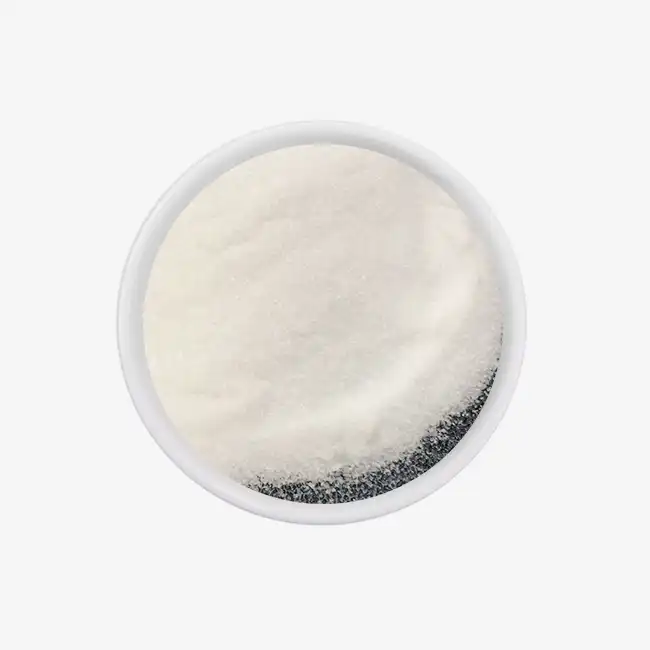
Fertilizer solid potassium acetate is an organic potassium salt (CH3COOK) that is used in modern farming as a source of nutrients that doesn't contain chloride. Unlike potassium chloride or potassium sulfate, this white solid substance gives off about 46-48% potassium oxide (K2O) equivalent and dissolves very easily in water, 253g per 100ml at 20°C. Its special acetate part helps nutrients get into the soil quickly and supports good bacteria, which makes it very useful for crops that are sensitive to salt and precision farming, where regular potassium sources don't work.
Understanding Potassium Acetate Fertilizer
Chemical Composition and Nutrient Profile
Fertilizer solid potassium acetate (CAS NO. 127-08-2) is made up of acetate anions bound to potassium cations. Its molecular formula is CH3COOK, and its molecular weight is 98.14. This organic salt gives potassium in a form that plants can easily use, and the acetate part does two things: it acts as a chelating agent to help minerals be absorbed, and it gives bacteria in the rhizosphere a carbon source that they can use. In farming grades, the substance usually stays pure at levels above 99.0%. This makes sure that nutrients are delivered consistently without any impurities that could hurt plant health or soil life.
The amount of potassium is about 46-48% K2O equivalent, which puts it on par with other high-quality potassium sources in terms of mineral concentration. This substance is unique not only because it contains potassium, but also because of how the acetate form affects plant growth and soil chemistry. Since there are no chloride ions, there is no need to worry about salt building up in the root zones. This is a huge benefit when taking care of plants like grapes, citrus, tobacco, and many greenhouse veggies that are sensitive to chloride at moderate to low amounts.
Solubility Characteristics and Application Advantages
The most scientifically important thing about this type of fertilizer is its excellent soluble profile. Over 250 grams dissolve fully in 100 milliliters of water at 20°C. This is a huge improvement over potassium nitrate (about 31 grams/100 milliliters) and potassium sulfate (about 11 grams/100 milliliters) in the same circumstances. Because of this property, highly concentrated liquid fertilizers that don't change when it gets cold can be made. This solves a problem that makers have been having for a long time: normal solutions tend to crystallize or precipitate during storage and shipping in cold climates.
Complete dissolving without waste is good for fertigation systems because it keeps drip emitters and spray nozzles from getting clogged, which cuts down on upkeep needs and makes sure that nutrients are spread evenly. The substance dissolves easily in water, acid, and alcohol, which gives formulators a lot of options when they are making unique mixes. The pH of the solution is usually between 7.5 and 8.5 at 5% amounts. This light buffering ability helps keep fertilizer mixtures stable without needing a lot of pH changes. These physical qualities have clear operational benefits, such as cleaner tools, more stable application rates, and better field performance in a range of environmental conditions.
Agronomic Benefits and Plant Response Mechanisms
In addition to providing basic nutrients, the acetate form speeds up the plant's ability to take in potassium through both root and leaf routes. Because it is organic and has a low molecular weight, the substance can get deeper into leaf cuticles than artificial potassium salts. This makes it especially good for fixing gaps on the leaves during important growth stages. When plants are stressed by things like cold weather, drought, or disease, their roots work less and it's harder for them to get potassium from the dirt. By applying acetate-based products straight to the leaves, these problems can be avoided, and potassium can enter metabolic pathways within hours instead of days.
The acetate part has a positive effect on soil life because it gives good microbes carbon and energy. Soil bacteria break down acetate, which speeds up the cycling of nutrients and the breakdown of organic waste. This indirectly improves the productivity of the soil as a whole. These are different from salt or sulfate-based fertilizers, which don't feed soil bacteria and can stop some good species from living in large amounts. Compared to potassium chloride, the low salt index (about 20–30) lowers osmotic stress on root tissues. This lowers the risk of root burn even when higher rates are used during busy production cycles.
How to Use Solid Potassium Acetate Fertilizer for Optimal Results?
Application Protocols and Dosage Guidelines
For effective use to begin, correct soil or tissue testing is needed to find out the baseline level of potassium and the severity of the shortage. Depending on the crop, the amount of potassium in the soil, and whether the application is for main nutrition or extra correction, the general application rate of fertilizer solid potassium acetate is between 10 and 50 kilograms per hectare. Higher rates may be necessary for high-value specialty crops that need a lot of nutrients, while care plans for established perennials usually use lower application intervals.
When added to fertigation plans, dissolving in irrigation water at levels between 0.1% and 0.3% ensures steady nutrient delivery without putting root systems at risk of osmotic stress. In greenhouses, potassium levels are usually injected once a week or twice a week, depending on the stage of growth of the plants. During fruit development, when potassium needs are highest, the amounts are raised. Injection systems can be used to spread the material evenly across the production area for crops that use center pivot or drip watering systems.
Storage Requirements and Safety Protocols
Foliar application guidelines say that amounts of 0.5% to 2.0% (5–20 kg per 1000 liters of water) should be used early in the morning or late at night to get the most absorption and reduce the risk of leaf burn. The low molecular weight makes it easy for the plant to absorb it quickly. Usually, you can see a difference in the crop within 3–5 days of applying it. Multiple applications spaced 7–10 days apart work better than a single high-rate treatment for fixing serious shortages. This is because plants can only take and move potassium through their foliar routes up to a certain point, no matter how much potassium is present in the environment.
The quality of the product stays high and workers are safe all along the supply chain when they store it properly. The things should stay in buildings that are dry, well-ventilated, and out of direct sunlight and heat sources that could speed up breakdown or make handling dangerous. Changes in temperature and humidity can cause caking because hygroscopic crystals soak up water from the air and form solid masses that are hard to handle and dissolve. Using dehumidification tools or storing things in places that naturally have low humidity increases the time that they can be used and keeps the flow properties.
Standard PPE, like gloves, safety glasses, and dust masks, protects against skin and lung discomfort from crystalline dust when working with the material. Even though the combination is not very dangerous and is not considered a hazardous material by most shipping rules, it is still best to avoid direct touch with the eyes and long-term skin exposure. The material should be kept away from things that aren't compatible with it. However, because it has fairly benign chemical qualities, it is easier to keep it separate from other things than many farming chemicals.
Environmental Impact and Sustainability Considerations
Transportation safety rules stress keeping bags from getting holes or tears that could let water and germs into the goods. For loading and unloading activities, packages should not be dropped or handled roughly, as physical damage weakens the packing and lets it be exposed to the environment. Protecting loads from rain or snow and making sure they are properly secured during travel keeps products in good condition and stops losses from spills or water damage.
The environmental impact of fertilizer solid potassium acetate is different from that of other sources and has both pros and cons. Since chloride isn't present, there are no worries about salt building up in grounds and groundwater. This is especially helpful in dry and semi-dry areas where irrigation water saltiness already makes it hard to grow crops sustainably. The acetate part breaks down quickly in soils by microbes, turning into carbon dioxide and water with no lasting leftovers. This is better than some manmade fertilizer parts that build up or leak into water sources.
In terms of carbon footprint, the manufacturing process needs more energy than making regular potassium chloride from natural sources. This is because of the chemistry involved in making acetate. This is becoming more important as agricultural supply lines are pushed to cut down on greenhouse gas emissions and switch to input sources with less of an effect. Buyers who care about sustainability measures should ask providers for lifecycle analysis data to get a full picture of the environmental effects instead of just looking at a few factors at a time.
Long-term soil health goals are becoming more and more important for healthy agriculture, and the compound's role in helping soil microbial communities is a big part of that. The material works a bit like organic supplements because it provides metabolizable carbon along with important nutrients. However, it gives the same amount of nutrients as synthetic sources. Having two uses is in line with integrated nutrient management ideas that aim to mix the dependability of mineral fertilizers with the soil-building benefits of adding organic matter.
Procurement Insights for Solid Potassium Acetate Fertilizer
Supplier Evaluation and Quality Assurance
To find trusted suppliers of fertilizer solid potassium acetate, you need to look at their manufacturing skills, quality control systems, and legal compliance credentials that make sure the product specs are always met. Established producers with ISO 9001 quality management certification show organized ways of managing processes and keeping records, which lowers the risk of buying things that might vary from batch to batch. Facilities that meet the environmental management standards set by ISO 14001 show that they are committed to using responsible production methods that have the least possible effect on the environment and on the companies that run them.
For farming uses, a third-party lab test that checks the purity of the product gives objective proof of the stated specs. Certificates of analysis should show how much potassium is in the soil, how much water is there, how much heavy metal is present, and whether there are any contaminants that could harm crops or the health of the soil. Suppliers who are ready to send samples to be tested by a third party and allow customers to inspect their factories show openness, which boosts buying trust. When you're selling food or medicines, you need to get extra certifications like KOSHER, HALAL, and GMP compliance, which must be checked by the right certification groups.

Pricing Structures and Bulk Purchasing Strategies
Another important thing to look at when evaluating a business is its production ability, especially for buyers who need regular supply volumes during seasonal demand cycles. Larger manufacturers, whose annual production capacity is measured in tens of thousands of tons, can handle big orders without any supply problems. On the other hand, smaller manufacturers may find it hard to complete large contracts or keep enough inventory on hand during times of high demand. When procurement teams know how long it takes to make and send items, they can plan their orders in a way that keeps enough goods on hand while reducing the costs and space needed for storage.
The price of specific potassium sources like acetate depends on more than just the cost of the raw materials. It also depends on how hard the product is to make, how the market changes in demand, and how it will be shipped. Acetate-based goods have more price differences between sellers and geographic markets than commodity fertilizers, which have clear global pricing benchmarks. This opens up possibilities for procurement workers who are willing to spend time comparing suppliers and negotiating better terms.
Most of the time, promises to buy in bulk lead to lower prices because of economies of scale in planning production, packing, and shipping. Annual contracts with guaranteed minimum purchase amounts give makers a way to predict their income, which they can use to get buyers to lower their prices. Multi-year contracts with price changes based on measures of the cost of raw materials protect both parties from changes in the market and ensure long-term supply relationships. When judging offers, don't just look at the per-unit price; also think about the total acquisition cost, which includes freight, handling, and storage. Logistics can make up big parts of the delivered cost based on shipping distances and order numbers.
Payment terms also affect how much something costs. For example, sellers will often offer small savings for quick payments or prepayment plans that help their working capital. On the other hand, longer payment terms may come with higher unit prices that are hidden finance costs. To get the best total procurement economics, it's helpful to balance payment terms against cash flow needs and the potential costs of capital that is being used to buy inventory. Having ties with several approved suppliers creates competition, which helps buyers get better prices and terms. It also creates redundancy in the supply chain, which lowers the risk of disruption.
Logistics and Supply Chain Management
When you buy something internationally, you have to deal with customs processes, paperwork needs, and freight issues that aren't present when you buy something locally. Knowing the Harmonized Tariff Schedule classifications and tax rates for potassium acetate in the places where it will be sold will help you avoid unpleasant cost surprises during customs clearance. Working with experienced freight forwarders who are familiar with shipping chemicals makes paperwork and following transportation rules easier. This cuts down on delays and makes sure that everything is handled correctly along the logistics chain.
How containers are chosen and loaded protects the quality of the goods during ocean freight, which is the main way that large chemicals are moved around the world. Standard 20-foot containers can hold between 20 and 25 metric tons, based on the size of the bags and how they are stacked. 40-foot containers can hold about twice as much. If you secure your loads properly, they won't move around during transport, which could damage your bags and let water in. Some buyers ask for container desiccant units to keep the humidity inside sealed containers under control during long ocean trips. These units add a small cost but protect against quality loss caused by moisture.
When clear delivery terms are set through Incoterms specs, there is no doubt about when duty shifts and costs are split between parties. Once goods are loaded at the starting port, buyers are responsible for logistics under FOB terms. On the other hand, sellers are responsible for logistics under CIF terms, where they plan and pay for ocean freight and insurance to the destination port. DDP (Delivered Duty Paid) terms are the most convenient because the provider handles all transportation and customs clearance while bringing the product directly to the buyer's facility. However, this service comes at a higher cost because the seller is taking on more responsibility.
Why Choose Zhaoyi Chemical's Solid Potassium Acetate Fertilizer?
Shanxi Zhaoyi Chemical Co., Ltd. has been making specialized acetate salts for over 30 years and serves industry and agriculture markets all over the world. Our factory makes 150,000 tons of acetate goods every year, which means that we can reliably serve our customers in a way that smaller factories can't. With this level of output and smart inventory management, we can fill orders within 5–7 business days and make sure that the quality of each batch is the same thanks to strict process controls that go above and beyond international standards.
Our agricultural-grade fertilizer solid potassium acetate is at least 99.0% pure and has a potassium content of 46-48% K2O equivalent. This is proven by strict testing procedures that look at every production batch before it is released. The material has excellent solubility, which is important for making liquid fertilizer and using it in fertigation. It dissolves fully without leaving behind any residue that could clog equipment or cause uneven distribution. We use quality assurance methods that are certified to ISO 9001 standards. We also have KOSHER and HALAL certifications to help customers who serve different foreign markets with different rules.
Our relationships with our customers are different from the transactional supply deals that are common in commodity chemistry markets because we offer technical help. Our team gives customers application advice that is specific to their crops, soil conditions, and production methods. This helps them get the most out of their fertilizer purchases and follow the best practices for using it. We answer all questions within two hours and are available 24 hours a day, seven days a week for pressing technical questions or transportation coordination. This is because we know that farming operations can't always wait for business hours to deal with time-sensitive production problems.
Our dedication to process control and ongoing growth shows in the quality that is consistent across all shipments. Customers say that physical properties, dissolution rates, and agronomic performance are very consistent from batch to batch. This gets rid of the inconsistency that makes application management and crop reaction forecast more difficult. We package materials in 25 kg plastic woven bags or 1000 kg ton-bags, depending on the order number and handling system. The packing specs can be changed to meet the needs of each customer, such as for branding, labeling, or making sure the bags work with the handling tools they need to use.
Our chloride-free formula saves delicate plants from the quality loss and output reductions that come with too much chloride. The acetate part supports good soil microbiology, which improves the health of the soil over time. Our product is used by people who run greenhouses, grow unique crops, and make liquid fertilizer when other potassium sources don't work well enough. Our manufacturing process is approved to ISO 14001 standards for environmental friendliness. This meets the sustainability goals of our customers while still meeting the technical needs of their operations.
Conclusion
Fertilizer solid potassium acetate is a unique but strategically important type of fertilizer that can solve some technical problems that regular potassium sources can't perfectly. It dissolves easily, doesn't contain chlorides, and is quickly absorbed by plants. These properties make it useful for making liquid fertilizer, fertigation programs, foliar nutrition treatments, and growing specialty crops where higher quality standards support higher input costs. Procurement pros and agronomists can decide if adding this product to their operations or product lines helps them reach their strategic goals by learning about the material's chemical qualities, its benefits for farming, and the right way to use it.
For procurement to go well, suppliers need to be carefully evaluated based on more than just price. They need to be looked at for their manufacturing skills, quality stability, ability to follow regulations, and expert support capacity. Because this material is so specific, ties with suppliers are more important than in markets for commodity fertilizer, where goods are mostly interchangeable. When buyers work with well-known companies that care about quality and customer satisfaction, they get a steady supply of materials backed by technical know-how that increases value and lowers business risks.
FAQ
Is potassium acetate safe for all crop types?
When sprayed according to the instructions given, fertilizer solid potassium acetate is very safe for almost all types of plants. Because it doesn't contain chloride, it's perfect for crops that are sensitive to it, like oranges, grapes, tobacco, and many veggies that lose quality or yield when they are exposed to chloride. Compared to other potassium sources, the low salt index makes osmotic stress less likely, even when higher application rates are used.
Can I blend potassium acetate with other fertilizers?
The substance works well with most liquid nitrogen and phosphorus fertilizers, but it's a good idea to try certain combinations at the concentrations that are meant before mixing them on a big scale. Do not mix with strong acids or oxidizing agents that could lead to chemical reactions. The mild alkalinity helps keep the pH level of many fertilizer mixes stable.
What is the optimal storage method to prevent caking?
To keep things from caking, store them in dry, well-ventilated buildings where the relative humidity is below 60%. Don't open bags until you're ready to use them, and keep the temperature stable to avoid condensation. If caking happens during storage, light mechanical stirring can usually get the flow back to normal without hurting the chemical quality.
How quickly do crops respond to foliar applications?
When applied to the leaves, potassium acetate is quickly taken up by plants, and results can be seen within 3–5 days. This is a lot faster than when normal potassium sources are applied to the soil. Because it works so quickly, it's especially useful for fixing problems at key points in the growth process, when time is important for protecting food quality or yield.
Partner with a Leading Fertilizer Solid Potassium Acetate Manufacturer
Zhaoyi Chemical wants people who work in agriculture, distribute fertilizer, or do buying to look into how our premium-grade fertilizer solid potassium acetate can help you with your specific business problems and market possibilities. With 30 years of experience making high-quality products and a capacity of 150,000 tons per year, we offer supply stability that few others can match. Our expert team is ready to talk about application standards, give you samples of our products, and come up with solutions that are just right for you. Get in touch with us at sxzy@sxzhaoyi.com for full details, cheap quotes, and expert advice on how to add this unique fertilizer to your product line or production system. You can find out more about our full line of acetate products for farming, environmental, and commercial markets around the world by visiting zhaoyichemical.com.
References
1. Havlin, J.L., Tisdale, S.L., Nelson, W.L., and Beaton, J.D. (2014). Soil Fertility and Fertilizers: An Introduction to Nutrient Management. Eighth Edition. Pearson Education.
2. Marschner, P. (2012). Marschner's Mineral Nutrition of Higher Plants. Third Edition. Academic Press, London.
3. Mengel, K., Kirkby, E.A., Kosegarten, H., and Appel, T. (2001). Principles of Plant Nutrition. Fifth Edition. Kluwer Academic Publishers, Dordrecht.
4. Fageria, N.K., Baligar, V.C., and Jones, C.A. (2011). Growth and Mineral Nutrition of Field Crops. Third Edition. CRC Press, Boca Raton.
5. Foth, H.D. and Ellis, B.G. (1997). Soil Fertility. Second Edition. CRC Press, Boca Raton.
6. Westermann, R.L. (1990). Soil Testing and Plant Analysis. Third Edition. Soil Science Society of America, Madison, Wisconsin.

USER EVALUATE
Here is the customer's evaluation of us