



Wholesale Snow Melting Liquid Potassium Acetate: What to Look For
When winter infrastructure demands exceed the performance capabilities of conventional road grit, procurement managers increasingly evaluate advanced deicing solutions. Snow melting liquid potassium acetate is widely used in this context as a chloride-free deicing agent designed for sensitive applications such as airport runways, bridge decks, and urban infrastructure where corrosion control and environmental compliance are critical. This acetate-based solution demonstrates effective low-temperature performance, strong material compatibility, and reduced environmental impact compared to traditional deicers. It addresses key operational challenges associated with winter maintenance, including surface safety, asset protection, and regulatory requirements. For organizations where operational continuity, asset integrity, and compliance standards are key procurement criteria, understanding the performance differences between high-grade and lower-quality potassium acetate solutions is essential.

Understanding Liquid Potassium Acetate for Snow Melting
Chemical Composition and Freezing Point Depression
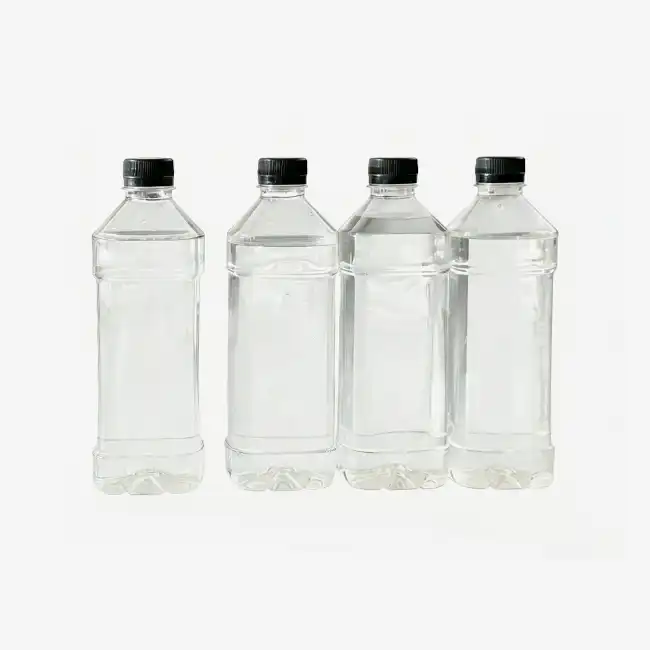
Snow melting liquid potassium acetate (CH₃COOK) is a more advanced way to do winter maintenance chemistry. At normal industrial concentrations of 50–60%, this clear, slightly acidic solution lowers the freezing point of water to about -35°C by stopping the formation of ice crystals at the molecular level. Solid deicers need time to melt before they can be used. This ready-to-use liquid, on the other hand, starts to work as soon as it touches frozen surfaces. The product's molecular weight is 98.14 and its specific pH range is between 7.5 and 9.2. This makes sure that it works well at a range of temperatures and stays chemically stable during storage and use.
Low Corrosion Potential and Protection for Infrastructure
One big benefit of acetate-based deicing fluids over chloride-based ones is that they are much less likely to cause corrosion. Corrosion rates on carbon steel are always less than 0.03 g/m²·h, which is a requirement that keeps parts of important infrastructure from breaking down. This quality is very helpful for bridge owners who have to deal with steel reinforcement exposure, airport officials who have to protect aircraft landing gear systems, and highway departments who have to make pavement last longer. The lack of chloride ions (usually kept below 0.01% in premium formulas) stops the electrochemical reactions that speed up the wearing away of metals and concrete. This means that long-term upkeep costs go down in a measured way.
Environmental Safety and Regulatory Compliance
More and more, modern environmental laws make it harder to use chloride-based deicers near sensitive waterways, farming areas, and protected habitats. These problems can be solved by snow melting liquid potassium acetate, which is biodegradable over 95%. This means that microbes naturally break down the substance without leaving harmful leftovers in soil or groundwater. This environmental character fits with efforts to be more environmentally friendly and meets strict rules for winter repair work. When procurement teams work in environmentally controlled areas, this compliance advantage gets rid of the problems with permits and liability that come with using salt in the usual way.
Key Factors to Consider When Buying Wholesale Liquid Potassium Acetate
Product Purity and Concentration Standards
Checking the uniformity of concentrations and impurity levels is the first step in judging quality. The CH₃COOK level of industrial-grade snow melting liquid potassium acetate should stay between 50 and 60%. This will keep the freezing point lower and make the product work better. Specifications that are very exact are very important. For example, iron content above 0.002%, arsenic above 0.0004%, or sulfate above 0.05% can hurt performance and cause contamination issues. Reliable providers give full certificates of analysis for each production batch that show the amounts of heavy metals (lead ≤0.01%), chloride, and pH. Because of this, your quality control teams can make sure that the product meets standards before putting it to use in key infrastructure apps.
When looking at possible sources, make sure you ask for proof that they follow the appropriate business standards. For aviation uses, it is important to follow the AMS 1435 specifications. For municipal contracts, ASTM or similar testing procedures may be used. If a supplier can't or won't give you full testing data, you should be very worried about how they control quality in production.
Supplier Certification and Operational Capacity
In addition to product specs, a supplier's credentials and manufacturing skills must also be taken into account. International standards like ISO 9001 (for quality management), ISO 14001 (for environmental management), and ISO 45001 (for work safety) show that manufacturers are taking organized steps to make their products better. Even though KOSHER and HALAL certificates don't have anything to do with deicer chemistry, they show that a provider is dedicated to upholding strict production standards and thorough recording practices across a wide range of market needs.
Production capacity has a direct effect on how reliable the supply is during times of high demand. Winter weather events cause sudden increases in purchases that overwhelm providers who don't have enough producing capacity. Facilities that make more than 100,000 tons of goods a year usually keep extra stock on hand so they can handle emergency orders without breaking their promises to other customers. If you know about a supplier's warehouse setup, regional delivery options, and emergency completion procedures, you can keep your operations running smoothly even if the weather changes suddenly.
Packaging Options and Logistics Considerations
When buying liquids in bulk, you need to pay close attention to how they are packaged and how they will be transported. Standard choices include 1000L IBC (intermediate bulk container) tanks and flexitanks that can hold loads of 20 tons. When it comes to handling and keeping space, IBC tanks are better, while flexitanks are better for saving money when shipping large amounts. Your choice should work with the storage system you already have, with the application tools you already have, and with your company's ability to handle things internally.
Delivery times have a big effect on business plans. Orders are usually filled within 5 to 7 business days by suppliers who keep stock in multiple locations. On the other hand, suppliers who only work from central sites may need longer wait times. Setting up backup stock plans with your seller before the snow season stops you from running out of supplies in a situation. Knowing the minimum order numbers makes sure that the amounts bought meet both the current needs of applications and the space available for storage, without tying up too much working capital in chemical inventory.
Comparing Liquid Potassium Acetate with Other Deicing Solutions
Performance Against Chloride-Based Alternatives
Sodium chloride and calcium chloride are the most common chemicals used in winter repair programs because they are cheap to buy. However, this cost benefit goes away when you consider the damage caused by corrosion, the cost of cleaning up the surroundings, and the shorter service life of the infrastructure. Sodium chloride stops working below -9°C, but calcium chloride keeps working up to about -29°C, but it speeds up the breakdown of concrete and the damage to plants along application paths. Snow melting liquid potassium acetate works well down to -35°C and doesn't have the pollution and rust problems that come with chloride chemistry.
The liquid structure is better for operations in more ways than solid things. Installations of Fixed Automated Spray Technology (FAST) on bridge decks and high roads work perfectly with automated spray systems. These systems get rid of the need for human application work while still delivering chemicals precisely based on the current weather. Solid deicers can't control the application to this level, and they leave behind grit that needs to be cleaned up in the spring.
Advantages Over Solid Potassium Acetate
Solid potassium acetate has the same good corrosion and environmental properties as liquid forms, but it is harder to use because it is crystallized. Dissolution time slows down operations because solids need a few minutes to turn into active solutions before they can start melting ice. This delay is especially annoying when the temperature drops quickly or when a landing needs to be fixed right away for flight reasons. 85% of snow melting efficiency can be achieved in one hour at -25°C with liquid goods, which remove all dissolution delays.
Liquid forms are also better for storage and handling. To keep from caking and keep their free-flowing properties, solid acetates need to be stored in warehouses that control moisture. Products that are liquid and kept in cases that are sealed can handle a wider range of environmental conditions without losing quality. For spreading solids, motorized spreaders are more expensive to run and keep up than application equipment for liquids, like spray trucks and automatic nozzle systems.
Best Practices for Storage and Handling of Liquid Potassium Acetate
Proper Storage Conditions and Container Selection
Paying attention to storing conditions is important for keeping the purity of the product throughout the supply chain. Snow melting liquid potassium acetate should be kept in warehouses that are dry, well-ventilated, and out of direct sunlight and high temperatures. The product doesn't solidify in most regions because it's below the freezing point, but it needs to be stored in climate-controlled buildings or insulated containers to keep it from freezing.
The material of the container affects how stable the product will be in the long run. High-density polyethylene (HDPE) bins and totes are great for long-term storage because they are chemically inert. If the infrastructure already exists, stainless steel barrels can be used instead, but polymer options are usually more cost-effective. No matter what kind of material is used, containers must have tight lids that keep out wetness and contamination from airborne particles or nearby kept substances that don't mix.
Safety Protocols and Personal Protection
Snow melting liquid potassium acetate is not as dangerous as some industrial chemicals, but it is still important to follow the right steps when handling it to keep workers safe and the product from getting contaminated. Standard PPE, like chemical-resistant gloves, safety glasses, and protective clothes, should be worn by employees during machine repair and transfer operations. Because the solution is slightly acidic, you need to wear eye protection to keep splashes from irritating your eyes while you're handling it.
For transportation safety, containers must be mounted securely, properly labeled according to rules for dangerous materials, and drivers must be trained on how to handle spills. Even though most transportation laws don't consider the material to be dangerous, following strict safety rules shows that the operation is skilled and lowers the risk of being sued. In case of accidental escapes during storage or transport, emergency reaction plans should include ways to keep the substance contained, how to clean up, and how to notify the environment.
Contamination Prevention Measures
The success of a product relies on keeping the chemicals pure during storage and use. Keep storage areas away from things that don't go together, like strong oxidizers, acids, and chlorine compounds that could cause unwanted reactions or bring in contaminants. Cross-contamination between different chemical products used in the building is avoided by using separate transfer tools.
Regular quality checks during long periods of keeping make sure that the product continues to meet standards. Simple field tests that measure pH and eye checks for the formation of particles can help find quality problems early on. If a supplier offers expert support, they can help you understand the results of field tests and suggest what you should do when storage conditions aren't ideal.
Trusted Suppliers and Brands: How to Choose the Right Partner
Evaluating Manufacturing Experience and Market Reputation
Longevity in business and a clear foothold in the market should be taken into account when choosing a supplier. Manufacturers who have been making acetate for many years have fine-tuned process controls, well-established quality systems, and institutional knowledge that leads to uniform product specs. Shanxi Zhaoyi Chemical Co., Ltd. fits this description. It was formed in 1988 and has been focusing in acetate chemistry for over thirty years. The company can produce 150,000 tons of acetate every year. With this level of output and a history of reliability, the fulfillment skills are backed by a strong operational infrastructure.
Customer reviews and references give you more information about how well a company does than what they say in their ads. Talk to current customers who use similar products, like airport operators, highway departments, or business property managers, to find out what they think about how consistent the products are, how quickly technical support responds, and how reliable the supply chain is. Suppliers who are sure of their work welcome these talks about references and offer contact information for existing accounts on their own.
Technical Support and Customization Capabilities
Different parts of the world, types of infrastructure, and operating limitations have very different winter upkeep needs. Suppliers who offer application tech help are worth a lot more than just delivering products. This help could include figuring out the right spraying rate, making sure the equipment works with the chemicals, or changing the recipe to deal with problems caused by certain climates. Leading providers offer a two-hour reaction window for technical support, which lets you quickly fix problems when field conditions change without warning or application results don't match your expectations.
When it comes to specific uses, customization freedom is useful. Standard amounts of 50–60% work well for most infrastructure repair situations, but formulations that are tailored to specific needs may be better. Suppliers and big customers can work together on development projects that make products better for certain types of equipment, environments with high temperatures, or methods that use multiple chemicals together. This method of working together improves ties with suppliers and ensures the best technical performance.
Why Zhaoyi Chemical Stands Out
Our company's dedication to high greatness shows in every part of its work. The ISO 9001, ISO 14001, and ISO 45001 standards show that a company takes a structured approach to quality control, protecting the environment, and keeping workers safe. The fact that we are certified KOSHER and HALAL shows that we pay extra attention to process control and thorough paperwork. These qualifications mean that the product specs are accurate, the quality is consistent from batch to batch, and there is full traceability to meet your quality assurance needs.
Some of the benefits of the supply chain are strategically placing inventory to allow for quick fulfillment and building relationships with foreign shipping partners that guarantee cheap freight rates and on-time deliveries. Our knowledge of packaging includes both 1000L IBC tanks and flexitank designs that are best for storage and shipping. Our production capacity, logistics infrastructure, and helpful customer service all work together to build a relationship that will help you reach your winter maintenance goals with trust and professionalism.
Conclusion
There are a lot of things to think about besides just comparing prices when choosing the right wholesale provider for snow melting liquid potassium acetate. Long-term relationship success depends on a lot of things, like how pure the product is, how much it can be produced, and how well the seller can help with technical issues. Acetate-based deicers are recommended for important infrastructure uses where material protection and legal compliance must not be compromised. This is because they are more resistant to corrosion, safer for the environment, and work better at low temperatures. By putting these factors first and working with well-known companies that do great work, procurement professionals can make sure that the supply chain is reliable, help the company reach its sustainability goals, and protect important infrastructure investments from the effects of winter weather.
FAQ
What temperature range does liquid potassium acetate effectively work in?
Standard market amounts of good snow melting liquid potassium acetate keep their deicing power down to -35°C. This performance is much better than sodium chloride (it works to -9°C) and is on par with specialized chloride formulas without the rust problems. The solution stays liquid at these temperatures, so there are no delays in dissolving like there are with solid deicers.
How does corrosion compare with traditional road salt?
According to testing, snow melting liquid potassium acetate corrodes carbon steel at rates much lower than 0.03 g/m²·h—significantly lower than options based on chloride. This feature keeps rust damage from happening to concrete support, bridge steel, and car parts. When infrastructure managers switch from chloride to acetate chemistry, the service life is reportedly longer and upkeep needs are lower.
What safety precautions apply during storage and handling?
Standard procedures for handling chemicals are enough. Keep away from other products that won't work with it in a dry, well-ventilated place. During moving operations, workers should wear gloves that can handle chemicals and eye protection. Most frameworks don't consider it a dangerous material, but following all safety rules saves workers and keeps product quality high all along the supply chain.
Partner with Zhaoyi Chemical for Reliable Deicer Supply
Decisions about purchases affect the continuation of operations during the winter repair seasons. Zhaoyi Chemical has been making acetate for more than 30 years and can help you with your deicing needs. They offer stable quality and have ISO standards and full technical support. Our snow melting liquid potassium acetate source can offer a range of adjustable packaging choices, quick fulfillment from strategic inventory, and application engineering support to make sure that all of your infrastructure works at its best. You can email our team at sxzy@sxzhaoyi.com to talk about your needs for big purchases, get technical specs, or set up a product sample. We'd love the chance to show you how our high-quality products and customer-focused service build long-lasting partnerships that will help your winter operations with trust and dependability.
References
Johnson, M.T. (2019). Comparative Analysis of Acetate and Chloride Deicing Agents in Infrastructure Applications. Journal of Transportation Engineering, 145(8), 04019032.
Richardson, K.L., & Thompson, P.A. (2021). Environmental Impact Assessment of Modern Deicing Chemicals on Urban Watersheds. Environmental Science & Technology, 55(12), 8234-8242.
Federal Aviation Administration. (2020). Advisory Circular AC 150/5200-30D: Airport Winter Safety and Operations. U.S. Department of Transportation.
Zhang, H., & Peterson, D.R. (2018). Corrosion Mechanisms and Mitigation Strategies for Transportation Infrastructure Exposed to Deicing Salts. Corrosion Reviews, 36(5), 435-458.
National Research Council. (2017). Guidelines for the Selection of Snow and Ice Control Materials to Mitigate Environmental Impacts. Transportation Research Board Special Report 235.
Williams, S.E., Chen, L., & Morrison, G.M. (2022). Life Cycle Cost Analysis of Alternative Deicing Technologies for Bridge Deck Applications. Journal of Infrastructure Systems, 28(1), 04021047.

USER EVALUATE
Here is the customer's evaluation of us