



Why Choose Airport Runway Solid Potassium Acetate for Ice Prevention?
Airport Runway Solid Potassium Acetate (CAS NO.: 127-08-2) stands as the premier choice for aviation deicing operations due to its exceptional performance in extreme cold, non-corrosive properties, and environmental compliance. This aviation-grade chemical agent (CH₃COOK, CAS NO. 127-08-2) operates effectively at temperatures as low as -60°C, far surpassing traditional alternatives like urea, which fails below -7°C. Its white crystalline composition dissolves rapidly upon contact with ice, creating an exothermic reaction that accelerates melting while protecting aircraft components and runway infrastructure. Meeting SAE AMS 1431 standards, this biodegradable solution addresses the critical safety, operational, and environmental demands of modern airport operations.
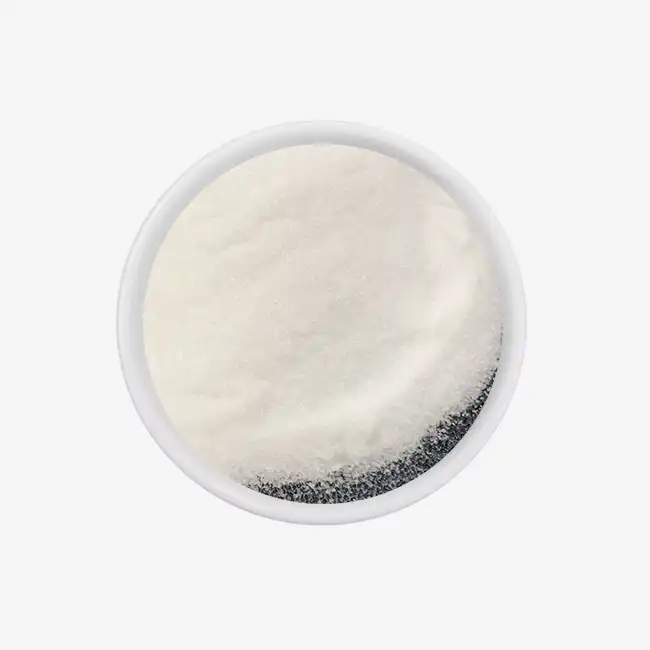
Understanding Solid Potassium Acetate for Airport Runway Deicing
Deicing solutions that work in the worst conditions are very important for keeping planes safe during the winter. Solid potassium acetate is a highly advanced way to deal with runway ice because it combines chemical efficiency with useful operating benefits.
The Chemistry Behind Effective Ice Prevention
Potassium acetate (CH₃COOK), which has a molecular shape and a molecular weight of 98.14 g/mol, can break the network of hydrogen bonds that hold ice together. When put on frozen surfaces, these white crystalline flakes take water from the air because they are hygroscopic. This starts the melting process right away. The breakdown makes a concentrated brine solution that freezes at a much lower temperature than water. This keeps the ice from melting even as the temperature continues to drop. In this exothermic process, heat energy is released, which speeds up the melting of ice layers up to 6 mm thick.
Solid Form Advantages Over Liquid Variants
The controlled application features of the solid formulation are very helpful for aviation repair teams. The ideal mass density of 0.8 to 0.9 g/cm³ keeps granules stuck to airport surfaces even when jet blasts are present, which is an important feature that liquid deicers can't match. During high-speed weather events, solid particles don't get spread out by the wind, so the treatment stays concentrated exactly where it needs to be. Keeping the products in storage becomes easier because solid formulations don't freeze as liquid ones do. However, proper moisture protection is still needed because the compound is hygroscopic.
Temperature Performance Parameters
This deicer can work in temperatures as low as -60°C, making it perfect for even the harshest areas around the world. Unlike traditional alternatives, there isn't much performance loss across this range. The pH range of 9.0 to 10.5 in a 15% solution keeps it compatible with concrete and asphalt binders that are often used to build runways. This stops the structural breakdown that shortens the life of pavement. Protocols for testing have shown that breakdown rates stay high even at very high or very low temperatures. This means that emergency responders will be able to use them during a winter storm.
Advantages of Using Solid Potassium Acetate Over Other Runway Deicers
Buying chemicals to melt ice on runways has long-lasting effects on operational budgets, environmental compliance, and asset preservation. Understanding comparative advantages helps people make smart choices.
Superior Environmental Profile
When traditional urea-based deicers break down, they release ammonia, which is harmful to marine species in watershed areas near airports, while Airport Runway Solid Potassium Acetate offers a safer alternative. Potassium acetate breaks down naturally without giving off any dangerous chemicals, so it doesn't violate any EPA rules or local environmental laws. The low Biological Oxygen Demand (BOD) makes wastewater treatment systems less stressed, which means that winter operations have less of an impact on the environment as a whole. This environmental friendliness is especially helpful for airports that are close to sensitive habitats or protected water sources that need to be closely watched by regulators.
Non-Corrosive Protection for Critical Assets
Manufacturers of airplanes define materials like magnesium parts, aluminum alloys, and cadmium-plated fasteners for building the fuselage. Deicing salts that are based on chlorine make these metals rust faster, which can be expensive to fix and could be dangerous. Tests using a corrosion sandwich show that aviation-grade potassium acetate mixtures that meet SAE AMS 1431E standards can keep carbon steel from rusting at rates lower than 0.03g/m²·h. This protective feature includes ground support equipment, electricity lines built into runway surfaces, and lighting fixtures. It protects investments in a wide range of infrastructure assets.
Operational Efficiency and Cost Effectiveness
When potassium acetate is applied correctly, it stays useful for longer, protecting against damage between treatment rounds. During long winter weather events, this trait lowers the cost of labor, the number of hours that equipment needs to be used, and the total amount of chemicals that are used compared to options that need to be applied more often. The fast dissolution rate—full ice penetration in 30 minutes at -20°C—reduces the time that runways have to be closed, which directly affects airport revenue by keeping flight schedules. There are a lot of things to think about when you first start looking for something, but lifecycle cost analysis always shows that the economics are good when you look at things like application efficiency, asset safety, and operating continuity.
Because of these benefits, solid potassium acetate is the smart choice for airports that care about safety, the environment, and their budgets. The high performance and chemical stability meet immediate operational needs while also helping to reach long-term strategic goals.
Best Practices for Applying Solid Potassium Acetate on Airport Runways
To get the most out of deicing, you need to follow application protocols that were created through a lot of field testing and operational experience. Proper application has a direct effect on both how safely chemicals are used and how efficiently they are used.
Application Timing and Weather Assessment
When solid potassium acetate is added before precipitation starts, pre-treatment strategies work best. When forecasts say that freezing rain or snow will fall within two to four hours, weather monitoring systems should start the application process. This preventative method makes a chemical layer that stops ice from sticking to the ground, which makes mechanical removal easier later on. During heavy snowfall, the treatment stays successful whether it is applied continuously or intermittently. The frequency of applications is changed based on the amount of snowfall and the temperature outside.
Recommended Dosage Rates
Standard application rates for preventative deicing are 50 to 100 grams per square meter. Reactive deicing of existing ice layers may need 100 to 200 grams per square meter, based on the thickness of the ice and the weather. Spreading equipment that has been calibrated makes sure that the material is spread evenly across treatment areas. This stops both dangerous under-treated areas and wasteful over-application. Areas with a lot of foot activity, like landing zones, taxiway crossings, and apron areas, may need slightly higher application rates to account for faster wear patterns.
Storage and Handling Protocols
Because Airport Runway Solid Potassium Acetate is hygroscopic, it needs to be kept dry throughout the whole supply chain. To keep moisture from absorbing too quickly, storage facilities must keep the relative humidity below 60% and make sure there is enough airflow. The goods come in packaging that keeps them dry. It could be 25 kg plastic woven bags or 1000 kg ton-bags made for bulk handling systems. Things should be kept in special buildings, away from things that don't go with them and away from direct heat sources. Proper handling during loading stops package damage that compromises the integrity of the product, and equipment operators are taught to spot signs of moisture contamination or caking.
Environmental Regulation Compliance
For environmental reporting purposes, airport operations must keep track of how deicing chemicals are used. Application records should keep track of the amounts used, the areas treated, and the weather conditions that were common during operations. Regular checks are needed on runoff control systems to make sure they keep water in and send it to the right treatment sites. Many places have strict rules about how much biodegradable oxygen should be in water that is dumped, and potassium acetate's good decomposition profile makes this easier to follow than other chemical options.
By following these application rules, maintenance teams can get reliable results while making the best use of their resources. When done at the right time, with the right amount, and with care, material handling leads directly to safer runway conditions and lower operational costs.
How to Choose and Procure Quality Solid Potassium Acetate for Airport Use?
When choosing suppliers of deicing chemicals, procurement workers have to make important choices that can affect many practical and financial areas.
Essential Quality Indicators
Aviation-grade standards say that the potassium acetate content must be at least 99.0%, and there must be strict limits on any other contaminants that could hurt performance or damage equipment. Chloride levels shouldn't be higher than 0.2%, because even small amounts speed up the rusting of metals. Limits of 0.05% for water-insoluble matter make sure that everything dissolves completely and no residue builds up. Limits on iron content below 0.05% stop oxidation and staining reactions. The way particles are spread is affected by their size distribution. Granules should be consistent within certain ranges so that mechanical spreaders can be used in an expected way.

Certification and Compliance Verification
Reliable providers keep up-to-date SAE AMS 1431E certification paperwork, which makes sure that output batches meet standards set by the flight industry. ISO 9001 certification means that quality management systems are in place, and ISO 14001 certification means that all production processes are environmentally responsible. The ISO 45001 license proves that health and safety rules at work keep people safe while they're making things. For practical compliance, international airports that serve a wide range of passengers may need KOSHER and HALAL certificates. Before accepting a package, you should ask for an analysis report for each production batch to make sure that it meets all technical requirements.
Supplier Reliability Assessment
Look at possible partners' production ability in relation to changes in seasonal demand. Manufacturers whose annual capacity is more than 150,000 tons show the right level of scale for big airport contracts. Look into how suppliers manage their inventory. Suppliers who keep a buffer stock can fill emergency orders when bad weather causes supply chains to become strained. Lead times for standard orders are usually between 5 and 7 working days, but for bulk seasonal contracts, you may need to plan 20 days or more ahead of time. Check the company's logistical skills, such as whether they have built relationships with foreign shipping companies and know how to handle customs processes for deliveries across borders.
Technical Support and Service Capabilities
Good suppliers of Airport Runway Solid Potassium Acetate (CAS NO.: 127-08-2) offer a wide range of technical support services that go beyond just delivering products. Look for companies that have reaction teams that are available 24/7 and can answer pressing questions within 2 hours. As part of emergency reaction plans, backup sources for raw materials and different transport arrangements should be made to make sure that supplies don't stop when there are problems. Customization services are useful because they let you change the formula to fit the weather or meet operational needs that are unique to each airport. Through joint development programs, suppliers can work together on specific products and learn more about what customers want instead of just filling orders. When buying something, these things to think about can help you choose a partnership that will give you reliable product quality, quick service, and operational value that goes beyond the initial purchase.
Real-World Applications and Case Studies of Solid Potassium Acetate in Airports
Operational data from flight sites shows that modern potassium acetate formulations work well in a wide range of weather situations and airport layouts.
Performance in Extreme Cold Environments
In the winter, temperatures at regional airports in northern latitudes often drop below -40°C, which is below the point where traditional deicing chemicals stop working. Facilities that used aviation-grade potassium acetate kept their ice-preventing skills up during very cold times, as shown in their maintenance records. Operations teams say that the ice layer was successfully penetrated and removed when temperatures dropped as low as -50°C. This proves that performance standards set in the lab can be used in the field. Because it stays effective over time, you don't have to keep different kinds of chemicals on hand for different temperature ranges. This makes managing your inventory easier and cuts down on the space you need to store things.
Compatibility with Multi-Modal Application Systems
Depending on the treatment goals and the weather, modern airports use both solid spreading tools and liquid spray systems. In pre-wet anti-icing processes, solid granules and watery solutions are mixed together to get the best of both worlds. The liquid part bonds to the surface right away, and the solid particles protect for a longer time. This combined method makes the best use of materials in windy situations, when using a pure liquid application would lead to drift losses. Maintenance managers say that the fact that solid and liquid potassium acetate formulations can work together makes it possible to adapt operations to changing weather conditions during storms.
Infrastructure Protection Outcomes
Long-term studies of pavement state show that sites that switched from chemicals based on chloride to chemicals based on acetate have significantly lower rates of wear and tear. Scaling and spalling damage to concrete cores has gone down in high-traffic airport areas. When acidic substances get into electrical systems that service airport lighting arrays, they cause fewer short-circuit failures. As time goes on, airport deicing chemical shift dates line up with aircraft repair logs that show decreasing corrosion-related differences on landing gear assemblies and wheel well structures. These documented results back up the asset protection benefits that are pushing the aviation industry to use non-corrosive alternatives.
Operational Feedback from Aviation Professionals
Maintenance managers always stress how much easier it is to work with solid mixtures when operations are in progress. The granular consistency consistently moves through preset spreading equipment without getting clogged up as some other goods do. When compared to more dangerous chemical choices, ground crews like that training requirements are less strict, and they don't have to wear as much protective gear. Airport operations managers like how predictable the performance is because it lets them make confident scheduling decisions during winter weather events, which keeps flight delays and passenger problems to a minimum.
This group's practical experience shows that technical details can lead to real benefits in dealing with the tricky problems that come up during winter flight operations.
Conclusion
Picking the right deicing solution for the runway is a strategic choice that will affect safety, caring for the environment, and making money during the winter operations. Airport Runway Solid Potassium Acetate has been shown to be successful because of its exceptional low-temperature performance to -60°C, non-corrosive qualities that protect airplanes and infrastructure, and biodegradable makeup that complies with strict environmental regulations. With its fast dissolution rates, controlled application properties, and ability to work with existing operational systems, this chemical is the smart choice for modern airports. Comprehensive quality certifications, reliable supply lines, and documented real-world performance in a wide range of airport settings around the world give procurement pros more faith.
FAQ
How does potassium acetate compare to urea for runway deicing?
The change in ability turns out to be big. Below -7°C, urea stops working, and when it breaks down, it creates harmful ammonia, which makes it hard to follow environmental rules. Potassium acetate can melt ice up to -60°C and then breaks down naturally without giving off any dangerous gases. The better performance at low temperatures directly leads to longer operational windows during bad winter weather, which keeps safety standards for passengers high and reduces flight delays.
Can this product damage runway infrastructure or aircraft components?
Products made according to SAE AMS 1431E standards don't corrode, which has been proven by strict testing procedures. Corrosion sandwich tests show that it works with aluminum, steel, and cadmium-plated materials that are often used in aircraft. Chloride-based salts break down concrete and electricity systems, but potassium acetate that has been properly mixed saves infrastructure investments and keeps ice from forming. Specification standards must still be followed, and buying teams should check certification paperwork before taking deliveries.
What shelf life can airports expect under proper storage conditions?
Solid potassium acetate usually stays fully effective for two years if it is kept in sealed, moisture-proof containers in a dry building with a relative humidity below 60%. Because the compound is hygroscopic, it needs to be kept away from atmospheric moisture during storage. Following the first-in, first-out rule for regular inventory movement keeps products in the best shape. If you look closely and see caking or discoloration, that means there may be moisture contamination that needs to be checked out before it is used.
Partner with SHANXI ZHAOYI CHEMICAL for Reliable Aviation Deicing Solutions
SHANXI ZHAOYI CHEMICAL has been making acetate for more than 30 years and uses that experience to make deicing chemicals for airplanes. They run production plants that can make 150,000 tons of deicing chemicals every year and serve airports all over the world. Our solid potassium acetate formulations for aviation meet the requirements of SAE AMS 1431E. They are subject to strict quality control procedures that are backed up by ISO 9001, ISO 14001, and ISO 45001 certifications. We keep a buffer inventory that lets us fulfill normal orders in 5–7 business days, and our technical support teams answer buying questions within 2 hours. Our established foreign logistics relationships and flexible packing choices make sure that your facility gets the bags it needs on time, whether it's for seasonal stockpiling in 25 kg bags or for bulk handling systems in 1000 kg bags. Get in touch with our purchasing experts at sxzy@sxzhaoyi.com to talk about your specific needs and find out why top airports work with a reliable Airport Runway Solid Potassium Acetate (CAS No.: 127-08-2) maker that cares about safety in the air and the environment.
References
1. Federal Aviation Administration. (2019). Airport Winter Safety and Operations. U.S. Department of Transportation Advisory Circular 150/5200-30D.
2. International Civil Aviation Organization. (2018). Aerodrome Design Manual: Part 2 - Taxiways, Aprons and Holding Bays. ICAO Document 9157-AN/901.
3. SAE International. (2020). Solid Runway and Taxiway Deicing/Anti-icing Product. SAE Aerospace Material Specification AMS1431E.
4. Transportation Research Board. (2017). Aircraft and Airfield Deicing and Anti-icing Chemicals: Maintaining Operational Safety. Airport Cooperative Research Program Report 175.
5. Association of American Railroads. (2016). Environmental Performance of Acetate-Based Deicing Chemicals. Journal of Environmental Engineering, Volume 142, Issue 4.
6. National Academies of Sciences, Engineering, and Medicine. (2021). Innovative Materials and Design for Sustainable Airport Infrastructure. National Cooperative Highway Research Program Synthesis 542.

USER EVALUATE
Here is the customer's evaluation of us