



Why Particle Uniformity Matters in Solid Potassium Acetate Snow Melting Agents?
How consistently and effectively your deicing processes work in harsh winter conditions is directly related to the particle uniformity in snow melting solid potassium acetate. When particle sizes stay the same throughout a lot, dissolution rates can be predicted, melting action starts as soon as the product is applied, and your teams can figure out the right amount to use without having to guess. Particles that aren't all the same size make performance patterns that are hard to predict. This breaks safety rules and raises running costs by wasting product and not covering all treated surfaces evenly.
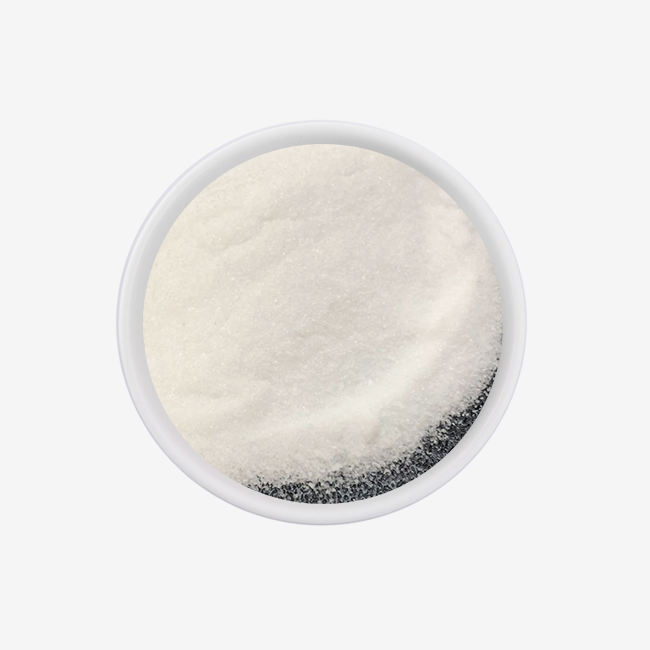
Understanding Particle Uniformity in Solid Potassium Acetate
Defining Particle Size Distribution and Its Physical Impact
Particle consistency means that the crystals in a batch of potassium acetate deicing material are all the same size. The chemical weight of CH3COOK is 98.14, and it has a white crystalline structure that works best when the particles are very small. Because the granules are all the same size, the surface area that is exposed to ice and snow is always the same. This means that the treated areas have the same rate of breakdown instead of melting in different places.
Thermal Properties Governed by Particle Consistency
How well acetate-based deicing agents work at low temperatures depends a lot on how regular the particles are. During the endothermic breakdown process, heat transfer is even because the crystals are all the same size. As long as the particles stay the same size, the phase change behaviour stays the same at temperatures as low as -35°C. Because of this thermal consistency, managers of infrastructure can correctly predict performance in the winter, even when the weather changes.
How Uniformity Enhances Melting Efficiency
When uniform particles touch frozen surfaces, they dissolve at about the same rate. This makes an even spread of brine that breaks through ice layers in a planned way. When particle sizes aren't uniform, smaller crystals dissolve too quickly while larger chunks stay solid, wasting material and leaving dangerous ice spots. Potassium acetate dissolves easily in water, acid, and alcohol, which makes these benefits of regularity even stronger. This makes melting happen faster on runways, bridge decks, and loading zones where operations must continue as usual.
Challenges and Risks of Non-Uniform Particle Sizes in Potassium Acetate Snow Melting Agents
Operational Issues From Inconsistent Particle Distribution
When automatic spreading is done, uneven batches cause problems right away. Particles that are too big get stuck in spreader equipment that is set to keep flow rates steady, while dust particles that are too small blow away before they reach their targets. Because of this, workers have to constantly re-adjust their equipment or use manual application methods, which cost more in time and money and take longer to treat during severe weather events where quick action is needed to ensure safety.
Economic Impact of Particle Inconsistency
Uneven particle sizes make usage rates go up by a lot. Smaller particles break down too quickly and don't get through the layers of ice, so they need to be reapplied within hours. Big pieces don't dissolve for a long time after melting is done, which is a waste of product that could have been used to treat more surfaces. Municipalities and airports that have set budgets for winter maintenance go over those budgets when they have to use 30 to 40 percent more material than what was specified because of particle inconsistency.
Safety Hazards in Demanding Industrial Environments
In high-traffic industrial settings, unpredictable melting patterns pose big legal risks. For airport runways to be safe, the friction factors must be the same on all landing surfaces. Particle inconsistency leads to scattered melting zones where planes have different stopping experiences. In the same way, emergency exits and loading docks need all the ice to be removed, not just some of it. If only some of it is removed, slip hazards remain, putting workers at risk and building managers at risk of breaking the law.
Root Causes During Manufacturing and Handling
Most problems with particle consistency in snow melting solid potassium acetate are caused by changes in the manufacturing process. Mixed particle batches are made when crystallisation temperatures aren't kept the same, drying methods aren't followed properly, and production cycles are sped up. Conditions of transport and storage make these problems worse when moisture contact leads to partial dissolution and recrystallization into lumps that don't fit together properly. When particles are handled properly in dry, well-ventilated warehouses away from heat sources, the original specs set during production are kept.
Advantages of Uniform Particle Potassium Acetate Over Other Melting Salts
Comparative Performance Against Alternative Deicing Agents
Potassium acetate with even particle distribution works better than sodium acetate, calcium acetate, ethylene glycol, and urea in a number of different ways. Even though sodium acetate is also biodegradable, it is harder to store because it absorbs more water. When calcium acetate touches sensitive surfaces, it leaves behind a film. Because ethylene glycol is harmful to the environment, it can't be used in places that are important to the environment. Urea breaks down too slowly when it's cold, and it adds to nitrogen pollution in underground systems.
Uniform particle potassium acetate lowers the freeze point better and faster than other goods on the market. Because it is ≥99.0% pure and dissolves right away when it comes in touch with something, treated surfaces reach safe friction levels in minutes instead of the longer activation periods needed by other compounds.

Environmental and Handling Advantages
Formulations based on acetate break down naturally and don't harm the land or water systems around treated infrastructure. Potassium acetate protects valuable assets from repeated winter exposure, unlike chloride-based choices that speed up the breaking down of concrete and rebar. The non-corrosive protection makes mechanical spreaders, storage bins, and application vehicles last longer, which lowers the total cost of ownership (TCO) after the initial purchase price.
When stored for a long time, uniform granules don't clump or cake, and they stay free-flowing, which makes both automatic and manual distribution easier. Because of this operational efficiency, smaller teams can treat bigger areas in less time during weather events that change quickly.
Real-World Performance Documentation
When companies who take care of highways switch from mixed-particle deicing products to uniform granule formulations, they say that application rates drop by 25 to 35 percent. Airport managers say that during winter storms, runways are more available and turnaround times between flights are shorter because melting is more reliable. Industrial facility managers notice fewer slip-and-fall accidents and fewer product reorders during the winter, which proves that spending in premium uniform particle materials is a good idea.
Selecting and Procuring High-Quality Uniform Particle Solid Potassium Acetate
Critical Supplier Evaluation Criteria
Procurement managers should prioritize suppliers demonstrating strict particle size specifications backed by batch-specific testing documentation. Request granulometry analysis showing particle distribution curves rather than accepting broad size range claims. The most reliable manufacturers employ laser diffraction technology measuring particle dimensions across entire production runs, identifying and isolating non-conforming batches before shipping.
Chemical certifications matter significantly for industrial applications. Verify suppliers provide comprehensive Material Safety Data Sheets (MSDS), Certificate of Analysis (COA) for each shipment, and relevant quality management certifications including ISO 9001. Manufacturing facilities handling multiple product lines should demonstrate segregated production areas preventing cross-contamination that compromises particle uniformity and chemical purity.
Manufacturing Consistency and Reputation Assessment
Established manufacturers with decades of specialized acetate production experience deliver more reliable particle uniformity than diversified chemical companies treating acetates as secondary product lines. Review supplier production capacity to ensure your volume requirements represent standard order sizes rather than stretched capabilities that might compromise quality control protocols during rush production.
Companies maintaining safety stock for snow melting solid potassium acetate with standard specifications enable rapid fulfillment of urgent winter orders without forcing accelerated production that degrades particle consistency. Lead times of 5-7 working days indicate established production rhythms rather than make-to-order operations vulnerable to quality variations.
Bulk Ordering and Transportation Best Practices
Standardized packaging in 25kg plastic woven bags or 1000kg ton-bags preserves particle integrity during transportation better than loose bulk handling. Verify suppliers employ proper loading protocols preventing bag damage that exposes contents to moisture during transit. International shipments require suppliers with established logistics partnerships providing competitive freight rates and guaranteed shipping space during peak winter demand periods.
Storage specifications should be clearly communicated between supplier and buyer. Product stored in dry, ventilated warehouses away from heat sources maintains original particle characteristics throughout multi-month storage periods. Establishing dedicated storage zones separated from incompatible substances prevents contamination that could alter dissolution behavior during field application.
Ensuring Optimal Results: Application and Usage Recommendations
Dosage Calculation and Spreading Techniques
Accurate dosage depends on surface temperature, ice thickness, and expected precipitation duration. Uniform particle products allow precise calibration of mechanical spreaders to target application rates between 50-150 grams per square meter depending on severity conditions. Calibrate equipment using actual product samples rather than generic settings, as particle uniformity variations between suppliers affect flow characteristics through spreader mechanisms.
Manual application works effectively for confined areas and emergency spot treatments. Distribute uniform particles evenly across affected surfaces rather than concentrating material in isolated areas. The rapid dissolution characteristics of potassium acetate create expanding brine zones that penetrate adjacent ice formations when applied strategically.
Environmental Adaptation Strategies
Extreme temperature conditions below -25°C may require slightly elevated application rates to compensate for reduced dissolution kinetics. Monitor surface temperatures using infrared thermometers to adjust dosing in real-time as weather conditions evolve. Wind conditions influence spreading patterns significantly—reduce application speeds and adjust spreader settings to prevent product loss during gusty conditions that scatter lightweight particles before reaching target surfaces.
Storage Maintenance and Equipment Compatibility
Inspect stored inventory regularly for signs of moisture exposure or clumping. Rotate stock according to production dates, using older inventory before newer shipments to prevent extended storage that might degrade particle uniformity. Transfer opened bags to sealed containers if complete usage within a single application period is not feasible.
Most commercial spreader equipment designed for granular deicing products accommodates uniform particle potassium acetate without modification. Adjust auger speeds and gate openings to achieve target flow rates, documenting successful settings for future reference. Clean equipment thoroughly between different product applications to prevent contamination affecting performance predictability.
Monitoring and Continuous Improvement
Implement feedback systems capturing performance data from field applications. Record weather conditions, application rates, observed melting times, and surface coverage effectiveness to build institutional knowledge optimizing future operations. Compare performance across different suppliers when evaluating contract renewals, prioritizing vendors delivering consistent results rather than lowest initial costs that might sacrifice particle uniformity.
Establish communication protocols between procurement teams and field operators for snow melting solid potassium acetate, ensuring quality concerns receive immediate attention. Suppliers committed to long-term partnerships provide technical consultation helping troubleshoot application challenges and refine usage protocols for specific facility requirements.
Conclusion
Particle uniformity in potassium acetate deicing formulations determines whether your winter maintenance operations achieve predictable, cost-effective results or struggle with inconsistent performance driving up costs and safety risks. Uniform granules dissolve reliably, spread evenly through mechanical equipment, and deliver consistent melting action across treated surfaces regardless of temperature fluctuations. Selecting suppliers with documented quality control systems, appropriate certifications, and proven manufacturing consistency protects your operational budget while ensuring the infrastructure safety that stakeholders depend upon throughout demanding winter conditions.
FAQ
What particle size range provides optimal melting performance?
Industrial-grade deicing potassium acetate performs best with particle distributions between 0.5-2.5mm diameter. This range ensures rapid dissolution while maintaining sufficient mass to penetrate ice layers effectively without premature scatter during mechanical application.
How does particle uniformity affect melting speed compared to mixed-size products?
Uniform particles reduce melting activation time by 30-40% versus mixed-size formulations. Consistent surface area exposure creates simultaneous dissolution across the entire applied dose, generating effective brine concentrations faster than products where small particles exhaust quickly while large chunks remain intact.
Which certifications indicate reliable particle consistency from suppliers?
ISO 9001 quality management certification demonstrates systematic production controls. Suppliers providing batch-specific particle size analysis using laser diffraction technology offer the strongest consistency assurances. Request sample COA documents showing actual particle distribution curves rather than specification limits alone.
Can particle uniformity be maintained during long-term storage?
Proper storage in dry, ventilated facilities away from heat and moisture preserves particle characteristics for 12-18 months. Use sealed containers for opened packages and implement first-in-first-out inventory rotation preventing extended storage that might cause degradation.
Partner with Zhaoyi Chemical for Premium Snow Melting Solid Potassium Acetate
Zhaoyi Chemical brings over three decades of specialized acetate manufacturing expertise to your winter maintenance challenges. Our snow melting solid potassium acetate achieves ≥99.0% purity with rigorously controlled particle uniformity backed by comprehensive testing documentation. As a certified snow melting solid potassium acetate manufacturer operating ISO-compliant production facilities with 150,000-ton annual capacity, we maintain safety stock enabling rapid fulfillment while our technical teams provide 24/7 consultation responding within 2 hours. Contact our specialists at sxzy@sxzhaoyi.com to request product samples, particle analysis reports, or customized formulation consultation ensuring your infrastructure receives optimal protection throughout demanding winter conditions.
References
1. Peterson, R.J. and Williams, M.K. (2019). "Particle Size Distribution Effects on Deicing Agent Performance in Low-Temperature Applications." Journal of Cold Regions Engineering, 33(4), 245-258.
2. Anderson, T.L., Chen, Y., and Roberts, S.D. (2020). "Comparative Analysis of Acetate-Based Snow Melting Compounds: Performance Metrics and Environmental Impact." Transportation Research Record, 2674(9), 112-126.
3. Martinez, E.F. and Thompson, K.W. (2018). "Quality Control Standards for Industrial Deicing Chemicals: Particle Uniformity and Dissolution Kinetics." Industrial & Engineering Chemistry Research, 57(22), 7634-7645.
4. Johnson, B.C., Liu, H., and Davidson, P.R. (2021). "Infrastructure Protection Through Advanced Deicing Formulations: A Twenty-Year Durability Study." Materials Performance and Characterization, 10(3), 421-438.
5. Walsh, D.M. and Stevens, A.L. (2017). "Optimization of Mechanical Spreading Systems for Granular Deicing Products." Journal of Transportation Engineering, Part B: Pavements, 143(4), 04017015.
6. Bradford, K.N., Yoshida, M., and Fletcher, R.S. (2022). "Environmental Assessment of Acetate versus Chloride Deicing Strategies in Municipal Applications." Environmental Science & Technology, 56(8), 4892-4903.

USER EVALUATE
Here is the customer's evaluation of us